Politics & Government
Padilla, DeSaulnier Took Questions At Monday Virtual Town Hall
The Congressmen spoke about immigration reform, infrastructure, voting rights, the filibuster, Afghan refugees and the eviction moratorium.


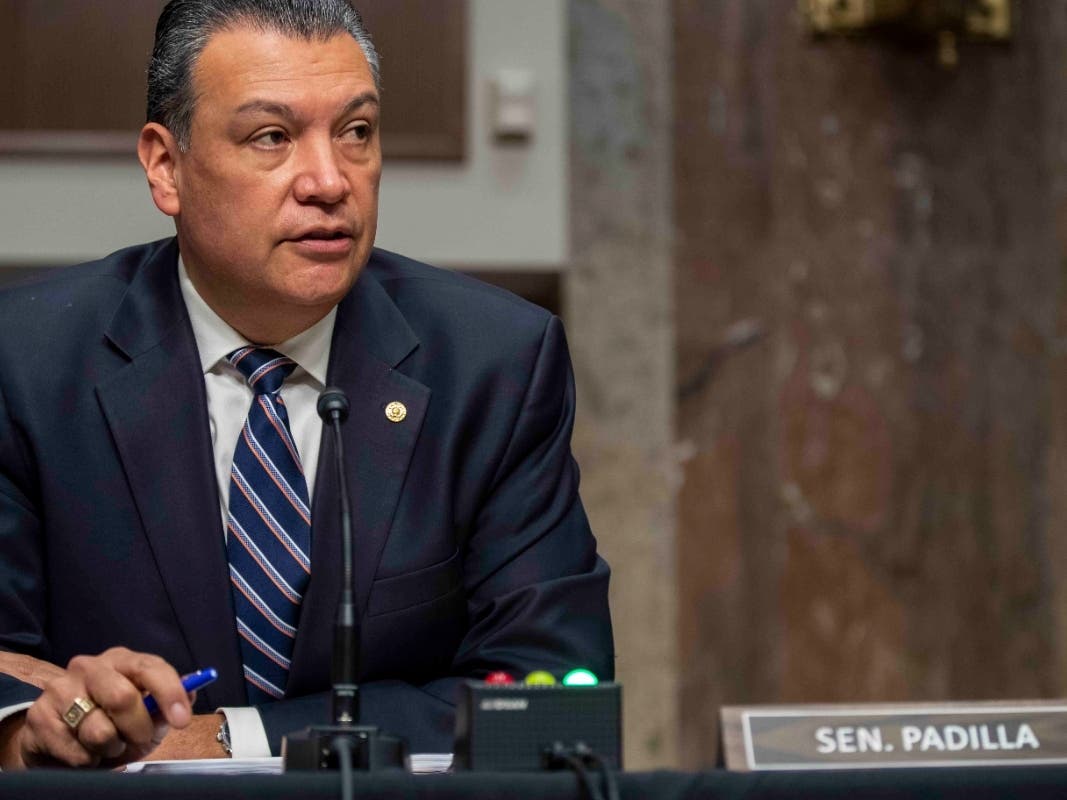
WASHINGTON, DC —Sen. Alex Padilla (D-CA) and Rep. Mark DeSaulnier (D-11) participated in a virtual town hall Monday afternoon, where they took questions about immigration reform, infrastructure legislation, voting rights, the Senate filibuster, Afghan refugees and the eviction moratorium.
Both congressmen have been outspoken in their support for protections for immigrants -including for those that fall under the Development, Relief and Education for Alien Minors (DREAM) Act. However, neither congressman was particularly optimistic about bipartisan measures on immigration reform.
"To be transparent and honest, (immigration reform) is a priority for me and no state has more at stake than California," Padilla said. "We are the most populous state, most diverse and have the most immigrants, and we are the fifth-largest economy in the world. That is not a coincidence. If immigrants were a drag on the economy, we wouldn't be the fifth-largest in the world. We are there BECAUSE OF immigrants and their contributions."
Find out what's happening in Walnut Creekfor free with the latest updates from Patch.
While both men said Republican colleagues in both chambers have expressed some private support for immigration reform, doing so publicly appears to be damaging politically.
"Unfortunately, some of our Republican colleagues want to do the right thing from an economic and ethical standpoint, but are afraid of being primaried," DeSaulnier said.
Find out what's happening in Walnut Creekfor free with the latest updates from Patch.
Padilla said there may be a chance to get some immigration reform laws into this year's budget. He said that in 2005, Republicans, than the majority in the Senate, used the budget reconciliation to change immigration law, and Democrats are now appealing to the Senate Parliamentarian to allow immigration reform into this year's budget."
With the Dixie Fire raging and Hurricane Ida pummeling Louisiana, climate change was an important topic of conversation. It gave Padilla a chance to talk about the $1.2 trillion infrastructure bill the Senate passed earlier this month, which includes numerous measures to fight climate change.
Padilla said the ice storms in Texas this past winter, which knocked out power around the state, were the impetus for his colleague John Cornyn (R-Texas) to offer GOP support for elements of the infrastructure bill designed to modernize the electrical grid.
Meanwhile, Padilla touted the Clean Commute Act, which he supported, and which set aside $5 billion within the infrastructure bill to upgrade America's school busses to clean energy, according to the New York Times. Padilla, an MIT-educated mechanical engineer, said the reforms are good for the environment and for children's health.
While the Senate passed the infrastructure bill, the House has been leading the way on voting rights protections, including passing HR 1 - For the People Act in March-which DeSaulnier is a co-author - and HR 4 - John Lewis Voting Rights Advancement Act, which was passed last week.
However, it likely will take the elimination of the filibuster in the Senate to get voting rights legislation passed in that chamber. Padilla said he believes that "behind the scenes" support is building among those Democrats who initially opposed the elimination of the filibuster, or at least to carve out exemptions around voting rights measures.
Though the House does not have a filibuster, DeSaulnier said he's seen different legislative rules during his time in state politics, like the supermajority law in California.
"A lot of people think the filibuster helps with bipartisanship, I would argue the opposite," DeSaulnier said.
Asked about what California is doing for refugees during the current crisis in that Afghanistan, Padilla urged Californians with friends, relatives and co-workers in that country to look to his website for resources about getting asylum seekers to safety. Longer term, Padilla said the government will be supporting Afghans who have settled throughout the U.S., including in California, assisting on issues like healthcare, education and job placement.
"The largest concentration of Afghans outside of Kabul is in Fremont, California and surrounding communities," Padilla said.
Finally, though the Supreme Court last week rejected the Biden administration's latest moratorium on evictions, the congressmen reassured Californians that they still would be protected.
Padilla pointed out that the ruling simply restricted President Joe Biden's ability to extend the moratorium through executive order, but that congress still could do so, and each state and every local jurisdiction also had the ability to put in place extensions.
"Thankfully, California under Gavin Newsom has broad protections in place through September," Padilla said. "Though we need to work together to make sure that when funding is approved to help tenants with back rent, that it continues to flow and does not get caught up in bureaucracy and gets to the people who need the help."
DeSaulnier added: "The good news is, we have really strong protections on the municipal side here in Contra Costa and good protections at the state level."
Get more local news delivered straight to your inbox. Sign up for free Patch newsletters and alerts.