Community Corner
Pickleball Dispute Enters Year 4 Still Unresolved In Walnut Creek
Neighbors near the Rudgear Park pickleball courts say they feel overwhelmed by pickleball players who defend their court access.


WALNUT CREEK, CA — Court restrictions and negotiations have failed to resolve Rudgear Park’s pickleball noise dispute now in its fourth year prompting neighbors ask a judge to force Walnut Creek to control the disturbance.
Neighbors near the Rutgear Park pickleball court say that the city created a public nuisance when it converted two tennis courts into eight pickleball courts without notifying affected residents or studying the potential effects on noise, traffic, and safety.
Their amended complaint, dated May 1, 2025, places their homes 50 to 90 feet from the nearest courts and alleges noise levels as high as 88 decibels. The residents argue that the city has violated state law, its own noise ordinance, and noise provisions in city and county general plans.
Find out what's happening in Walnut Creekfor free with the latest updates from Patch.
The lawsuit seeks court orders requiring the city to stop the alleged nuisance, comply with noise requirements, and pay legal costs and attorney fees.
Neighbors are asking for fewer courts, quieter equipment, soundproofing, limits on players — or eliminating the courts.
Find out what's happening in Walnut Creekfor free with the latest updates from Patch.
Judy Wobleski, who lives on Dapplegray Lane beside the courts, said closed doors cannot silence the noise. On some summer weekends, she said, players keep the “pock, pock, pock” going for 14 hours a day.
A few hours would be tolerable, she said. The longer stretches drove Wobleski and her husband to sue the city.
They bought their home in 1979 partly because they could walk to the tennis courts. Now the pickleball noise prevents them from watching television in their family room, opening windows, entertaining outdoors, or dining on their deck.
“They’re having fun,” Wobleski said of the players, “and they go home to a quiet home.”
The noise interrupts business calls, forces them to work elsewhere, and prevents them from using patios and gardens, the neighbors said.
Some residents said players threatened and made racist comments when asked to limit the noise.
Players also parked their cars in driveways, in front of fire hydrants, and moved trash cans when they couldn't fit otherwise.
The parked cars obstructed residents’ views as they pulled out of driveways, creating collision risks, according to neighbors and the lawsuit.
Like city staff, mayor and councilmember Kevin Wilk recognized the problem years ago, emails show.
A 2022 City Council agenda report described the neighborhood impact as “unsustainable at this location.”
Wilk also wrote in 2022 that he had visited the courts, and had to admit that "it’s loud all day...which is new since the pickleball courts have been there only a relatively short amount of time."
He added, "I love playing pickleball myself. Hopefully we can find a solution that all parties are happy with."
But those conversations have failed to deliver relief from noise Wobleski describes as deafening in every room of her home.
Wobleski said players refuse to use noise-reducing materials. She questioned why officials dismissed sound-blocking sheeting without trying it, saying they concluded that the location would prevent it from working.
A committee explored moving the court, she said, but the relocation plan “just went nowhere.”
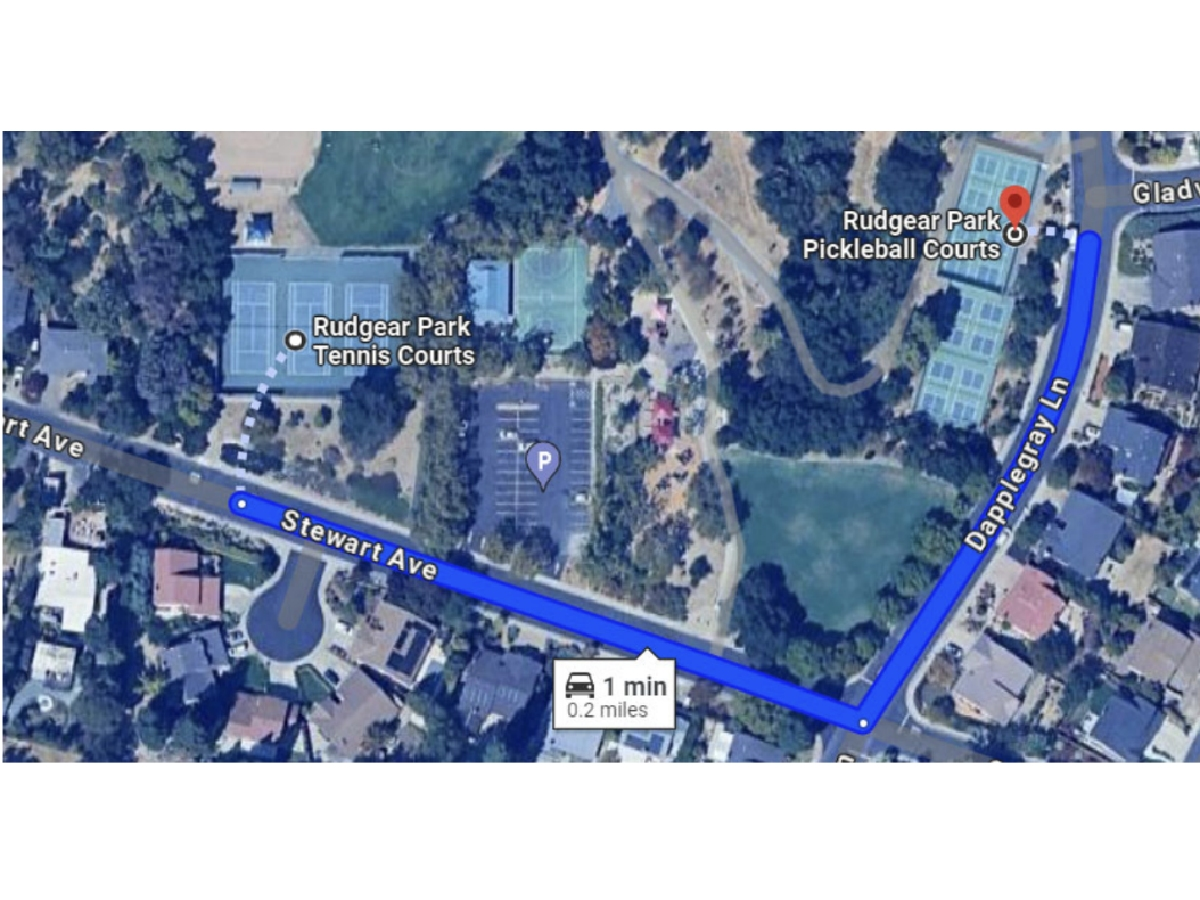
The complaint contrasts the Rudgear conversion with the city’s consideration of pickleball at the Stewart Avenue tennis courts, about two-tenths of a mile away.
According to the lawsuit, a city-commissioned sound assessment warned that play without mitigation would exceed noise guidelines and likely disturb nearby residents.
The city did not proceed with that conversion, according to the complaint, but continued allowing play at Rudgear despite complaints and a petition signed by 42 neighbors.
The city owns the courts and allows the public to play at no cost during posted hours.
Walnut Creek spokeswoman Elizabeth Orcutt said the ongoing litigation prevents the city from commenting on the lawsuit or explaining why particular alternatives did not advance.
Orcutt said the city reduced court hours about three years ago, locks the courts outside posted hours, and directs players to park on the court side of the street instead of in front of homes.
Officials reduced playing hours by 20 percent and closed the courts for two afternoons after city officials, neighbors, and Walnut Creek Pickleball Club members discussed locations and schedules.
Club members said the restrictions blocked access when many people finish school or work. Players argued that the courts operated within legal noise limits and that residents should expect recreation noise from a community park.
“It’s not a quiet meadow. It’s a community park,” one woman told the Walnut Creek City Council.
Elsewhere in Walnut Creek, city records list the Rossmoor Pickleball Court project at 1021 Stanley Dollar Drive as under construction. The project includes a 12,309-square-foot pickleball facility, landscaping, lighting, and tree removal.
The Planning Commission approved the project on March 27, 2025. Orcutt said the Golden Rain Foundation project is separate from the Rudgear courts and will not provide public courts.
Meanwhile, games continue at Rudgear Park.
Wobleski said she values pickleball’s ability to get people exercising and making friends. Her objection centers on the games’ proximity to homes.
“It’s just too noisy to be close to homes!!” she said.
Get more local news delivered straight to your inbox. Sign up for free Patch newsletters and alerts.