Community Corner
Wildfires Cause Air Quality Problems In Walnut Creek
The Bay Area Air Quality Management District has issued an air quality advisory for Thursday and Friday because of wildfire smoke.

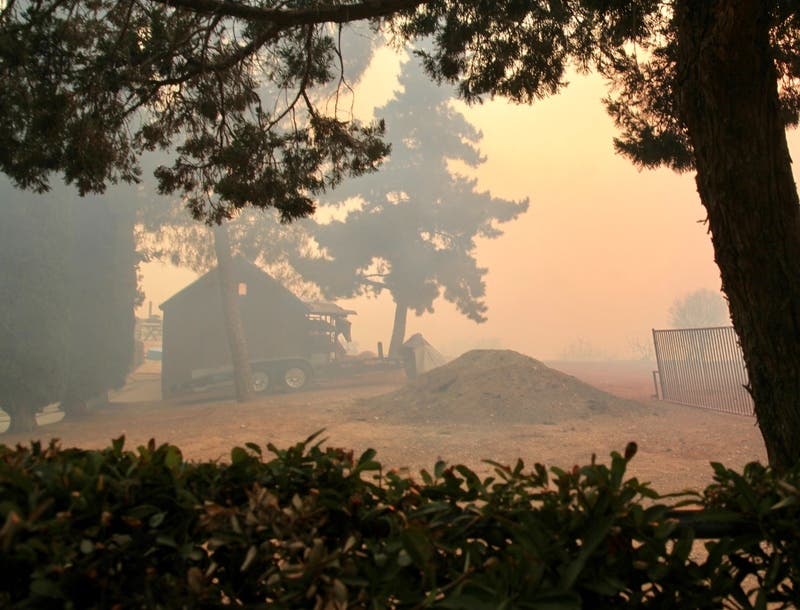
WALNUT CREEK, CA — Smoke from the McFarland, Monument and River Complex fires in northern California is expected to stay aloft and not be unhealthy to people in the Bay Area, according to the Bay Area Air Quality Management District, but smoky and hazy skies may be visible in Walnut Creek.
Air district officials say they will be monitoring air quality in the region, and encourage anyone who smells smoke to stay inside if possible.
You can follow real-time air quality readings online.
Find out what's happening in Walnut Creekfor free with the latest updates from Patch.
Smoke from California, Oregon and other western states and Canada have triggered air quality warnings all the way to the eastern seaboard.
What Makes Wildfire Smoke So Harmful?
A study published in January in the journal Proceedings of the Natural Academy of Sciences said a large wildfire, such as the Bootleg Fire currently burning in Oregon, can account for 25 percent of dangerous air pollution in the United States.
Find out what's happening in Walnut Creekfor free with the latest updates from Patch.
“What they’re experiencing on the East Coast from our West Coast fires shows it’s a nationwide and a global problem,” Mary Prunicki, the director of air pollution and health research at Stanford University, told National Geographic.
Here’s what makes wildfire smoke so dangerous:
Each plume of wildfire smoke is unique. About 80 percent of it is made up of fine particulate matter unique to the types of trees, buildings and other objects burned in a wildfire.
“These microscopic particles can penetrate deeply into your lungs,” according to the EPA. “They can cause a range of health problems, from burning eyes and a runny nose to aggravated chronic heart and lung diseases.”
Particle pollution exposure can also cause premature death, the agency says.
It’s especially important for the following groups of people to closely monitor the air quality index:
- People with heart or lung diseases and older adults, who are more likely to have those conditions than younger people.
- Children, including teenagers; because their respiratory systems are still developing, they breathe more air (and air pollution) per pound of body weight than adults, they’re more likely to be active outdoors and they’re more likely to have asthma.
- People with diabetes, who are more likely to have underlying cardiovascular disease.
- Pregnant women, because there may be potential health effects for them and their developing fetus.
Here are some symptoms to watch for:
- Burning eyes, a runny nose, cough, phlegm, wheezing and difficulty breathing — symptoms that may worsen among people with heart and lung diseases.
- Chest pain, palpitations, shortness of breath or fatigue among people with heart disease.
- Difficulty breathing as deeply or vigorously as usual, and symptoms such as coughing, phlegm, chest discomfort, wheezing and shortness of breath among people with lung diseases.
The EPA says everyone should limit their exposure to smoke, and that it’s especially important for people at risk for particle-related effects to talk to their health care providers about specific steps they should take.
Air cleaners can help reduce particulate matter indoors as long as they’re the right type and size, and that they don’t generate ozone. Also, the EPA advises, have a supply of N95 or P100 masks on hand to wear when it’s necessary to be outside.
Beth Dalbey/Patch and Bay City News Service contributed to this story
Get more local news delivered straight to your inbox. Sign up for free Patch newsletters and alerts.