Politics & Government
Of Aretha Franklin, Mae West, West Hollywood & R-E-S-P-E-C-T
"Transformational" Construction Project Prompts Existential Question for WEho: Who are "WE?"

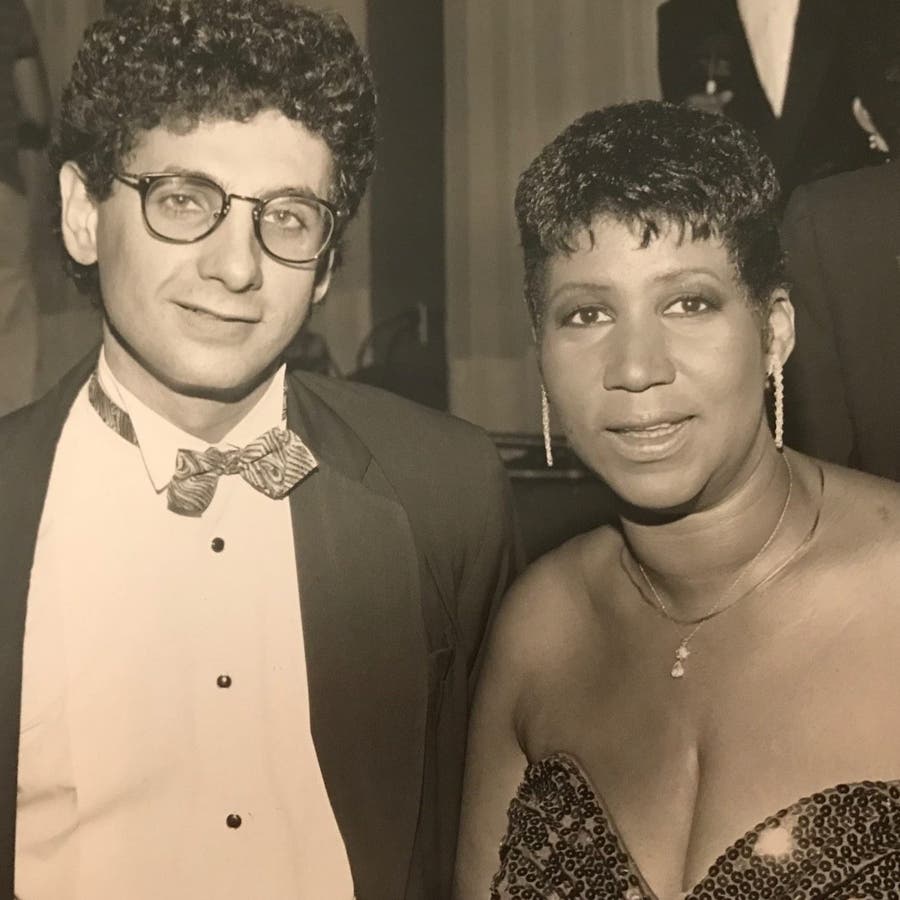
Early last month, Richard Gordon, a nationally known public relations executive in the entertainment industry, posted a message on his Facebook wall, which, in part, said this :
"L.A. is getting too overbuilt and the traffic has really become unbearable these days. The building below is just an IDEA and will take over two years to go through the local government and construction will not begin to break-ground for OVER two years from this summer."
It's par for the course of being West Hollywood, that even devoted residents often call it L.A., and Gordon is referring to a new multi-use complex proposed for 8445 - 8447 Santa Monica Boulevard in West Hollywood, a "transformational" project that would necessitate the demolition of what exists currently on that site, including a retail space leased by "Avalanche" and the historic roadhouse, Barney's Beanery, considered one of the most important landmarks in the history of the LGBTQ civil rights movement in the U.S.
Find out what's happening in West Hollywoodfor free with the latest updates from Patch.
Welcome to the future, West Hollywood residents, it is now. It seems almost quaint to remember back to 1970, when Joni Mitchell opined in Big Yellow Taxi,
They paved paradise, and put up a parking lot. With a pink hotel, a boutique and a swinging hot spot. Don't it always seem to go that you don't know what you've got 'till it's gone...they paved paradise and put up a parking lot.
Find out what's happening in West Hollywoodfor free with the latest updates from Patch.
There are fewer taxis on the road today in the age of Uber and Lyft, not to mention big yellow ones, and had urban development been confined only to parking lots, this would seem even more like the good old days, but we all know progress, as measured in real estate development, is relative to what preceded the new development. There is counter-intuitive relevance to some of these lyrics, more than just the inevitability of the give and take correlation between progress and paradise, especially now for West Hollywood...as the pink hotel just around the bend in neighboring Beverly Hills, a long standing fixture that spells Beverly Hills, both literally and figuratively, didn't start out this way. Once again "progress" seemed to be crying out for review and revision, out with the old and in with the new. "Don't it always seem to go that" some newbie comes along, who claims to know better?
Such was the case with architect, Paul Williams, except he wasn't a newbie, he was one of L.A.'s most prolific and influential architects, and he had a whole new vision for a hotel that seemed too inconsequential for current tastes, and, once again there was a total re-imagining of what had existed undisturbed for decades. Williams was such an iconoclast, he had a whole new strategy by which to re-do and renew a pale vestige of former tastes and times...he rejected the usual menu of bulldozers, dynamite and dump trucks...he didn't need to make his artistry as conspicuous as it seems routine to do today, likely at the insistence of the developer, to build a trophy as much as a prized work of art. Williams had a different idea about how to enhance its curb appeal...with paint and brush, he turned a white hotel pink to match the sunsets. He didn't need to change the existing footprint of the architecture and The Beverly Hills Hotel has been the city's most famous landmark ever since.
West Hollywood isn't the same town as any of its neighbors, as it is undeniably squeezed among more towering neighbors of affluence, size and longevity of existence, foremost of which are Beverly Hills, Hollywood and the City of Los Angeles. Weho is not unlike the runt of the litter in its origin- last town standing, least amount of clout and bank account, and somewhat of an after thought, like an unexpected child. On top of all that, it has a geographical contour that is so unconventional, it is too conspicuous to be ignored. It once had been a stretch of unclaimed territory that linked Hollywood and Beverly Hills, as only a thoroughfare...the road most traveled by movie stars and studio executives as a daily commute between work and home.
Anyone who knows anything about movies knows this is the way a star is born. It's always the unlikely someone in the background, whether by sheer coincidence or calculation, who becomes an overnight sensation...it's not just a classic story that is on its fourth go round in the soon to be released, A Star is Born with Lady Gaga in the lead, it is the story of Broadway's 42nd Street and of the all time classic, All About Eve, and now may be the time for Weho to consider its roots and its singular identity in a fast changing world, at the precipice of losing what makes it separate from the pack.
Here's how the legacies of Aretha Franklin and Mae West come into play, these legendary women were born with such unconventional assets, there was no denying they didn't fit the mold of what the world expected from an actress or a singer. Mae West was shaped with such unconventional contours, they were as conspicuous as the zig zagging outlines that distinguish the borders of West Hollywood. No honest person would pretend these are body images made easy in the real world. So often is it confusing even for long term residents to know for sure, if on any given block they are in or out of their own home town, and as audiences were pulled to what had been a uniquely shaped presence, as was Mae West, it didn't matter much, if her name was Diamond Lil on screen, there was no mistaking this diamond in the rough, she was never going to be Meryl Streep in any era. She did rough right, because she did it her way and by her own choice, the way Tina Turner sings Proud Mary, nice and rough, self-proclaimed, as her way, also, and no one ever was going to tell Aretha Franklin what she could or could not do but that didn't mean it ever was easy nor that she didn't take risks, and risk more than others, because people always wondered when she had strayed onto new turf, covering what seemed to belong to Otis Redding, Dionne Warwick or Luciano Pavarotti, she always showed the world the singular stuff that always will be Aretha Franklin.
A self-proclaimed "transformational project" that is a mixed use facility of hotel rooms, residential units, a night club, recording studio and parking lots, begs the question what is West Hollywood transforming to become and what will it lose in the process?
There is no question it's designed by a top notch architectural firm, that designed the Lucas Museum currently in construction at USC. West Hollywood's City Council will need to consider how much of an upheaval this project will be for scores of residents, such as Mr. Gordon, many of whom may not have the means to pick up and move, even if few would have the desire, in consideration of the 45 new residential units this complex will add, in addition to a nightclub, hotel rooms, a recording studio, etc., and decide what is more essential for the greater good of the city.
One of the singular challenges for the powers that be in this municipality, unlike others, is to consider what's going on in adjoining neighborhoods, as the aforementioned "runt" of the litter, because while the West Hollywood City Council has a fiduciary responsibility to generate tax revenues to cover its own budget, and additional unknown expenses, it has a moral imperative to consider the quality of life that makes West Hollywood unique, and has little choice but assess this project in consideration of the Frank Gehry mixed use development, about to be built up against its border with the City of Los Angeles, that recently got the go ahead after a series of court battles with the L.A. Conservancy, that sued its own city in an attempt to protect a historic bank designed by architect Richard Meier.
Perhaps most importantly, the City Council of West Hollywood will need to consider the significance of Barney's Beanery as a historic site, pegged to its very origin, as a safe haven for the LGBTQ community, and at the very least, should dispel the notion of re-creating a landmark by disassembling it, as if it can be re-enacted, in whole or in part, which seems more like a brand of New York City or Paris one would find in Las Vegas.