Community Corner
Weho's General Plan Could Drive Out Little Russia
The general plan discusses raising building height restrictions that could drive up rents and forever alter the neighborhood, a City Council candidate says.
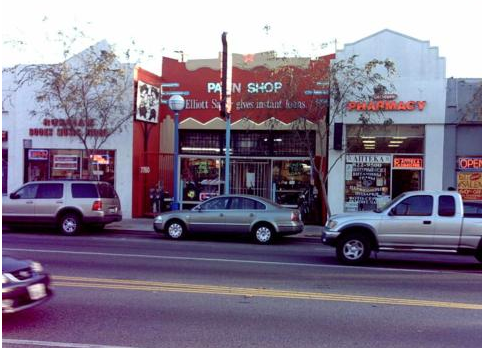

Before it became an official city, West Hollywood was known as a "cultural melting pot." It was a place where casinos, speakeasies, hippies, rock stars, celebrities and, most important, the largest subset of the city's population—the gay community—ruled.
In the mid 1970s, a tremendous cultural shift took place in our city. The Jackson-Vanik Amendment, enacted as part of the U.S. Trade Act of 1974, put pressure on the Soviet Union to allow more emigration.
As a result, many Russian immigrants fled their homeland and some found a new home in West Hollywood. Their adopted city catered to them by creating various opportunities for them to thrive and feel included.
Find out what's happening in West Hollywoodfor free with the latest updates from Patch.
"I like where I live," said Alex Vinochurob, a 20-year-old Russian-speaking resident of West Hollywood. "It's [a] nice neighborhood, nice people, no noise."
As more Russians arrived in West Hollywood, they transformed the city. Russians began to set up small businesses such as grocery stores, restaurants and bars.
Find out what's happening in West Hollywoodfor free with the latest updates from Patch.
West Hollywood brought the new residents in to the city's political system through an advisory board, and their influence was felt along our main artery of Santa Monica Boulevard, east of Fairfax and west of La Brea avenues.
The city's Proposed General Plan is a living document that reflects the wants and desires of the community in the areas of land use, housing, traffic and transportation, parks and open space among other city services.
The General Plan under consideration could bring big changes to Little Russia because it will allow taller buildings to be constructed there, eventually pushing out small businesses.
Why would building height restrictions be raised in the area where our Russian residents own their businesses? Why haven't the Russian business owners been made aware of the ramifications of the increased height restrictions on Santa Monica Boulevard? Why have the Russian community not been made aware this will likely lead to the loss of their businesses and their identity within the proposed, newly gentrified Eastside?
I'm sure there are more factors the Russian community should be concerned about, but height restrictions are important—especially when it's being discussed in the city's General Plan.
Height averaging is what defines a neighborhood. If everything is a one-story building and height restrictions are raised, it opens the door for development that forever changes that specific neighborhood.
Developers will scrape the existing structures to the ground and replace them with tall buildings (a result of raising height restrictions). Then they will offer our Russian small business owners the option to come back to their former business location at market rate—which would essentially be double, triple, or quadruple their existing rent.
As a resident on the eastside of West Hollywood fondly known as "Little Russia," this is my neighborhood, and the residents around me are my friends and neighbors who stand a chance of losing their sense of identity, their sense of community. If the current City Council is willing to approve demolition for the old Elixir building on Melrose and the functioning House of Blues on Sunset Boulevard, it will not hesitate to destroy the Russian culture for financial gain.
Now I ask, what about the "melting pot?" What about our Russian residents? What about the Russian presence in our city? What about Plummer Park? What about Jon's market? How much diversity is our current City Council willing to forgo until we are no longer West Hollywood? It just does not stop at scaring the renters away, it does not stop at the issue of overdevelopment in our city, it does not stop at the lack of community gardens, it does not stop at not fostering small businesses, it does not stop at passing their own agendas, it does not stop until we as a city, we as a "melting pot," say enough is enough!
Mito Aviles is driven by the desire to effect change through the fusion of art, design and politics. Aviles resides in West Hollywood with his partner and is running for West Hollywood City Council in 2011. Mito is an active member of the West Hollywood Democratic Club, Stonewall Democratic Club, a member of the West Hollywood Smoking Ban Task Force, and is president of a visual merchandising and branding consulting company.