Health & Fitness
Coronavirus: Essential Workers Want Voice In CT Reopen Plan
State labor leaders and AFL-CIO president said essential and frontline workers must have a say as they released their own reopen plan.


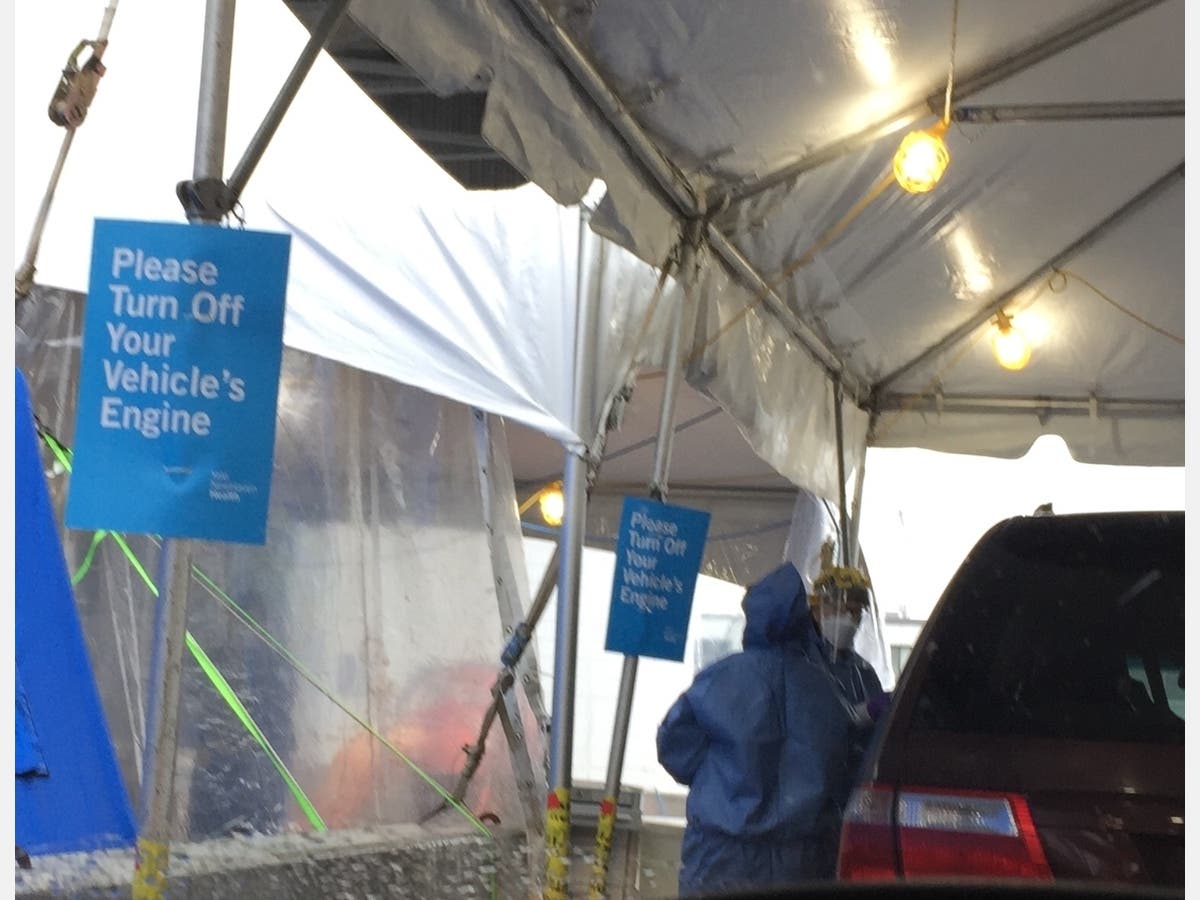

CONNECTICUT — Saying the state task force created to re-open Connecticut is absent representatives for workers including heath care and nurses, bus drivers and transit workers, grocery store employees, janitors, education paraprofessionals, cafeteria workers and building security among others, the AFL-CIO released its 'Working People’s Plan To Reopen Connecticut Economy' during a Zoom conference call Thursday.
Labor leaders representing essential, frontline workers and those working from home, along with national AFL-CIO President Richard Trumka spoke addressing the lack of representation of worker voices in state re-open plans.
Trumka, who was named to the New Jersey re-open commission, said labor leaders have been calling on Gov. Ned Lamont to add workers to the panel.
Find out what's happening in Across Connecticutfor free with the latest updates from Patch.
"Frontline workers deserve more than our gratitude," he said. "They need peace of mind. They need to be heard. We know the impact of this virus." He said that he understands the importance of re-opening the state, "but what i can't wrap my mind around is (leaving out front line worker)."
The worker's plan is called Safety First: Working People’s Plan for Reopening the Economy the Right Way:
Find out what's happening in Across Connecticutfor free with the latest updates from Patch.
- Workers must have a say in these decisions at every level: workplace, industry, city, state and federal.
- Decisions must be based on worker safety and sound science.
- Strong, clear, and enforceable workplace health and safety standards must be in place.
- Workers must have stronger protections against retaliation.
- There must be a massive increase in adequate levels and types of personal protective equipment for workers currently on the job—and then for those returning to the job.
- There must be a massive increase of rapid and reliable coronavirus testing.
- The federal government must oversee a system of recording, reporting and tracking worker infections.
- Employers, in coordination with local and state public health departments, must trace the contacts of infected workers and remove exposed workers from work with pay and without retaliation.
"Nobody wants the economy open more than workers, but we'd rather be one week late than one week early. Too early ...we'll have another shut down that could plunge us into an economic depression," Trumka said. "Do more than thank first line workers, listen to them."
Don't miss local and statewide news about coronavirus developments and precautions. Sign up for free Patch alerts and daily newsletters from all across Connecticut.
During the teleconference, a dozen labor leaders representing frontline workers said, "Essential workers have been keeping Connecticut running and selflessly serving their communities throughout this deadly pandemic. They are the ones whose lives and health are on the line. Therefore, essential workers must have a significant role in deciding when it is safe to reopen our economy and allow others to return to work."
Happening now: nat'l @AFLCIO prez @RichardTrumka joins @ConnAFLCIO to announce re-open CT plan prioritizing #EssentialWorkers' needs & w/voice of those "selflessly serving" on frontlines of #Coronavirus. #COVID19 @AFTUnion @AFTHealthcare @AFTteach @AFSCME @SEIU @UFCW @ATUComm pic.twitter.com/1HEdBFDPEg
— AFT Connecticut (@AFTCT) April 30, 2020
It was noted that when Lamont announced the membership of “Reopen Connecticut Advisory Group” and its various subcommittees. Notably absent were many representatives of frontline workers and those include nurses, nursing home workers, grocery store workers, corrections officers, and among myriad other workers deemed essential by Lamont.
Sal Luciano, President of the Connecticut AFL-CIO, said he spoke to Lamont and said it is "always a problem ...when business leaders pick the labor rep."
“It’s a missed opportunity hear from people on the frontlines," he said. "I don't know how you can have a reopen committee without those voices."
Luciano said the people "who have been going to work and feeding and protecting our community ... their lives are on the line and so they should have a critical role in deciding when Connecticut should re-open."
A parade of labor leaders each spent a few minutes describing what the workers they represent have been living through since the pandemic began.
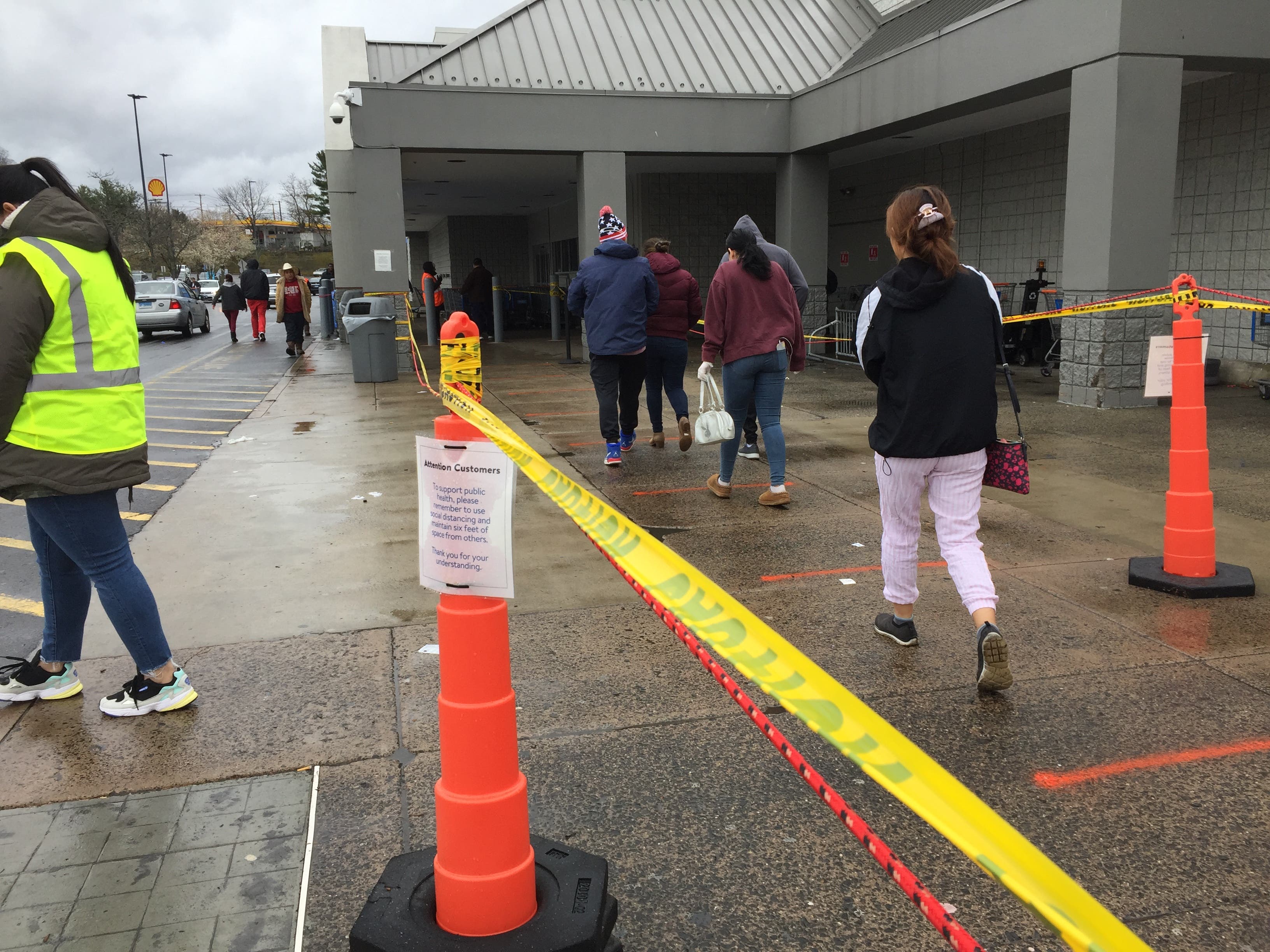
Keri Hoehne, Executive Assistant to the President for UFCW Local 371, representing grocery store workers, said that "unlike the health care heroes, (grocery store workers) never chose to enter a line of work where they'd put themselves in harms' way for six weeks and and from the beginning without PPE."
She said that there are residents who shop and who refuse to wear masks. She said the concern is that a massive re-opening will mean "hundreds, thousands more shoppers in stores and workers must have stronger protections."
Ellyn Santiago/Patch
Hoehne called for shoppers not wearing masks to receives summonses or fines or provide some medical reason why they cannot wear face coverings." She also noted that if there was more testing, people who are positive will be identified and makes more sense then the unknown: believing one has been exposed and going into quarantine for 14 days, which is "more costly."
"We need more testing, more drive up testing. Even if asymptomatic; that will allow members some peace of mind if the are exposed so people can work more safely."
Juan Hernandez, Vice President of 32BJ SEIU, representing building cleaners and security officers, said there are currently 700 members who have been laid off and he expects there will be more to come as a result of higher education closings.
"All our members are essential workers, but worked for many weeks without protection," he said. "It's imperative," he said for the "people who guard and clean" have PPE.
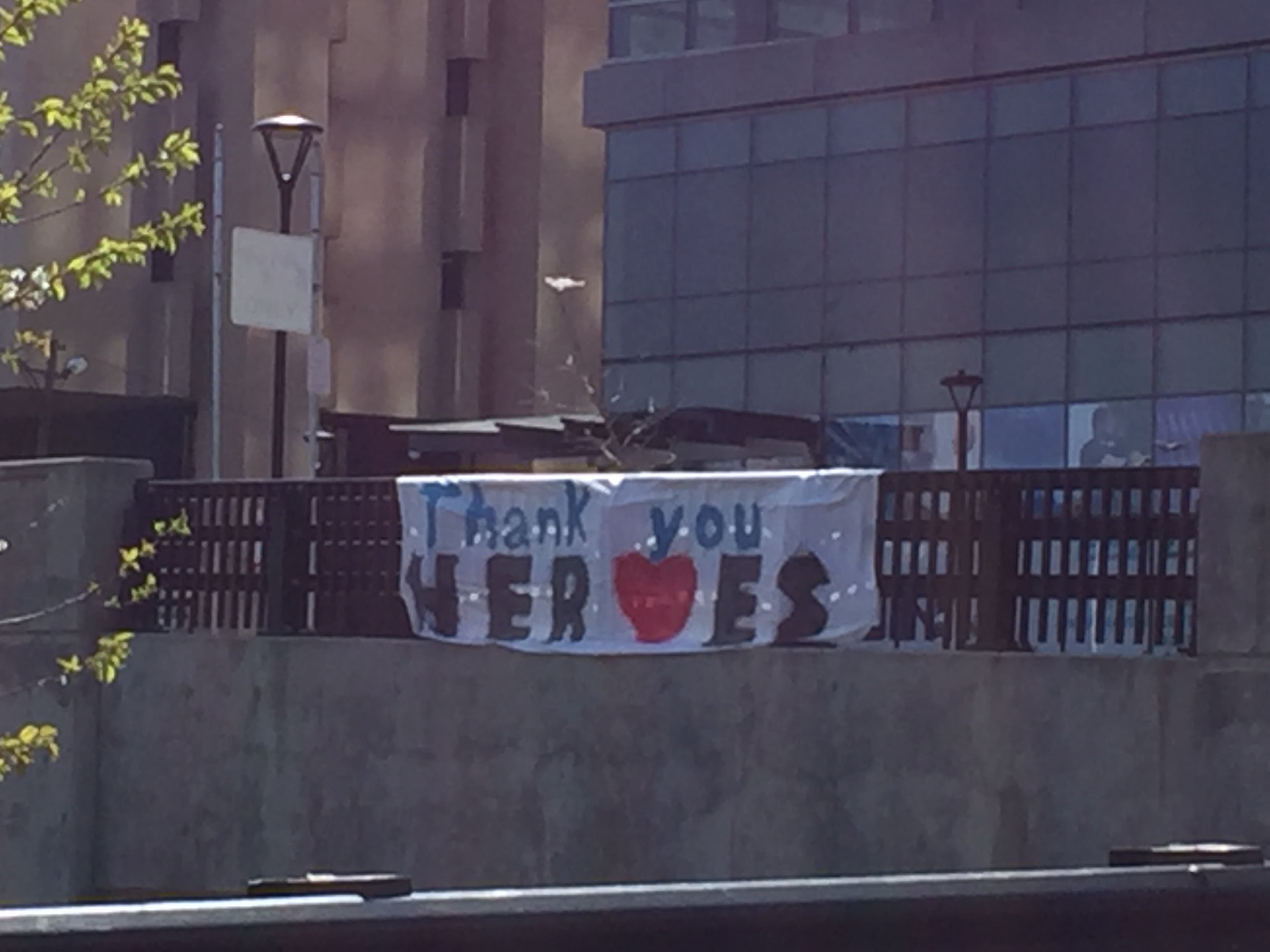
Dave Hannon, Secretary/Treasurer of CHCA District 1199, NUHHCE, representing health care workers, said that "workers we might have taken for granted before, are the backbone of our society."
"Before we reopen we need to remember why we stayed home," he said. "To safely reopen we must ID who is infected without testing and contract tracing could have explosion of infections." He also noted that personal protective equipment is supposed to be disposable and not re-used. He said that cleaning and disinfecting PPE "is only a emergency measure" given the pandemic and masks and other protective equipment shortages.
"We must return to enforce those strict infection controls."
Ellyn Santiago/Patch
John Brady, Vice President of AFT Connecticut representing nurses said that a too-early re-opening could lead to a "harmful second wave" of infection for nurses without appropriate PPE. He said nurses have "gotten sick, transmitted the virus and some have died."
He quoted a nurse who said, "We're professionals, not sacrificial lambs.” He said any re-opening "must come with hazard pay."
"Expressions of gratitude are wonderful but don't pay the bills," Brady said. "Our health care workers must have a voice in re-opening."
#AFTCT VP @JB5591 delivers clear #GetUsPPE message; #HospitalStaff & health professionals demand "supply chain we can count on" to ensure gear protecting #EssentialWorkers from #Coronavirus exposure before reopening CT or US. #COVID19 @AFTUnion @AFTHealthcare @AFLCIO @ConnAFLCIO pic.twitter.com/8HbqaWgO7P
— AFT Connecticut (@AFTCT) April 30, 2020
Veronica Chavers, President/Business Agent of ATU Local 443, representing bus drivers and tranit workers said they "are first responders." She said re-opening will mean increased ridership on buses and warned that there must be "protocol in place for drivers to go back to work."
"Throwing them back into the line of fire without proper protocols... throwing them back to work after 14-day quarantines, that's how a lot of drivers are getting sick."
She said protecting drivers is critical.
"We have to come together with a solution. Ask the governor to listen to all of us transit workers and please respect the transit workers. We transport the front line."
Mary Yordon, President of the Norwalk Federation of Teachers, AFT Local 1723 said in a meeting with state Education Commissioner Dr. Miquel Cardona, he said it's highly unlikely that school will resume in June. She also pointed to a proposed plan for re-opening schools across the country released Wednesday by the national union, the American Federation of Teachers. Called a "detailed road map," the plan looks at, without a vaccine, "a path to safely and responsibly reopen school buildings and other institutions crucial to the well-being and economic vitality of our communities."
Read more about the AFT Plan to Safely Reopen America’s Schools and Communities here.
Stacie Harris-Byrdsong, Secretary of AFSCME Council 4, representing 30,000 workers,and President of AFSCME Local 3194, representing para-educators, child care workers, and others, said these workers are the frontline on education.
"We love what we do, making a difference. But our work is also risky. Classrooms do not allow for safe social distancing. We must have a say in when and how we reopen our schools. I hope you hear and respect our voices.
Carl Chisem, President of CEUI – SEIU Local 511, representing building cleaners at Connecticut Valley Hospital and cafeteria workers said his members too are concerned and need a voice in plans to re-open.
Get more local news delivered straight to your inbox. Sign up for free Patch newsletters and alerts.