Business & Tech
CT Package & Convenience Stores Fight Proposed Alcohol Sale Plans
A bill proposed in the Connecticut Legislature, HB6101, would allow grocery stores to sell wine, and big box stores to sell beer.


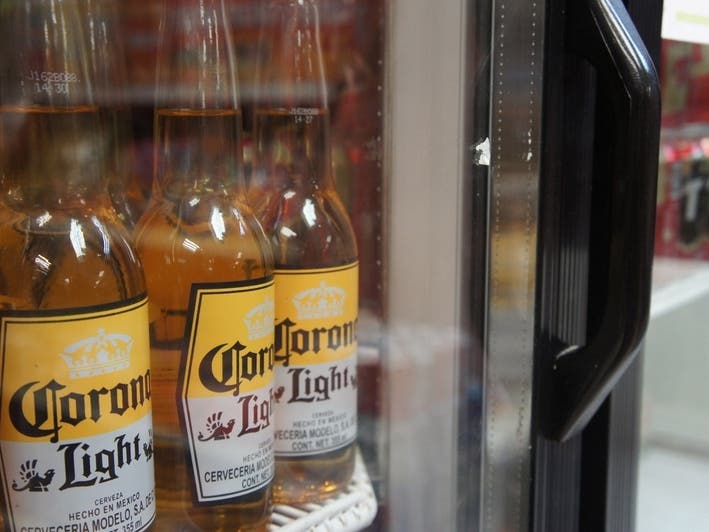
CONNECTICUT — Hundreds of the state's package and convenience stores have banded together to oppose a new bill in the Connecticut Legislature that would allow grocery stores to sell wine, and big box stores to sell beer.
HB6101 — An Act Concerning Various Issues Related to the Liquor Control Act — contains the two provisions mentioned above, and also would allow restaurants to continue to include alcohol with takeout orders for the next three years, well beyond when the coronavirus pandemic is expected to subside. Connecticut's restaurants already are allowed to do that by executive order from Gov. Ned Lamont, but the proposed bill would extend it.
The bill has a champion in, among others, state Rep. Michael D'Agostino, a Democrat from Hamden who chairs the state House's General Law Committee, which oversees liquor regulations.
Find out what's happening in Across Connecticutfor free with the latest updates from Patch.
D'Agostino argues that the moves would help consumers, and in the case of extending the provision of allowing the inclusion of alcohol with takeout orders, it would also help the ailing restaurant industry, which has suffered under the pandemic.
"From the package stores' perspective, they don't want the competition," D'Agostino told the Hartford Courant. "I understand that. I wouldn't want the competition either, if I were them."
Find out what's happening in Across Connecticutfor free with the latest updates from Patch.
For the package and convenience store owners, however, it is beyond just facing new competition. They view the bill as an existential threat to their businesses and livelihoods, and they argue that it is patently unfair to boost some businesses — namely grocery stores and big box stores like Target or Walmart that already sell food — over other, "mom and pop" businesses.
"My store is only allowed to sell three items by law, beer, wine, and liquor," said Ridgefield resident Michael Interlandi, owner of the decades-old White Bridge Wines & Spirits in Darien, during public testimony this week in the state Legislature. He added that by contrast, grocery stores and big box stores can sell thousands of items. "Allowing either of those items to be sold by corporate giants would lead me to go out of business."
Former Norwalk state Rep. Lawrence Cafero Jr., now the executive director of the Norwalk-based trade association Wine & Spirits Wholesalers of Connecticut, told Patch that of the three things package stores can sell, wine is by far the most profitable. And wine is easily accessible throughout the state at one of more than 1,200 package stores, the most per capita in the nation.
"By allowing wine and beer to be sold in grocery stores and big box stores, respectively, you're killing foot traffic to package stores," Cafero told Patch. "And in the case of wines, you're also negatively impacting the most profitable item for package stores.
"This is not a win-win. It's a huge loss for package stores."
In a message to Patch, Jon Shaer, executive director of the New England Convenience Store & Energy Marketers Association, said the organization, which represents more than 1,000 convenience stores in Connecticut, also opposes the proposed bill.
"While we support an expansion in beer and wine licensing options in the state, very few convenience stores will meet the 6,000-square foot minimum threshold defined in section 56," Shaer told Patch, referring to the bill's section that addresses beer sales in big box stores. "This section favors large format and big-box retailers while effectively excluding convenience stores from acquiring future licenses, considering the smaller format retail nature of our class of trade. It is unfair and anti-local and small business. As a result, we oppose the bill."
State Sen. James Maroney, a Democrat from Milford who chairs the state Senate's General Law Committee, said his support of the bill, like D'Agostino's, is also consumer driven.
"With these particular proposals, it is my focus to make sure we are protecting consumers and the consumer's choice," said Sen. Maroney. "I have seen throughout the coronavirus pandemic, consumers have enjoyed the ability to have breweries deliver as well as be able to purchase alcoholic beverages when placing an order at a restaurant to go. I would like to see what has been working out for consumers and what has been proved to be popular amongst several orders to continue."
Proponents of the bill also believe it could help Connecticut's wineries; legislators are looking to add language that would require stores to carry wines from smaller, local wineries.
John Martello, owner of Old Greenwich's Sam's Wine & Liquors for more than 50 years, also said the bill will cause him to close immediately. But he also believes the desire to help Connecticut wineries also falls flat.
"Grocery stores and large big box stores are allowed to sell thousands of items in their stores," Martello told the legislature. "They rely on selling national brands in their stores and do not and will not carry even close to the number of Connecticut-made products that I do. As a small business owner, I sell and advocate for local home-grown Connecticut products in my store and have an in-depth knowledge of each and every one of those products. This proposal would cause hundreds of stores to close and would hurt and possibly close many Connecticut breweries, wineries, and distilleries, by having them lose hundreds of package stores that sold and advocated for their products."
Cafero also is not buying it. "If we're trying to help the wineries, fine, then let's do that," he told Patch. "But if we're looking to help the supermarkets and the big box stores at the expense of mom and pop package stores, then shame on us."
Get more local news delivered straight to your inbox. Sign up for free Patch newsletters and alerts.