Politics & Government
Lamont Makes Case For Tolling All Vehicles In CT
Gov. Lamont explains why he believes the state may need to institute electronic tolling on all vehicles.


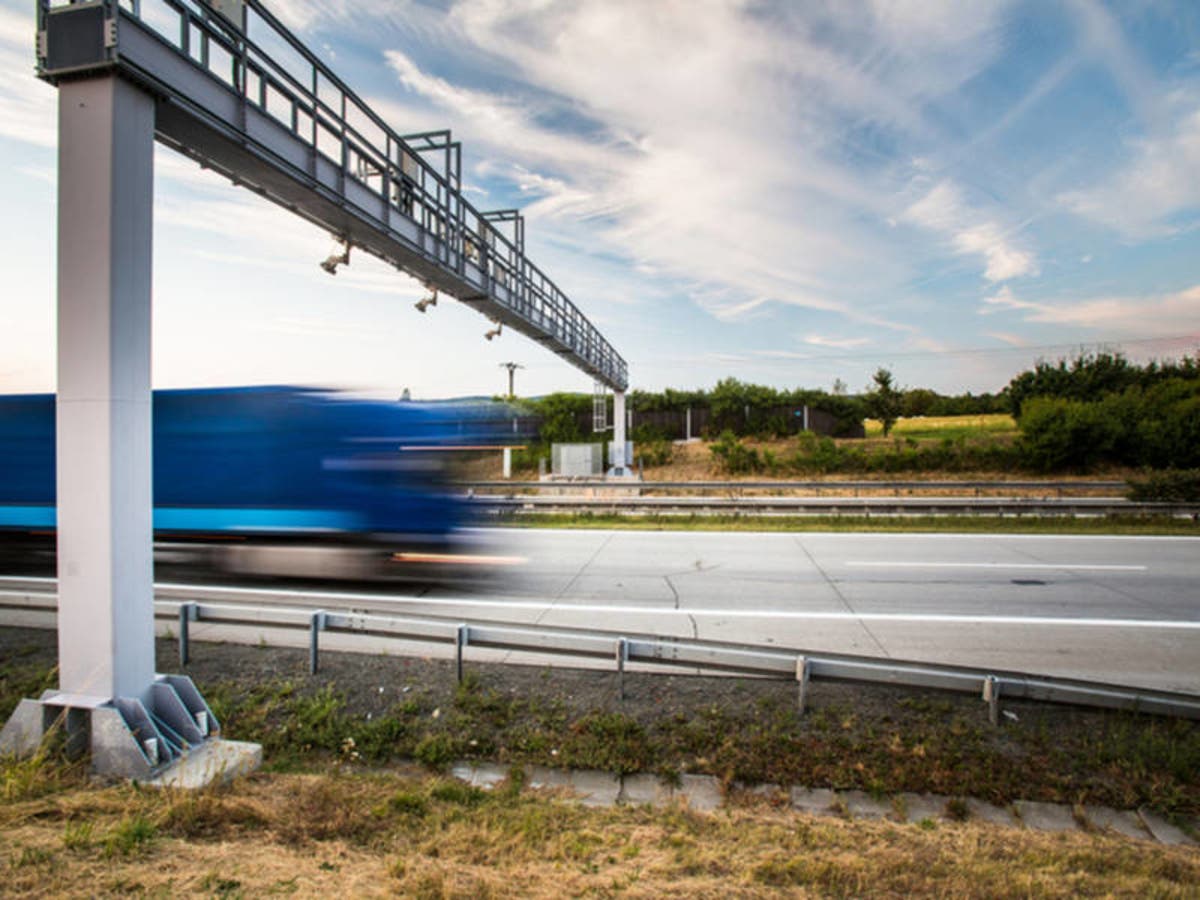
HARTFORD, CT — Gov. Ned Lamont in an op-ed first published in Hearst Connecticut Media newspapers Saturday made the case for why the state needs to institute electronic tolling on all vehicles. He did say he wants discounts for "frequent driver(s)" of Connecticut's highways.
He said his initial proposal to implement tolls on tractor-trailers would not generate nearly enough money to adequately raise the revenue needed to maintain and improve the state's aging transportation infrastructure.
He said for Connecticut to grow and prosper we must upgrade our roads, bridges and rail service.
Find out what's happening in Across Connecticutfor free with the latest updates from Patch.
"These transportation upgrades are the building blocks of our economic future and we must formulate a real, sustainable plan to start now," Lamont said in the op-ed, which you can read in its entirety below.
He said if the state approves electronic tolling on all vehicles he'd pursue a possible reduction in the gas tax and or "discount for Connecticut EZ-Pass users and/or offered a “frequent driver” discount for those who are required to travel our major roadways on a frequent basis."
Find out what's happening in Across Connecticutfor free with the latest updates from Patch.
"We have been subsidizing our neighboring states’ road repairs by paying their tolls, and it’s estimated that out-of-state drivers would provide nearly 50 percent of our tolling revenue, as well," Lamont said.
Tolls could produce more than $1 billion a year in revenue for the state by 2023. Of that, a little more than 40 percent would come from out-of-state motorists. About 71 percent of revenue would come from passenger vehicles with the rest coming from trucks and buses. One potential outline would have Connecticut E-Z Pass holders pay 4.4 cents off-peak and 5.5 cents on-peak per mile.
In a prior November study by a policy group it suggests toll gantries be placed an average of 6.6 miles with only one gantry per town on any given highway. Higher trafficked highways should have more gantries while more rural ones should have less. I-95, I-84, Route 15, I-91, I-395, Route 8, Route 9, I-691 and I-291 were considered as tolled rolls in the analysis. There would be 82 tolling gantry locations across the state.
Here is the entire op-ed as written by Gov. Lamont and released to all media on Saturday:
By Gov. Ned Lamont
February 16, 2019
I recently announced a reinvigorated economic development team, whose mission it is to promote and champion Connecticut to businesses who wish to locate or grow here. On paper, we have it all — access to world-class talent; equidistant between Boston and New York without the exceptionally high cost of living; vibrant cultural and educational institutions. But our reputation in one area in particular precedes us, and not in a good way. Our economic development team must be prepared to answer the question that everyone who knows anything about Connecticut will ask: “What about the congestion on your highways?”
Beyond an inconvenience, the crushing congestion we experience on I-95, I-91, I-84 and the Merritt Parkway, in particular, is a real challenge we must address and overcome if we are to maximize our economic development potential. Our proximity in mileage to New York City means nothing if it takes 90 minutes to get there from Stamford on the road, and over an hour by train. We need to not only maintain our aging transportation infrastructure, but it’s high time that we upgrade it, too.
The gasoline tax simply does not provide the reliable revenue we need, period. Gasoline tax revenues have been flat for 10 years and are expected to begin declining as cars become more efficient, and as the sales of electric vehicles increase. As such, I do not support raising the gas tax, as it is already high compared to our peers. Some people have espoused “priority bonding,” where we further cut back on economic development and other bonding in favor of transportation. As I recently announced, Connecticut is in dire need of a “debt diet” and as such, I cannot support this type of borrowing to pay for ongoing and continuous repairs and upgrades — it is not sustainable or wise. The Legislature previously established a bond cap and I know they appreciate how important keeping to our debt discipline is.
I understand how controversial electronic tolling is. As I learned about the issue, I indicated my support for tolling only tractor trailer trucks, as they do in Rhode Island. This would provide at least some revenue to maintain our system, though not enough to upgrade it. While we are awaiting a ruling from the courts regarding truck-only tolling, our attorneys are pretty certain that if permitted, the tolling could only be done on specific bridges and the generated revenue would be reserved for those bridges, not for congestion pricing. Assuming our attorneys are correct, the truck-only option provides too little revenue, too slowly and too piecemeal to make a meaningful difference.
I know there are proposals in the Legislature that include tolling for cars and trucks. I would only consider this option if we maximized the discount for Connecticut EZ-Pass users and/or offered a “frequent driver” discount for those who are required to travel our major roadways on a frequent basis. We have been subsidizing our neighboring states’ road repairs by paying their tolls, and it’s estimated that out-of-state drivers would provide nearly 50 percent of our tolling revenue, as well. As needed, we could also consider an increase in the earned income tax credit or reduction in gas tax to mitigate the costs of tolling on the everyday user.
We have modeled out both options in the budget I will submit to the Legislature on Wednesday. As my co-equal branch of government, I am open to a real discussion with them, as well as Connecticut’s residents, about the state of our transportation system and what will be needed going forward — not only to make repairs, but to truly put Connecticut in a position of strength when it comes to infrastructure upgrades and bold economic visioning. However, there is no doubt in my mind that our transportation fund will require additional strategic and recurring revenues in the very near future. In my opinion, there is no way around that hard fact.
Forward-thinking economic development demands that, among other transportation needs, we speed up our rail service from Hartford to New Haven, New Haven to Stamford and Stamford to New York City, with more frequent service to Waterbury and New London. These transportation upgrades are the building blocks of our economic future and we must formulate a real, sustainable plan to start now.
Get more local news delivered straight to your inbox. Sign up for free Patch newsletters and alerts.