Politics & Government
3 New Tax Cuts Begin Soon In CT: Here's Everything You Need To Know
The three measures are designed to reduce taxes for Connecticut taxpayers by approximately $460.3 million, Gov. Lamont said.


HARTFORD, CT — Gov. Ned Lamont detailed what he termed "three significant tax relief measures" will take effect in Connecticut at the start of 2024. Among them, he said, are the "largest income tax reductions ever enacted in state history," that increase a tax credit targeting the lowest-income workers and an expansion of exemptions on certain pension and annuity earnings to benefit seniors.
They are the result of the fiscal year 2024-2025 state budget that the Connecticut General Assembly approved and Governor Lamont signed into law this summer also known as Public Act 23-204.
The three measures are designed to reduce taxes for Connecticut taxpayers by approximately $460.3 million, Lamont said. He said that, "due to the fiscal guardrails and smart management of the state budget," analysts anticipate that revenue growth will exceed growth in fixed costs for the next several years.
Find out what's happening in Across Connecticutfor free with the latest updates from Patch.
For example, Lamont said, is that General Fund revenue is expected to increase by $393.4 million from fiscal year 2025 to 2026 and fixed costs by $254.6 million for the same period.
"We enacted these tax relief measures to provide broad-based tax relief to those who need it, specifically middle-income workers, low-income workers, and seniors," Lamont said. "These tax cuts are possible due to the fiscal discipline that we've implemented over the last five years, which has stabilized the state’s fiscal house and ended a trend of too many years of deficits and uncertainty."
Find out what's happening in Across Connecticutfor free with the latest updates from Patch.
Jan. 1 will mark the first time tax rates have been reduced in the state since the mid-1990s. Lamont has been touting the plan as "the largest income tax cut enacted in state history." Connecticut's rate structure is "progressive," he said, meaning that the tax rate increases with income at varying rates as income grows in each bracket.
The changes enacted in 2024 will affect the two lowest rates:
- The 3 percent rate on the first $10,000 earned by single filers and the first $20,000 by joint filers will drop to 2 percent.
- The 5 percent rate on the next $40,000 earned by single filers and the next $80,000 by joint filers will drop to 4.5 percent.
The relief is targeted toward "middle-class tax filers" and is capped at $150,000 for single filers and $300,000 for joint filers, Lamont said. The reduction is estimated to benefit more than a million tax filers, the governor said.
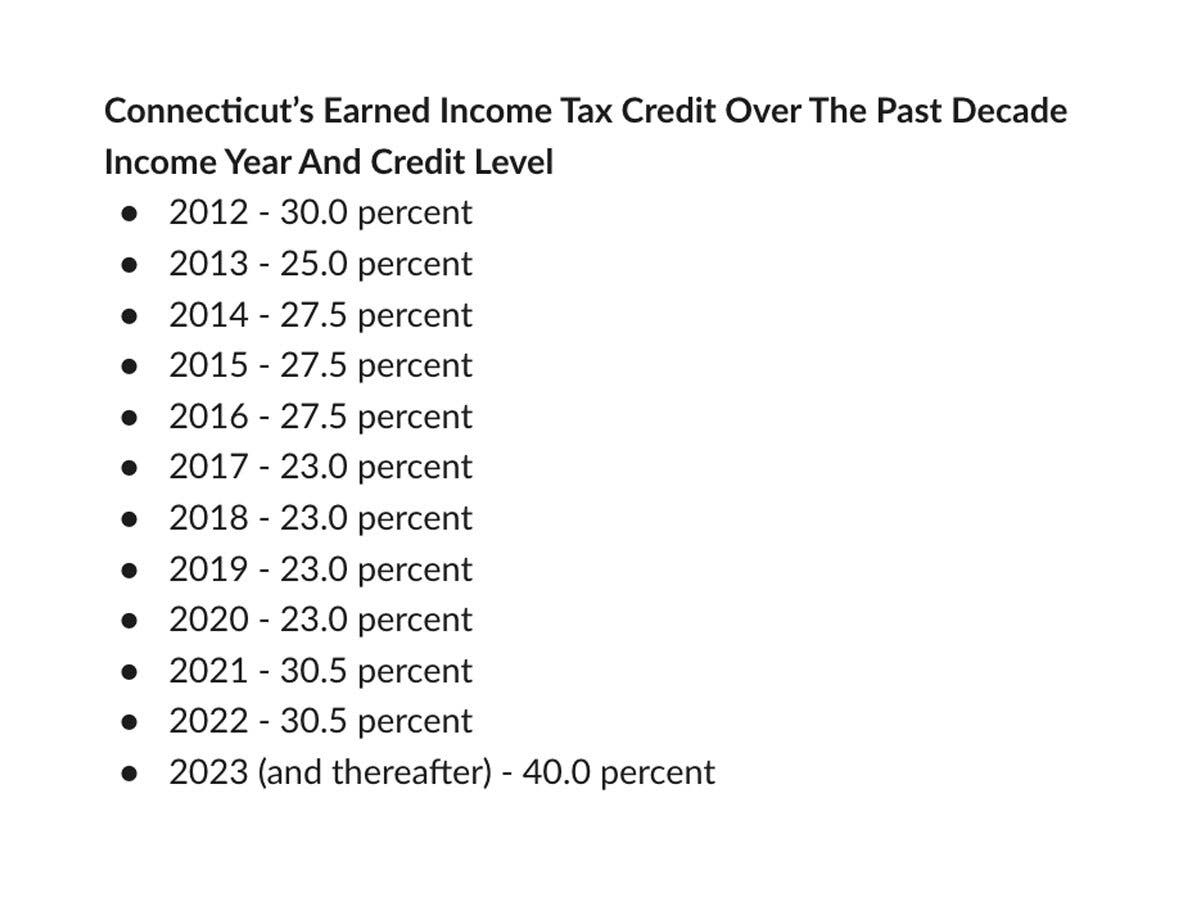
The state's new Earned Income Tax Credit change, which took effect retroactively for 2023 and will become available when recipients file their personal income tax returns in early 2024, places the state among the top five in the nation with the largest rates on the popular tax credit program, Lamont said. Under the change, the Connecticut EITC is increasing from 30.5 percent to 40 percent of the federal EITC. It will provide an additional $44.6 million in state tax credits to the approximately 211,000 low-income filers who receive the credit, Lamont said.
The Connecticut EITC is a refundable state income tax credit for the lowest-income working individuals and families that mirrors the federal EITC. Typically, more than 95 percent of filers who receive this credit are families with children, according to the governor's office.
____
____
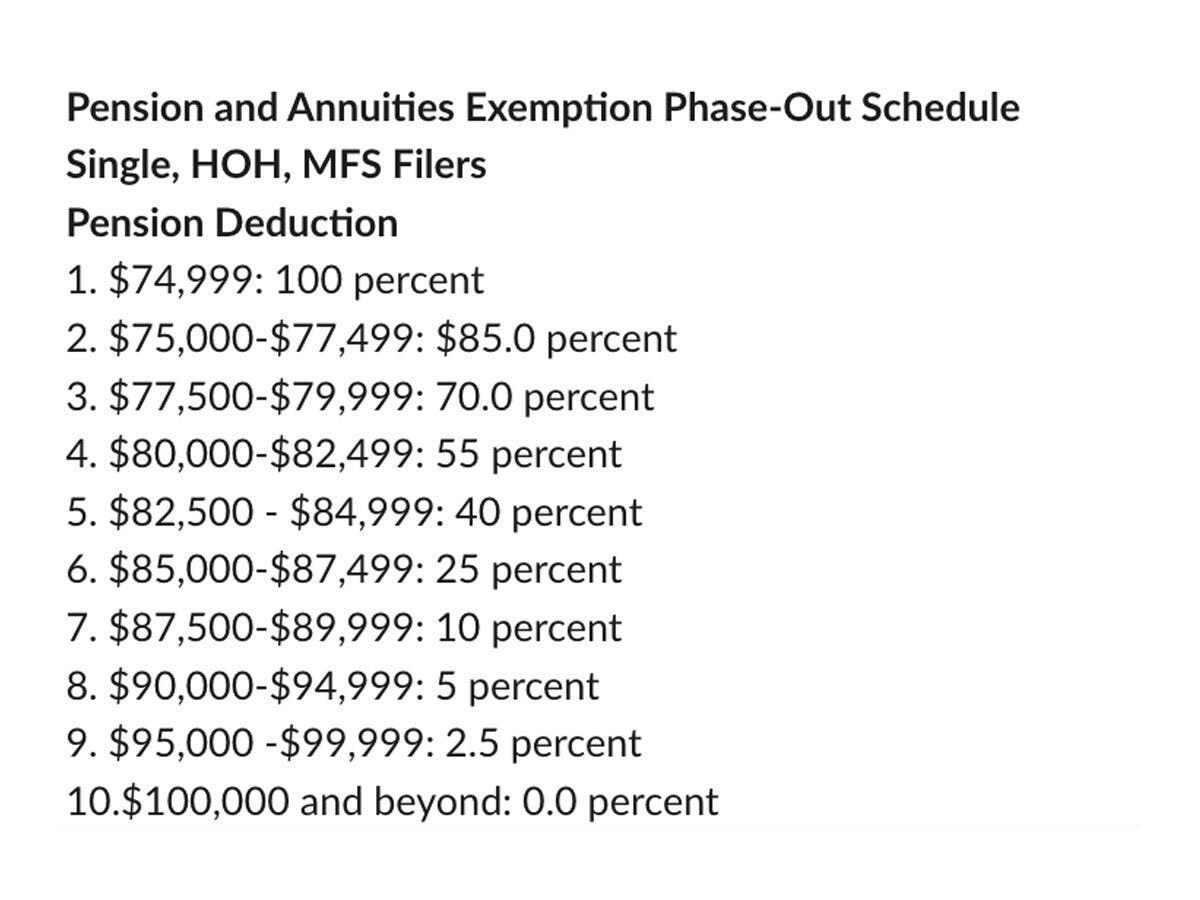
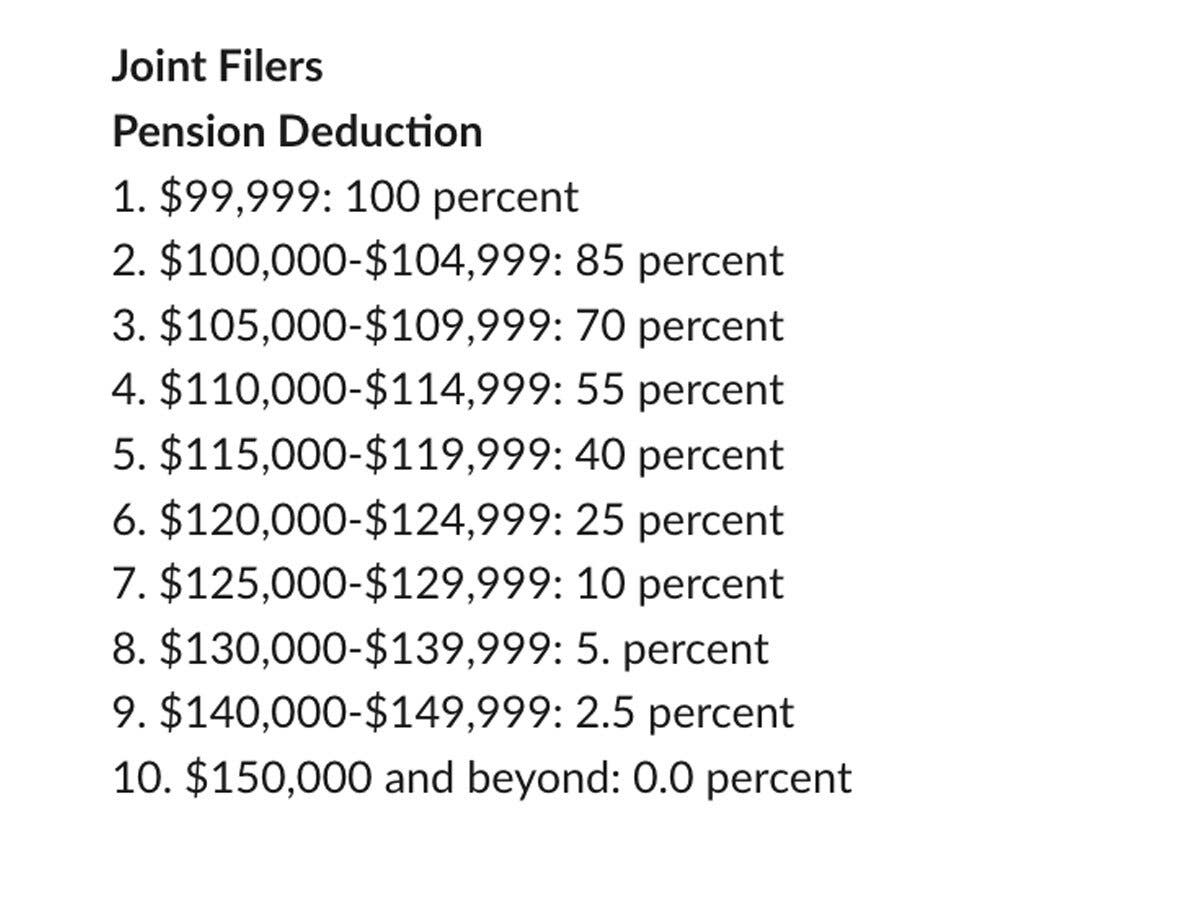
Also effective in 2024 is an expansion of the state’s existing deductions for certain IRA distributions and pension and annuity earnings to benefit seniors. Specifically, the state budget eliminates the retirement income tax cliff by adding a phase-out for allowable pension and annuity and IRA distribution deductions against the personal income tax, according to the plan.
Approximately 200,000 filers benefit from the currently enacted retiree exemption limits. It is estimated that with the changes, an additional 100,000 filers could benefit from the elimination of the retirement cliff via the exemption phase-out.
____
Get more local news delivered straight to your inbox. Sign up for free Patch newsletters and alerts.