Business & Tech
New Law Will Advance Careers for Dental Assistants; Benefit Patients
Collaboration Between CT Dental Association, UConn on Assessment Exam Will Create New Job Opportunities

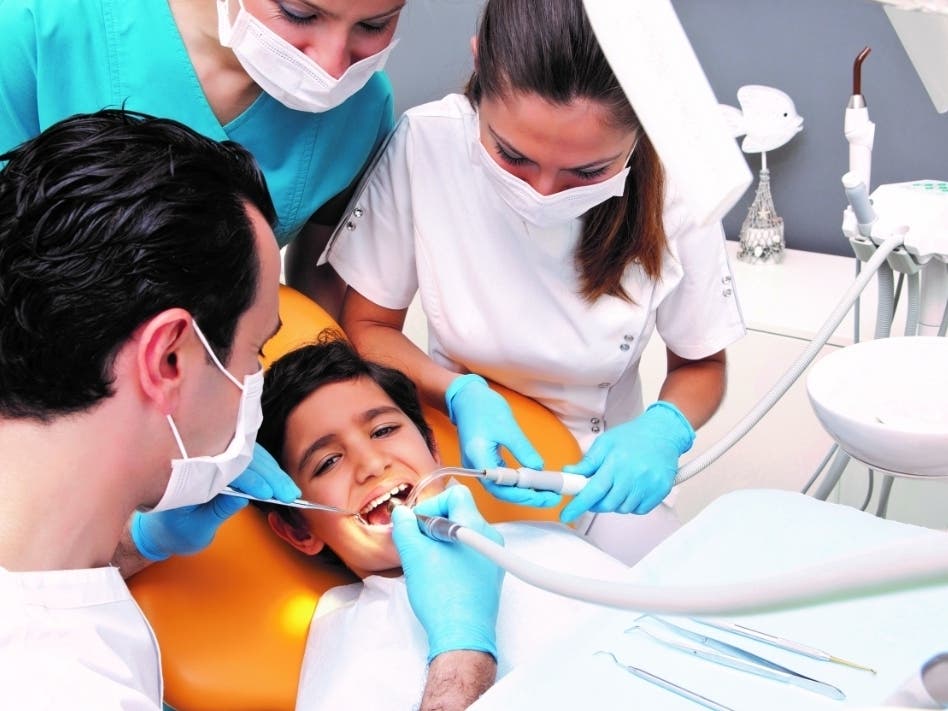
After years of advocacy, the Connecticut State Dental Association is excited to see final approval of a plan to improve the career pathway in Connecticut for Dental Assistants, providing career enhancing opportunities and improving efficiency in dental offices that will lead to improved patient care.
A new law, Public Act 23-97, will build on an existing three-year partnership between the University of Connecticut School of Dental Medicine (UConn-SODM) and the Connecticut State Dental Association by allowing UConn to develop an assessment examination for individuals seeking to advance in their careers.
The legislation, “An Act Concerning Health and Wellness for Connecticut Residents,” was approved unanimously by both Chambers of the General Assembly; 148-0 by the House of Representatives on June 2 and 36-0 by the State Senate on June 5. It was signed into law by Gov. Lamont a week later, on June 12.
Find out what's happening in Across Connecticutfor free with the latest updates from Patch.
Sections 40 and 41 of Senate Bill 9, “provides an alternate way for dental assistants to qualify to take dental x-rays, by passing a competency assessment rather than a national exam, and requires UConn’s School of Dental Medicine to develop the assessment by January 1, 2025,” according to the summary of the bill provided by the Office of Legislative Research.
“Building upon the successful partnership between the CSDA and UConn-SODM, we are poised to launch the next chapter of DA assessments in Connecticut. The UConn School of Dental Medicine has drafted the Radiographic Health and Safety Competency Assessment (RHSCA), and it is ready to go into effect now that Governor Lamont has signed it into law,” said Kathlene Gerrity, Executive Director of the CSDA.
Find out what's happening in Across Connecticutfor free with the latest updates from Patch.
“Removing barriers by establishing a Connecticut-developed competency assessment that parallels the national exam and provides an affordable, all-inclusive, self-paced option helps make the exam – and the career of Dental Assistant – more accessible to all, regardless of demographics or life circumstances. We are pleased to be able to partner with the CSDA in this effort,” said Steven Lepowsky, Dean of the UConn School of Dental Medicine.
Establishment of this assessment in Connecticut will allow those Dental Assistants who are already on the job to increase their skill set and perform more functions in the dental practice, moving them forward in their career, improving patient care, and enabling dental teams to improve functionality. Many dental practices are small businesses, so this level of professional development builds a stronger team, encourages employers to invest in their staff, and gives the employees more job satisfaction and higher pay grades, CSDA officials point out.
The provision of the legislation related to dental assistants’ eligibility to take dental x-rays after passing the assessment will take effect on October 1, 2023. The CSDA and the UConn-SODM are now proceeding with plans for the assessment examination, to allow individuals to sign up for the assessment so as to be ready to assume greater responsibility in dental offices, in accordance with the legislation’s provisions, this Fall.
Passage of the assessment examination, the Radiographic Health and Safety Assessment (RHSCA), will permit Dental Assistants to take x-rays. It mirrors an existing initiative in Connecticut that has proven to be successful, providing Connecticut residents a less costly alternative to assessments administered by the Dental Assisting National Board, without any lessening of the requirements.
Three years ago, the state legislature permitted development of a state assessment for another component of advancement for Dental Assistants, allowing the UConn-SODM and CSDA to develop an assessment exam for Infection Control (ICCA). The new law will do the same for the radiation health and safety assessment.
As the Office of Legislative Research points out, “Existing law allows dentists to delegate certain procedures to dental assistants if they are performed under the dentist’s direct supervision. Under current law, these include dental x-rays, but only if the assistant has passed the Dental Assisting National Board’s dental radiation health and safety exam (DANB).
The new law allows dentists to also delegate these procedures to dental assistants who have passed a radiation health and safety competency assessment. That assessment must be administered by an in-state dental education program accredited by the American Dental Association’s Commission on Dental Accreditation.” The law requires UConn’s School of Dental Medicine to develop this competency assessment, reflecting current industry practices on dental x-rays, by January 1, 2025.
Dental assistants perform several essential functions in both private practice and public health settings. A dental assistant’s training revolves around preparation to better assist the dentist in routine oral healthcare treatments and preventative and restorative care. These tasks include both clinical and administrative tasks, ranging from properly setting the room for various procedures and preparing a patient for their procedures, to coding and checking insurance forms.
Vacant positions in dental assisting and dental hygiene have reduced dental practice capacity by an estimated 10% nationally. One in three dentists who do not have full appointment schedules indicate that trouble filling staffing positions is a contributing factor. Workforce shortages are attributed in part to the COVID-19 pandemic. It is expected that the new law will bring more Dental Assistants into the profession, and help to retain others.
CSDA officials note that a 2022 survey of dental assistants revealed 53% of dental assistants currently view their jobs as a career because they feel their work is significant and meaningful, and 98% of dental assistants plan on continuing this career. The new law will make doing so more within reach.
For those who pass the assessments and advance in their careers, there’s more good news: as dental assistants elevate to higher competency levels, they receive higher pay; the average annual salary for dental assistants has risen in the last five years, according to data from the U.S. Bureau of Labor Statistics and the U.S. Inflation Calculator, to $42,510 from $37,690 in 2017.
The Connecticut ICCA exam was crafted, written, and vetted by the UConn-SODM; the CSDA administers the assessment in concert with UConn. UConn faculty assess the finished exams not just for pass/fail rates but to evaluate if any questions or sections of the exam should be revised . This successful partnership has enabled many dental assistants to pass this assessment and begin their career journey.
“CSDA member dentists rely heavily on their dental teams to provide integrated quality, effective and efficient care of patients; when all team members are fully utilized, dentists are able to see more patients and provide more care,” Dr. Michael Safian, CSDA Board President said. “This law is the next step forward, for patients, prospective and current Dental Assistants, dental practices and oral healthcare in Connecticut. We appreciate the efforts of Rep. Michelle Cook (Torrington) and her colleagues who worked diligently to navigate the legislative process to ensure this initiative gained approval.”
The CSDA has a statewide membership of approximately 2,300 members, representing nearly 90% of all licensed dentists in Connecticut.