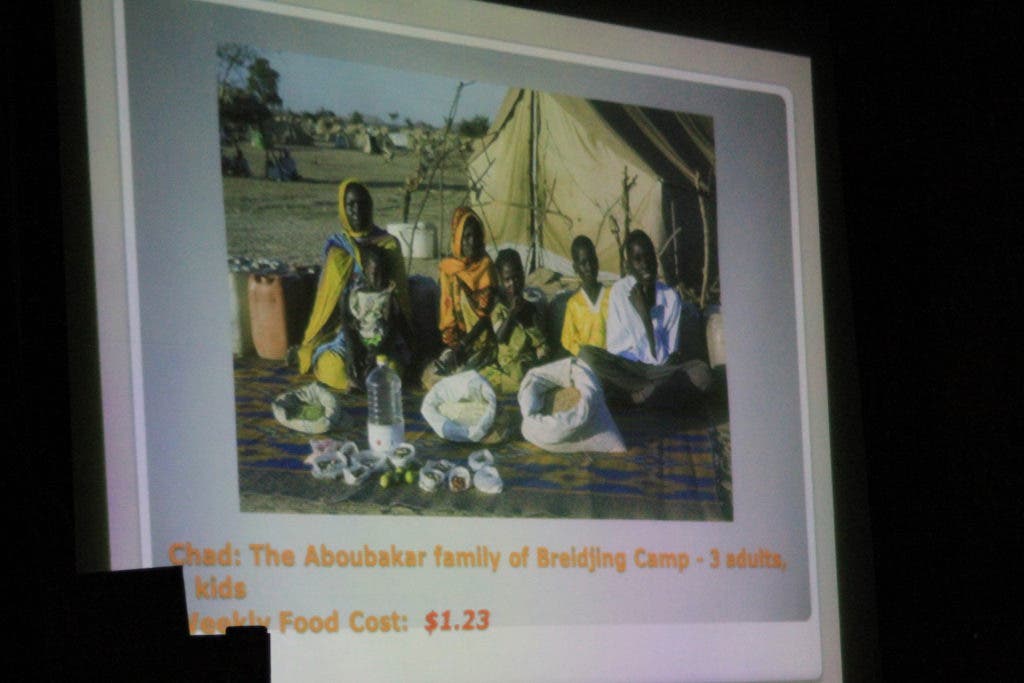


Johnson teacher Mary Liquori explained that the goal of the capstone project for 5th grade is to engage students in a cross-curricular examination of a prominent social justice issue – World Hunger. Principal Dr. Kathy Gombos and Library Media Specialist Christine Haddad initially designed the capstone; fifth grade teachers then became involved in the planning and logistics.
In Social Studies classes, students used resources from the Feeding Minds, Fighting Hunger website from the United Nations Food and Agriculture Organization (FAO). Feeding Minds, Fighting Hunger is a global education initiative designed to prepare and encourage young people, and their leaders and teachers, to become actively involved in helping create a world free from hunger and malnutrition.
Students then examined the following questions: What are hunger and malnutrition?; Who are the hungry?; Why are people hungry and malnourished? and what can we do to help end Hunger?
Find out what's happening in Bethelfor free with the latest updates from Patch.
"We learned that there are almost 900 million people in the world who are hungry – that is the same as the population of Canada, the United States and Mexico, combined," Liquori said. "We also learned that there really is enough food in the world to feed everyone – and we learned about the problems in our food delivery system that are some of the causes of world hunger."
Then, students into eight groups to study eight different countries: Brazil, Canada, India, Indonesia, Italy, Jordan, Sierra Leone and Uganda. Students researched their country on the Internet to learn more about their country. Each teacher became an “expert” on the hunger problem in one of the countries.
Find out what's happening in Bethelfor free with the latest updates from Patch.
Students are going to be using their research and class discussion to write a feature article in their Language Arts class. In technology, students accessed the www.breadartproject.org website to create a digital piece of toast that reflects their personality and creativity. That activity will provide a $1 donation per student to Share Our Strength.
Finally , students were visited by Epicenter Solutions. Here's what they learned from the experience:
- The average income in Malawi is $165 a year and 86 percent of people live in rural areas where just a simple act of getting water can be a 20 mile round trip journey.
- Bore holes bring water to villages that are in desperate need. The water quality is comparable to what we wash our cars and dishes with in the USA.
- 12 million people living at or below the poverty line in these areas.
- There are about 100 doctors for a country of 13 million. Many of these doctors are only located in cities.
Epicenter Solutions provides Steri-Pens, portable battery and solar powered UV ozone backpacks and bigger sterilization units to purify water. They train locals to use these tools for safe drinking water for a whole village.
The goal of Epicenter is to break the cycle of poverty and provide hope for the future in Malawi and Mozambique through education, donation and leadership.