Health & Fitness
Kepler-22b, Huge?
Another planet orbiting in a solar "sweet spot"? What does it mean?
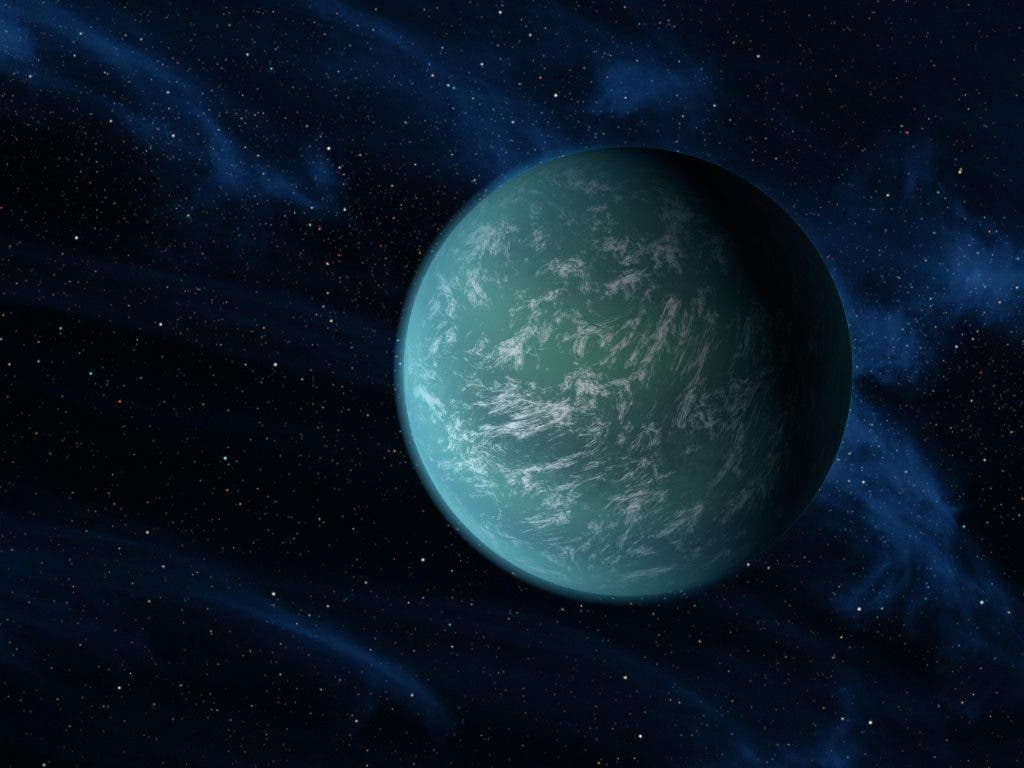
NASA has announced the discovery of a planet, 600 light years away, orbiting its sun in the “habitable zone”, where the temperatures aren’t too cold or too hot.
Some in the press have jumped to talking about possible life, even intelligent life, potentially dwelling on this distant world. Possible? Yes. Likely? Not hardly.
Microbial life is one thing, but complex things like puppies are quite another.
Find out what's happening in Branfordfor free with the latest updates from Patch.
How do we know? Well, the Universe doesn't have zoning laws, and just in our Solar System, Mars and Venus also orbit in the “Goldilocks” region. Yet neither shows any evidence of the tiniest fragment of life. Just a scintilla or sliver of a slimy insect would be a gargantuan discovery, but it’s just not there. And this is on planets that are right next door to our teeming abode.
NASA doesn’t know whether or not Kepler-22b (so-named) has water. That’s huge. Does it have a stable axis? Huge. Is it relatively free from large impacts so that life has time to evolve? Huge. Is there a surface made of rock or is this just a gas ball? Huge. Does the planet have an atmosphere? Huge. If it does have an atmosphere, what kind is it? Huge. Does it have a belt protecting it from searing solar radiation? Again, having the right answer is huge.
Find out what's happening in Branfordfor free with the latest updates from Patch.
From what we know, for the purposes of complex life, having all the right answers is very important. One or two just won’t do. You see, if life were that easy, we wouldn’t have to go as far away as Kepler-22b, we’d have found even a little bit of it on Venus or Mars.
One thing we can know. As we unpack the secrets of this distant orb, we will come away with even more evidence of just how special our own terra firma is.
Whether we see that, and fully realize it, well, that’s another question. It too, is huge.