Politics & Government
Kennedy Leads Passage of Important Environmental Bill
New law will require toxic chemical facilities to update their emergency action plans.


From CT Senate Democrats: Environment Committee Co-Chair, Senator Ted Kennedy, Jr. (D-Branford), led successful committee passage of S.B. 343, An Act Concerning the Effects of Climate Change on the Safety Plans of Certain Chemical Facilities, a bill to address the potential impact of severe weather events and sea level rise on the state’s toxic chemical facilities most at risk for climate change. S.B. 343 passed out of the Committee, with an overwhelmingly bipartisan vote of 29-1, and now heads to the senate floor.
According to a recent report, there are over 2,500 toxic chemical sites across the nation that are located in flood-prone areas, with over 1,400 of those that Federal Emergency Management Agency (FEMA) considers “at highest risk of flooding.” Based on permit information recently obtained by the Environment Committee from Connecticut’s Department of Energy and Environmental Protection (DEEP), approximately 40 of these hazardous waste and toxic chemical facilities are located in Connecticut – facilities located in sensitive coastal zone areas along Long Island Sound and adjacent to our state’s most flood-prone riverbanks.
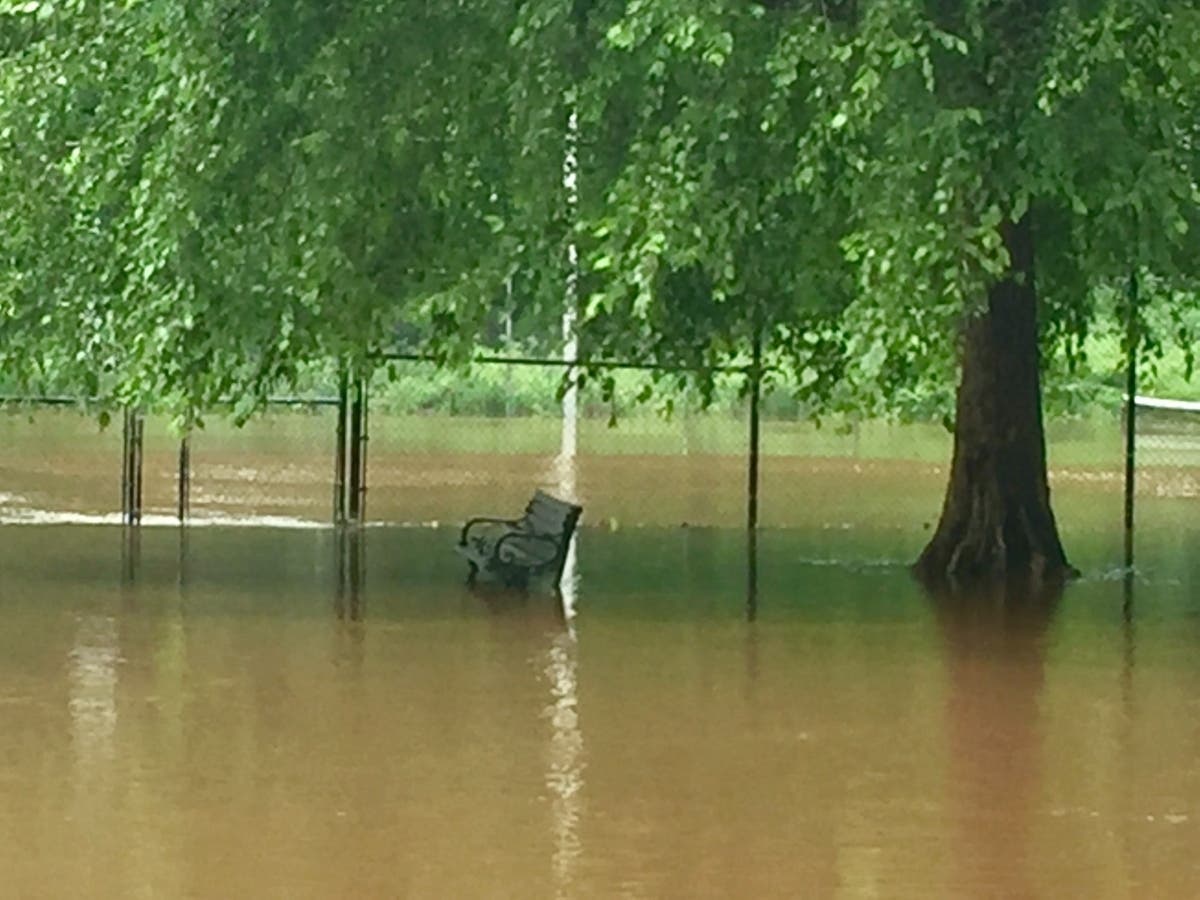
Historically, in what seemed like prudent planning, these chemical plants and sites of heavy industry were located near coasts, ports and waterways to take advantage of the ease of shipping and access to water for cooling. Now these facilities have become potential public health and environmental hazards due to new predictions for sea level rise, hurricanes and other severe weather events.
Find out what's happening in Branfordfor free with the latest updates from Patch.
“Many of our state’s chemical and toxic waste facilities were built many decades ago when dangerous storms were not as prevalent and when safety risks were not as great,” said Senator Kennedy. “That’s why I’ve introduced S.B. 343 – a bill that will require these toxic chemical facilities to update their emergency action plans based on new climate change data and flooding risks. Severe storms are becoming more common, powerful, destructive and expensive to deal with. We need to learn from the mistakes of other coastal states that experienced the escape of hundreds of tons of toxic chemicals during recent storms. It’s time to accelerate our safety planning efforts to better protect ourselves.”
S.B. 343 requires our state’s most vulnerable hazardous waste and toxic chemical facilities to update their safety and emergency action plans using the latest climate change data developed by The Connecticut Institute for Resilience and Climate Adaptation (CIRCA). Using the most up-to-date, peer-reviewed scientific data on sea level rise, CIRCA recently predicted that the waters of Long Island Sound could rise as much as 20 inches by the year 2050, dramatically increasing coastal flooding risks. These facilities are already required to prepare an environmental safety plan, but they are not required to use CIRCA’s new flood guidelines in their emergency planning scenarios and documents.
Find out what's happening in Branfordfor free with the latest updates from Patch.
Many of these facilities are also located in distressed municipalities, and present a disproportionate risk to residents living adjacent to these plants.
S.B. 343 is supported by many of Connecticut’s leading environmental advocacy organizations, including The Connecticut Fund for the Environment, Citizens Campaign for the Environment and the Nature Conservancy, and received public testimony from nearly 150 local activists, one of the largest responses to any environmental bill before the Committee this session.
“Coastal communities are especially at risk from the impacts of climate change, including coastal flooding, sea level rise, and increased extreme weather events. These events do not discriminate between industrial and residential sites, and they can lead to catastrophic emergencies when rising storm waters breach chemical plants, power plants and other sensitive facilities,” said Claire Coleman, a Climate and Energy Attorney with the Connecticut Fund for the Environment.
S.B. 343 is also supported by the Connecticut Conference of Municipalities (CCM), the largest statewide association of cities and towns, who testified that “S.B. 343 will enhance public safety efforts within municipalities that are at risk of flooding and severe weather events. This proposal is a necessary step to better protect and prepare municipalities and their residents against severe weather conditions.”
Image via Shutterstock