Crime & Safety
With Mental Health Crisis Calls Daily, Police Hire Social Worker
In just weeks, Branford's police social worker has already had a positive impact for officers, other first responders and people in crisis.


BRANFORD, CT — She's not a sworn Branford police officer, but her badge number is 701.
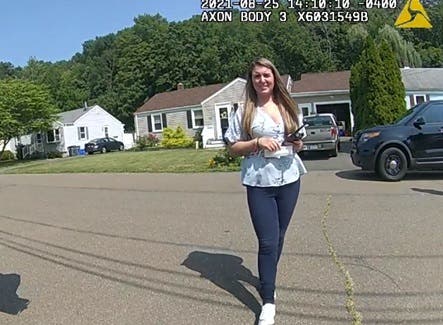
The first-ever Branford police social worker, and one perhaps to become a model for other police departments in the state, Danielle Suraci has been on the job a month and has already made an impact.
A licensed clinical social worker, Suraci had responded to 15 calls in the field and conducted follow-ups for off-shift calls and for walk-ins to the police department — all just three weeks in her new post as of mid-September.
Find out what's happening in Branfordfor free with the latest updates from Patch.
“She’s been very busy,” Branford Police Department Deputy Chief John Alves told Patch.
Charting uncharted waters
It's not known if Branford is the only police department in the state to have hired a full-time social worker. But a cursory search by Patch found two similar examples, though not full-time staff: One department has an "embedded" social worker who does ride-alongs with officers; and another had a pilot internship program connecting social work students with police.
Find out what's happening in Branfordfor free with the latest updates from Patch.
Suraci is an employee of Branford Counseling and Community Services, which is the town's behavioral health and social services agency, and the Branford Police Department. She works directly with police and other Branford first responders in a new role for law enforcement, a role that’s been discussed and studied by departments across Connecticut as required by the police accountability law.
In the Branford Police Department, that study led to action.
“We took this requirement seriously, conducted our study and found out what we already knew — that we respond to a high number of calls involving people in a mental health crisis,” Alves said.
Although 70 percent of Branford officers have crisis intervention training, making clinical assessments is another matter.
It’s a snapshot, but without having a mental health professional, police and other town first responders were called to some 479 mental health/social service-related calls for service from July 2020 to June 2021, though Alves said statistics are “very deceiving.”
“I don’t believe they paint the full picture on mental health related police contacts,” he said. Among the many calls, he said, police encounter people who are often suffering from issues that include suicidal ideations — meaning having thoughts of killing oneself — paranoia, schizophrenia, depression and anxiety, and those who “often utilize drugs and alcohol as a coping mechanism.”
“Our analysis showed us that we respond to people dealing with a mental health crisis on a daily basis,” Alves said.
The data also showed that police are very often called to deal with “non-criminal social issues” such as habitual intoxication, drug overdoses, homelessness or older people with needs, he said.
“We recognized that you can’t just rely on the data, because it doesn’t account for the all the arrests, disputes, disturbances, thefts or the reports of victimization that occur as a result of mental health issues,” Alves said.
“We agreed we need to do something better to help improve lives, provide better service and hopefully reduce reoccurring calls for service in these areas,” he said.
And so, many months of work followed, including the creation of the police department’s new Police Social Worker policy and the PSW job description created by a team including Alves, Branford counseling center director Peter Cimino, and Branford HR director Margaret Luberda, with support she said from the town’s First Selectman, police and fire chiefs, Police Commission and the Representative Town Meeting.
Eventually, the town was ready to hire.
The position was widely advertised; but ultimately, after outreach and far-reaching advertising for the post, the right person for the job was found in the town’s own back yard.
“In the end, word of mouth produced the best candidate for the position,” Luberda said, and Suraci — already a well-known Branford-based clinical social worker — was hired.
“Every day seems to be different.”
One of the reasons why Alves and the department agreed that a police social worker is needed is that police often respond to calls that are difficult to navigate, including ones that “involve someone who can be categorized as ‘gravely disabled,’ people who may show small signs and cues to a loved one or to the investigating officer that something is just not right,” he said.
“We now have a mental health professional to make these assessments and determine a proper course of action moving forward,” he said. “ Her professional assessments will cut down on unneeded involuntary commitments by police, but also identify when an involuntary commitment is needed but unable to be articulated by the officer; this has already occurred and very important to recognize.”
Suraci told Patch she was called to the field on her first day and that her role is a learn-as-you-go process.
So far, she said, “Every day seems to be different.”
Not a sworn officer and not involved in law enforcement action on calls, she supplements officers who are not trained mental health or social workers. She does not wear a uniform, but she drives a town vehicle, uses a police radio and has an office in the police department.
She reports to the police patrol captain, does ride-alongs with officers, monitors emergency calls and responds when needed. Calls include people who are suffering from suicidal ideation, are in psychiatric crisis, exhibit strange or bizarre behavior, have known mental illness and may be disconnected from services, are victims of family violence, runaways, homeless, families and victims of traumatic events, older people with “matters with unknown needs for service,” or are under the influence and cooperative with police but need help.
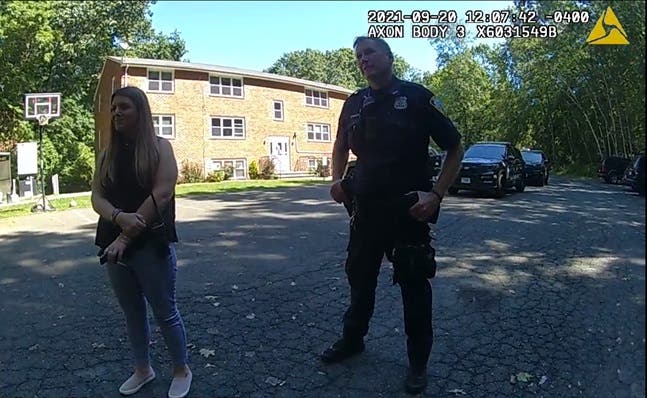
She also helps victims experiencing domestic and relationship violence; families that are at risk and in crisis; and adolescents and children in danger of harm. She assesses people who are in a psychiatric or mental health crisis, performs an on-site psychiatric evaluation to find a safe resolution, provides referrals and follow-up to other community resources, and is called upon to provides crisis intervention services to the community when needed.
And more.
She writes reports on all interactions in the field and keeps copious records; is the police department's liaison to myriad community agencies; is a member of the Juvenile Review Board and creates action plans to prevent and treat juvenile mental health issues; helps victims get protective/restraining orders; and overall leads in-house crisis intervention training for emergency responders.
And she’s been busy.
The second-responder
Known as a “second-responder,” Suraci said she will be “typically on standby or show up after the officers have responded to the call and determined it to be safe to respond.”
Not a police officer, she doesn't carry any kind of weapon, nor does she wear protective gear. But she also does not handle calls in which people under the influence are violently unstable, calls when the person has a weapon or is involved in a violent assault, and cases where a person is trying to take their own life and an “immediate use of force” by police is needed to “stop the act.”
Suraci explained that she attends daily roll call, where she talks with police about potential cases and works with police dispatch and lieutenants and/or sergeants on which calls to handle. In addition to carrying a police radio, she has access to the police records so she can “identify a case that I may be familiar with or feel I should respond to.”
Her job at the scene is to help de-escalate emotional situations, make assessments and perform brief mental status evaluations for suspected emotional disorders, crisis intervention and linkage to services. She does not use force or intervene physically with people; and in situations where physical intervention is required, an officer stays on the scene. In any case, she doesn’t leave until the “situation is stabilized.”
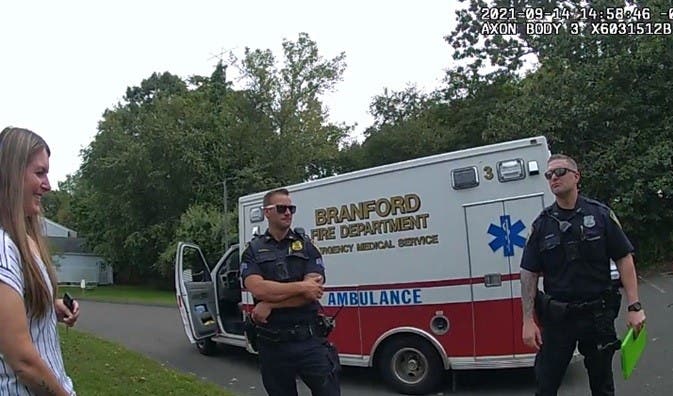
She does not discuss individual cases but said that from Aug. 23 to Sept. 15, she handled various calls from “mental health, substance abuse, suicidal parties, overdoses, medical assistance, elderly, domestic violence, and sometimes disturbances.”
Making a difference already
Alves said that since Suraci began work, “It’s the first time we’ve been able to be proactive in our approach to mental health.”
“Danielle has identified patterns of police contacts with individuals who, based on her experience, were in need of further assessment, and she’s taken an officer with her out into the field to make these contacts,” Alves said.
Suraci said that, to date, she’s been able to determine and/or assist if someone needs to be sent to the hospital; has connected people with resources in the community including treatment, housing, detox or inpatient care; and has been there to “provide support to the family and other people involved.”
In a call to a local motel, she was with an officer to help assess a person’s mental heath state and to be present to help.
Alves said the work Suraci is doing is already having an impact and that he sees the program as having “already proven successful.”
“It’s difficult to measure what you’ve prevented in police work, but we’re already providing better service in this area, and we anticipate a reduction in mental health calls and better outcomes,” he said.
“What’s great about our program is that we now have our own mental health professional working alongside us, housed in our building, available to us within minutes in the field and our officers have 24/7 access to her experience, education and expertise.”
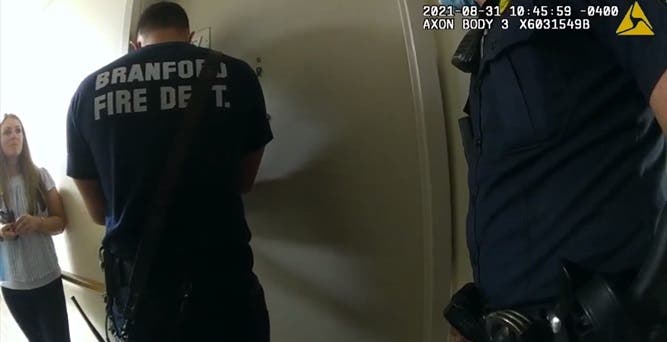
Though already fully immersed and devoted to the work, Suraci said the newly created post is not only an opportunity to help the community and police but is also new and vital terrain.
“We are still learning as we go,” she told Patch.
Get more local news delivered straight to your inbox. Sign up for free Patch newsletters and alerts.