Community Corner
Nip It In The Bud: Sales Of Nips In Branford Top 330K, Town Gets $17K
Spirited debate wasn't needed. Nips are everywhere and need to be cleaned up. The 5-cent surcharge on the millions sold will help do that.


BRANFORD, CT — Jen Reynolds and her dog CC had been running partners for a decade, but since CC turns 14 on Friday, which also happens to be Earth Day, the duo now “slowly stroll” the same one-mile route daily.
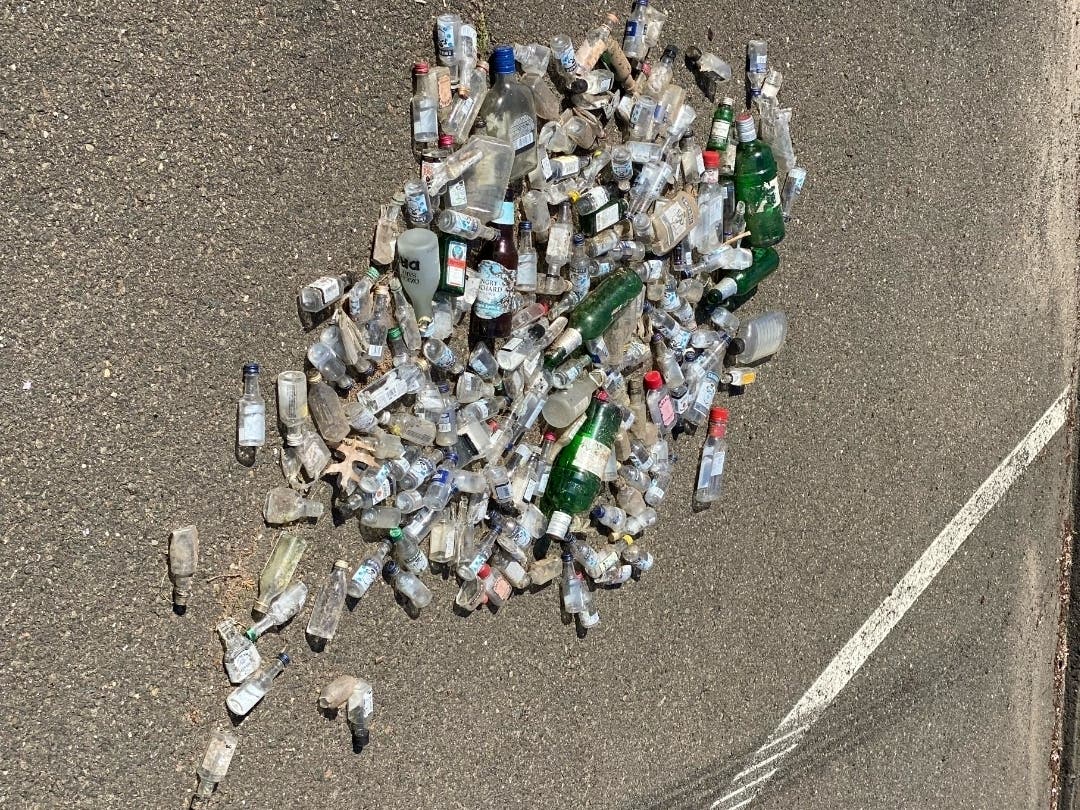
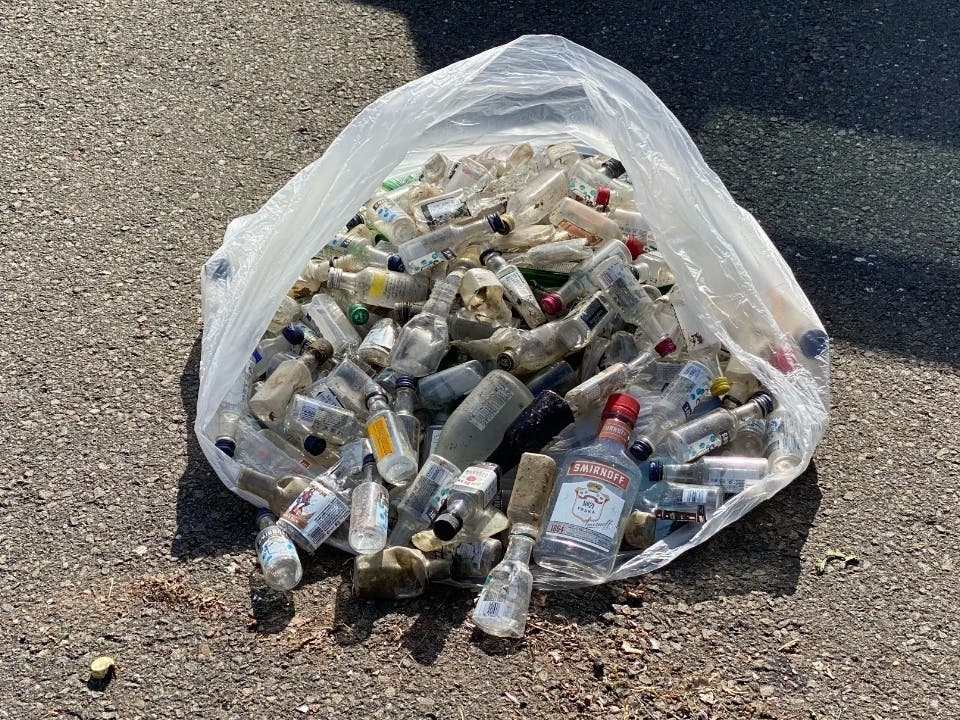
"It's amazing what you see when you slow down," Reynolds said. And lately, she said, she’s seen “more empty ‘nip’ bottles than daffodils” on their route. "It’s disturbing," she said. So last weekend, she took action and brought a trash bag along and collected the miniature plastic liquor bottles on their stroll.
She collected more than 200.
Find out what's happening in Branfordfor free with the latest updates from Patch.
“This concerns me for a couple of reasons,” she told Patch. “Environmentally, the litter is not only unsightly, but once the plastic/glass is chopped up by commercial lawnmowers, it becomes a real danger to small animals.”
Nips are omnipresent. You can find them on the roadside, peppered along trails, at the beach, in parks, on fields and myriad other spots in any town.
Find out what's happening in Branfordfor free with the latest updates from Patch.
There ought to be a law
Last fall, the state passed a law that required a five-cent surcharge on every nip sold.
Championed by state Sen. Christine Cohen, chair of the Senate Environmental Committee, she said the law, and its outcome, represent a "big step forward in reducing litter and ensuring bottles and cans are properly recycled."
"One of the big issues the law addresses are the small, nip containers that are not eligible for return. We see them strewn along the streets, sidewalks, trails and floating in our waterways," she said. "Beginning this month, municipalities will receive a check in accordance with the number of nips sold in their town which can be used to address an environmental concern. Whether they choose to use the monies towards clean-ups, drain covers, street sweepers or another conservation-minded initiative, the towns, their residents and our environment will be the better for it."
The surcharge is passed on to the retailer and then the consumer by alcohol wholesalers. And they in turn hand that money over to towns to mitigate the environmental, and aesthetic, havoc wreaked by the little bottles.
The law requires that each town use the money for environmental measures intended to reduce litter from improperly discarded nips bottles and the generated solid waste. Suggestions include hiring a recycling coordinator, installing storm drain filters designed to block solid waste and beverage container debris, buying a mechanical street sweeper, vacuum or broom that removes litter, and the like.
This month, those payments fall due.
The check's in the email
There are more than 70 alcohol wholesalers in the state. In one case, a few have banded together to make one payment to each town. Patch requested the reports from the Connecticut Department of Consumer Protection that delineate the number of nips sold, the surcharge collected and how much each of the state's 169 cities and towns are due.
Patch also reached out to the finance directors of a number of shoreline towns to check in and see if they've been advised payments are going out, and if the checks have arrived, or are on their way.
In East Haven, finance director Jim Keeley told Patch that he received a letter letting the town know a payment would be sent before the end of the month. The town's first check will be for around $18,000. Which may not seem like a lot, until one does the math.
Keeley did the math.
He told Patch that more than 359,000 nip bottles were purchased in the town since the law went into effect Oct. 1, 2021, so in just six months. Even Keeley said the number is “incredible.” By way of comparison, in 2020, 798,733 nips were sold in East Haven, some $40,000 worth of nips.
In Branford, finance director Jim Finch said his town expects to get just shy of around $17,000 for its first payment. Which means that nips sales in Branford also were up there: 329,974 nips were purchased in Branford. By way of comparison, for the full year 2020, 761,255 nip bottles were sold in Branford, to the tune of $38,000.
Madison had not yet been notified of its payment, according to town assistant finance director Cheryl Kuszpa. But the records obtained by Patch show a check for around $4,000 is due the town for the sale of some 80,000 nips. In 2020, 184,626 of the tiny bottles were sold in Madison.
Patch did not hear back from Guilford finance director Maryjane Malavasi, but state reports show that the town is due around $4,100 for 82,000 nips sold.
Most of these bottles are likely disposed of properly, but not all. Not by a long shot.
1 Million: That's a lot of nips
So, since last fall, around one million of the small plastic bottles with even smaller metal caps were purchased in four shoreline towns. And some percentage of those never made it to a recycle bin.
“As far as a solution goes, if you want to see a change, be the change,” Reynolds suggested. “Instead of just complaining, I picked up 209 bottles last weekend and hope to help bring awareness to the issue. I know there are states looking to ban the sale. It would be nice if it didn’t have to go that far and citizens would just not act like grubs.”
To sign up for Branford breaking news alerts and more, click here.
Get more local news delivered straight to your inbox. Sign up for free Patch newsletters and alerts.