Politics & Government
Grant to Fund Program for Bridgeport Students at The Maritime Aquarium at Norwalk
The money is the largest federal grant in the aquarium's 28-year history.


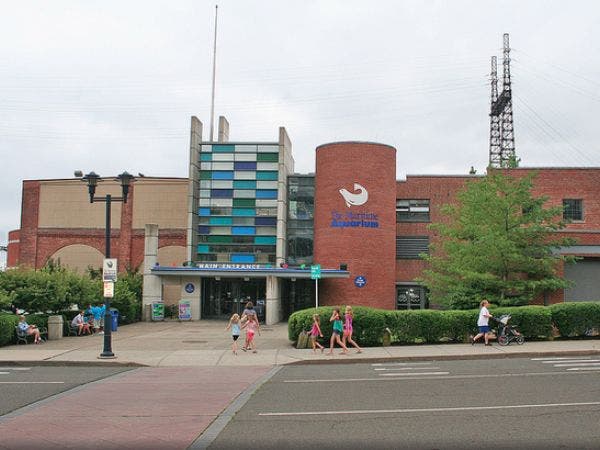
NORWALK, CT — The Maritime Aquarium at Norwalk has received a grant from the National Oceanic and Atmospheric Administration (NOAA), totaling $484,955, that will allow nearly 2,000 area students to "explore how severe storms, erosion and other environmental hazards threaten their communities."
The grant is the largest federal award in the aquarium’s 28-year history, and it will fund an initiative called “Sound Resilience – Get On Board!” Over the next three years, the aquarium will use the money to help teach middle- and high-school students from Norwalk, Westport, Greenwich, Stamford, New Canaan, Darien, Wilton, Weston, Fairfield and Bridgeport. The NOAA is part of the United States Department of Commerce.
Education and research will occur in school classrooms and also aboard the Aquarium’s hybrid-electric research vessel, R/V Spirit of the Sound ™ . Additionally, more than 150 teachers from those communities are expected to participate in professional-development workshops.
Find out what's happening in Bridgeportfor free with the latest updates from Patch.
"We thank the USDC and NOAA for endorsing this innovative program," said Dr. Brian Davis, president of The Maritime Aquarium at Norwalk, in a statement. "It is critical that residents of our shoreline communities understand the complexity of environmental issues and are able to engage in civic dialogue that addresses the new challenges – both physical and financial – produced by a changing climate.
"We are excited to work with NOAA, as well as with local schools and agencies, to bring a deeper understanding of environmental issues to students and teachers through interpretative experiences that this grant will support. Our nearly 500,000 guests of the Aquarium will benefit from this information as well."
Find out what's happening in Bridgeportfor free with the latest updates from Patch.
According to aquarium officials, the program has four main goals for students, teachers and aquarium guests:
- to identify local environmental threats, such as hurricanes and storm surge, flooding, winter storms, erosion and runoff;
- to identify locations and activities vulnerable to those hazards;
- to understand the science behind those threats and how scientists measure them;
- and to discover current and potential efforts to minimize those threats.
"In the classroom, students and teachers will learn about key environmental threats that impact their communities, the specific sites where those threats are most relevant, and resilience projects that are under way or will be necessary in the future," said Tom Naiman, the Aquarium’s director of Education. "Then, they will examine the coastline from the water, where they also will take part in science that will allow a deeper understanding of threats and the way they may be impacted by climate change. The ability to approach these issues, and the underlying science, literally from the land and the water will provide a unique perspective and a truly holistic educational experience."
In the coming weeks, The Maritime Aquarium will begin to develop educational content, by using NOAA educational resources and collaborating with the Western Connecticut Council of Governments (WCCOG), the University of Connecticut’s Connecticut Institute for Resilience and Climate Adaptation (CIRCA) and Connecticut Sea Grant. It also will work with an advisory board to review key educational strategies and resources and to identify participating schools.
Programming for students and teachers will start in 2017. Content will be aligned closely with national educational standards for Earth Science and Engineering & Technology.
For Aquarium guests, a related new exhibit will explore the ways that people and marine life in Long Island Sound are impacted by extreme weather and climate change.
"Weather events including related flooding, storm surges and erosion are some of the most relevant and recurring hazards faced by the 10 communities this program will reach," Davis said. "In light of the hurricanes, tropical storms and blizzards of the last five years, there has been tremendous momentum in Fairfield County for action. This grant and ‘Sound Resilience’ will help encourage a collaborative, energized and informed community."
The Maritime Aquarium grant is one of five 2016 Environmental Literacy Grants awarded by NOAA, totaling $2.5 million. Also receiving funding are: Brooklyn College/City University of New York; the Elizabeth River Project in Norfolk, VA; the Museum of Science & Industry in Chicago; and the Watershed Management Group in Tucson, AZ.
NOAA announced that the five projects were selected for funding following a highly competitive request for applications in which communities highlighted their needs for education projects that build resilience. NOAA received 170 applications from 40 states, the District of Columbia, and 3 U.S. Territories.
Photo credit: Maritime Aquarium at Norwalk
Get more local news delivered straight to your inbox. Sign up for free Patch newsletters and alerts.