Arts & Entertainment
A Novel View of Brookfield
Edna Ferber's novel "American Beauty" got a cold reception when it was published in 1931... but it stands up, because the author recognized the decline of agriculture, and the rise of immigrants.
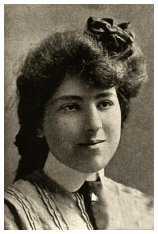


If there's a "must read" novel for Brookfield, surely it's Edna Ferber's American Beauty. Not because it's a classic — though it is pretty good — but because the novel was largely modeled on Brookfield, where Ferber — who won a Pulitzer Prize for So Big and other novels that became classic movies (Show Boat, Giant, Saratoga Trunk, Cimarron) — lived for a time in 1930 (on route 25, apparently in one of the 18th Century homes across from St. Paul's Church).
The world she paints is largely unrecognizable today — lakes play no part in her story, even though Candlewood had just been created — because it's mostly about the long decline of agricultural life.
About agriculture and another topic of continuing interest — immigration. Which is largely why the novel was controversial in its day, and has received brickbats from town residents down to the present.
Find out what's happening in Brookfieldfor free with the latest updates from Patch.
A few years back, a commentator in The Brookfield Journal found American Beauty "predictable and saccharine," and repeated approvingly the then-contemporary reaction to Ferber — that she was "rude and brash" while doing research, and in the novel itself made "scathing remarks about the foreign-born population."
Does she? Well, no: although there are references to "Polacks" and "lower classes," the novel chronicles the pendulum swings of history, as post-Puritan settlers, having bought land from the Weantinock Indian chief Waramaug, colonize land around the Still River. Captain Orrange Oakes (yes, with two "r"s), the novel's proudly English, born-in-Kent leader, sets up shop on a thousand acres, proclaiming, "I'll live in no sniveling cottage... but a proper house, such as the Oakes have always had."
Find out what's happening in Brookfieldfor free with the latest updates from Patch.
The Oakes' home is big and stately, brick rather than wood, and at least partially modeled on the well-known 1780s, Federal-style brick house on route 7, just north of Faith Church, that recently housed a retail business. Ferber, very conscious how ill-received American Beauty was in Brookfield, noted in a speech at Yale ("Miss Ferber Answers Her New England Critics," reads a New York Times headline on January 11, 1932) that "The house exists only in my mind." From a book describing regional houses, Ferber said, she took fireplaces from one, staircases from another, and "built my own house."
And with her characters, of course, she did the same borrow-and-conflate — with the larger-than-life Oakes ancestor, and the descendants who can't fill his shoes.
The Oakes clan we meet in the early 1900s are the spinster Judith, her dwarf and "slow" brother Jot, and the drunk giantess Big Bella (not a blood relative, but from a family historically close to the Oakes). They are almost a circus clan — and deliberately so, because the family's modern era begins when a long-lost niece, Tamar, comes to live with the Connecticut Oakes, her mother having died in New Orleans. The sister, Rilly, had disgraced the family years before by running off with a peddler, resulting in Tamar and Rilly becoming road gypsies, traveling the West and Midwest as part of "Pring's Indian Miracle Medicine Show."
Can you see where the story's going? Of course: Tamar's salt-of-the-earth demeanor is not only an affront to her once-rich, last-of-the-Puritans Aunt Jude, but fits in well with the ill-educated, European immigrants who are slowly taking over Housatonic Valley farms.
The old settler families with gumption and talent have moved to the cities, drawn to banking and trading and mercantile ways, and even hatting... leaving the "barren, rocky land" to the newcomers.
"Let the pinched and poor-spirited have it," Ferber writes, reading the late Puritan mind, "and welcome. Let them stay on this hateful flinty soil and live on it if they could; and die on it."
And the "Polacks" and their ilk did both, of course, because "They loved the land with the ardor of born farmers who come from a country where land has always been scarce and precious." They thrived because they loved land more than money, feeling about land "as men feel about women."
Does Tamar fall in love with a Pole? Of course. Have a child? Yes. And in adulthood, is that child — another Orrange, but this time surnamed Olszak — a diamond in the rough, a man who appreciates the magnificence of the house, as well as the land? Naturally. Like the house, he, too, is an "American Beauty," the product of cross-pollination, the stronger for his wide, multiple roots.
"American Beauty" is, then, an oddly modern novel, even if most of the farming done between its covers is of tobacco, even if the racial descriptions bother contemporary ears.
So suggesting Ferber was prejudiced, or status-oriented, is rather rich, for as a midwestern Jew of Hungarian extraction, and a newspaper reporter before she turned to fiction, she saw more, and experienced more, than most of her contemporaries. She understood the bad as well as the good — and like a veteran reporter, didn't sugar-coat it.