Home & Garden
Candlewood Lake Authority Explains Blue-Green Algae Blooms
"Candlewood has always had a healthy population of cyanobacteria. What is new is our understanding of the potential health risk."


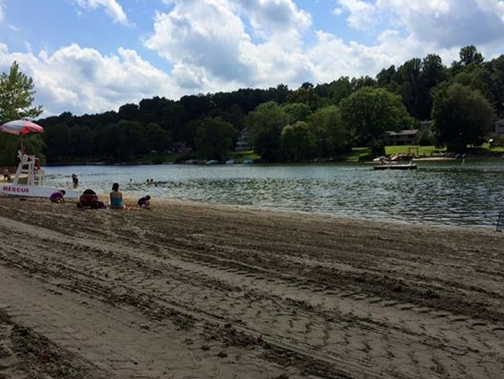
In the wake of the recent beach closures due to sometimes toxic blue-green algae blooms, Candlewood Lake Authority (CLA) Executive Director Larry Marsicano explains what they are and the possible health risks to humans and pets.
Several Candlewood Lake beaches were closed earlier this week due to blue-green algae blooms, also known as cyanobacteria blooms, including Brookfield’s Town Park. New Fairfield and Brookfield town beaches closed Monday, and Sherman’s closed on Friday after officials found blue-green algae. The blooms release toxins that can cause irritations and illness in humans and pets. Kettletown State Park was also closed Tuesday due to the algae blooms.
Brookfield’s Town Park was reopened on Wednesday with about a dozen beach-goers swimming in the lake on Wednesday afternoon.
Find out what's happening in Brookfieldfor free with the latest updates from Patch.
The CLA collected samples from all the municipal beaches on Tuesday for analyses of cyanobacteria cell and microcystin (cyano toxin) concentrations. Results are expected by the end of this week.
Marsicano said residents should know that not all blooms are toxic. He further explained, “It is also important to know that even individual cells from the species that are known to produce the toxins are genetically coded to do so. Some individuals within a species of known toxin producers can produce it, some can’t.”
Find out what's happening in Brookfieldfor free with the latest updates from Patch.
“Sometimes the cyanos don’t come all the way to the top and it can look like a flocculent below the surface and the water takes on a pea soup color. So when a determination is made that there is a bloom going on, the guidance is to close the beach and then test using cyanobacteria cells per mL and microcystin concentrations to determine public risk,” Marsicano explained.
The CLA has been collecting data on the lake since 1985 and, according to Marsicano, Candlewood has “always had a healthy population of cyanobacteria. What is new is our understanding of the potential health risk.”
If the algae produce toxins, symptoms can be serious, especially for children and small pets. These symptoms can affect the liver and kidneys and can cause possible neurological functions. Anyone who is exhibiting these symptoms should contact their doctor immediately. Click here for safety precautions.
“The important message here is that people need to be aware of blooms and if one is occurring, avoid contact or ingestion of the water. Also they should report it to their health department or the CLA.”
For questions or more information, call the Candlewood Lake Authority at (860) 354-6928.
Related:
Brookfield Officials Close Candlewood Town Park Indefinitely Due to Dangerous Blue Green Algae
Photo: Wendy Mitchell
Get more local news delivered straight to your inbox. Sign up for free Patch newsletters and alerts.