Schools
Western CT State University Instructor Releases New Book About Harlem Renaissance
WCSU instructor Lionel Bascom corrects perceptions about Harlem Renaissance with new book


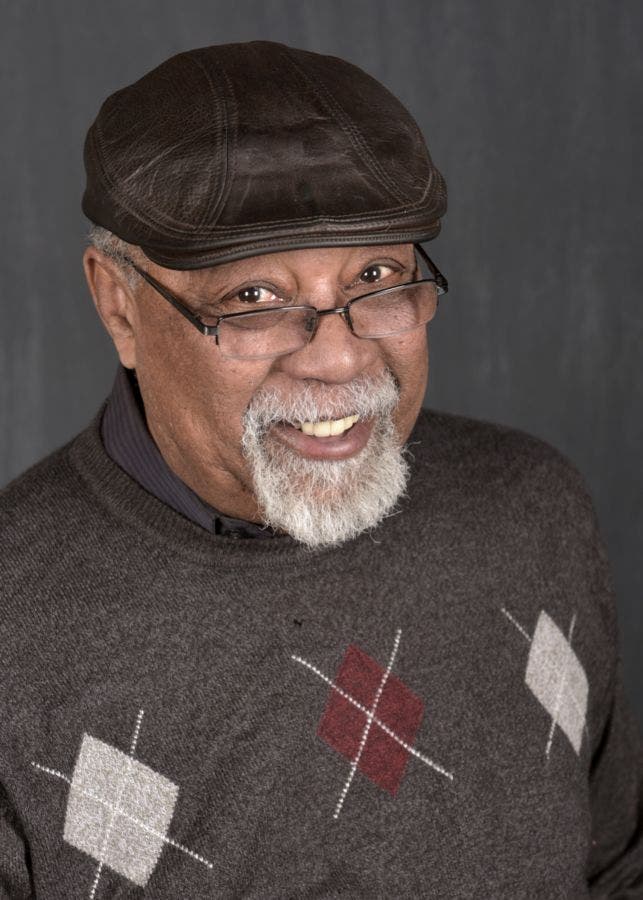
DANBURY, Conn. — Although much has been reported on the Harlem Renaissance, Lionel Bascom,
instructor in the department of Writing, Linguistics and Creative Process at Western Connecticut State
University, suspected there was more to the movement than has been revealed.
He decided to write a book about the period, “Harlem: The Crucible of Modern African American Culture,”
and found that not only did the flowering of African-American literature and music endure much longer
than is widely documented, it lasted long enough to change his own life.
“When you read about the Harlem Renaissance you believe it is a brief period where Harlem art scenes
flourished until it disappeared in 1929,” Bascom said. “I wondered, ‘Why 1929?’ I didn’t believe that
number. No one seems to know when the Harlem Renaissance began. No one used the phrase ‘Harlem
Renaissance’ until the ’40s. In the ’20s and ’30s no one wrote about this thing called the Harlem
Renaissance.”
While the specific dates aren’t important, what happened during the Harlem Renaissance was, because
much of black culture in the United States was forged there.
And although the Great Depression caused patrons from Midtown Manhattan to stop traveling uptown to
Harlem for the famous music and culture, which caused many clubs and theaters to close, black
intellectuals and artists like Ralph Ellison, Langston Hughes and James Baldwin continued to work there.
With many others, they found sustenance in Harlem that was rare in other parts of the country, and even
though factions developed and a new guard eventually rejected the old guard, enough people worked
together to foment a national movement.
Much of the legal attack on southern segregation, for instance, was devised in Harlem by Thurgood
Marshall and other leaders of the NAACP and the Urban League. Then, when leaders like Martin Luther
King Jr. called for a march on Washington in 1962, a 16-year-old Bascom, who was the president of the
Danbury NAACP Youth Group, answered the call.
“We got on a train in Danbury and didn’t have to get off,” Bascom recalled. “Sometimes we were going
backwards, sometimes we were going forward, but that car we got on in Danbury brought us to
Washington. When we got there, churches and organizations put us up. Howard University opened its
dorms. We were only there overnight. They had water stations with buckets of water that we dipped our
cups into — there was no bottled water. There were plenty of sandwiches and dinners at the churches,
though. We left at 7 p.m. after the speeches, then came back to Danbury.”
Bascom spent weekends in Danbury with his parents and went to high school in Brooklyn, where his
grandparents and brother lived. He shined shoes at his brother’s barbershop for tips and learned his way
around New York.
“Harlem was always a special place for me,” he said.
By then, Harlem was not the same vibrant source of new and radical ideas that it had been in the 1940s and
’50s, with factions and distrust developing.
As Bascom recounted, one break started after railroad porters, “who were among the most respected blacks
in America,” unionized and threatened to strike the Pullman Car Company. Negotiations stalled and A.
Philip Randolph, a labor and civil rights leader, organized a march on Washington. D.C., that promised to
bring 10,000 people to the city who would “stay until something happened.”
President Franklin Roosevelt called Randolph the day before the march and asked what could be done to
stop the protest. Negotiations led to Roosevelt issuing an executive order that for the first time opened all
federal contracts to black-owned companies.
Many saw it as a great victory, and it was a step toward later integration of the military by Harry Truman,
but some regarded Randolph as a sell-out who should have negotiated for bigger reforms.
Similar arguments simmered between writers and political thinkers of different generations who were
divided about how quickly to push their ideas. Bascom wrote that a new guard of black leadership came to
be known as “the New Negroes,” who openly campaigned against racism and segregation. One of them
was Marcus Garvey, a Black Nationalist who traveled around the country gathering raucous crowds with
his sermon-like message. One member of the audience in Nebraska was a youngster named Malcom Little,
who later became Malcolm X, a leader of the Nation of Islam.
Malcolm X drew large crowds, too, when he spoke in Harlem in the 1960s, a continuing example of the
social imprint the New York neighborhood exerted on the U.S., even after the jazz clubs of the “Harlem
Renaissance” closed.
“I thought this book was necessary because I wanted to say that when the music stopped playing, these
people in Harlem were working toward justice,” Bascom said. “It was a coming together of progressives
who said, ‘We have got to change.’ ”
Bascom’s book is available at the publisher’s website and at bookstores.