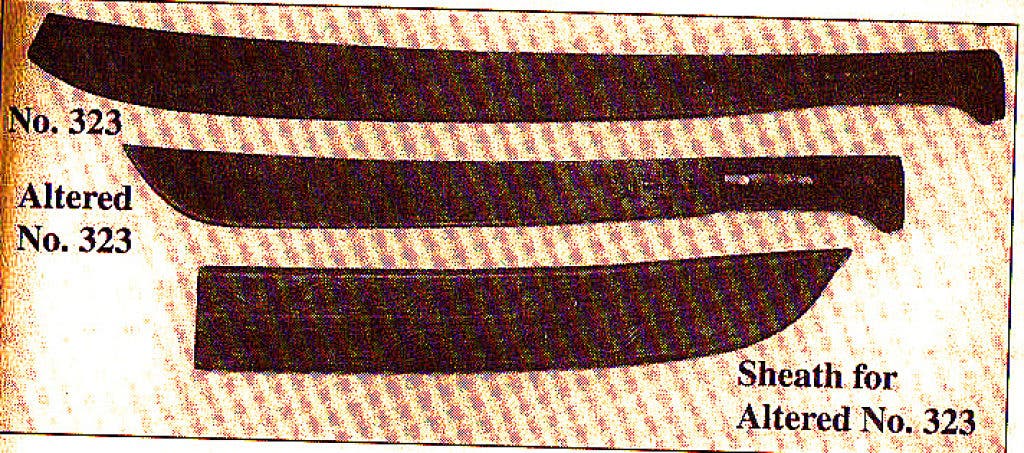
Machetes are as common in the tropics and Latin America as hammers and screwdrivers are to this part of the world. They have been the tool of choice to cut sugar cane, rainforest undergrowth and, it turns out, to make revolution.
In Cuba, the machete has a long history of use in defense of the island. Between 1868 and 1898, Cubans fought three separate wars for independence against the Spanish. The first, known as the "Ten Years War,” began when the owner of the island’s sugar refinery, Carlos Manuel de Cespedes, freed his workers from slavery. From there, they became a machete-wielding revolt.
Cuba would fight two more wars of independence against Spain: the “Little War,” which ran from 1879 to 1880, followed by the “Cuban War of Independence,” (1895 to 1898); which evolved into the Spanish-American War. Throughout these battles, a certain brand of machete was making history.
Find out what's happening in Cantonfor free with the latest updates from Patch.
These machetes of choice were crafted by a company known internationally for making axes. The Collins Company began introducing machetes into the marketplace in 1845. The 24 inch, Collins Model No. 23, became a favorite of the Cuban people. So renown became the Collins brand, that any machete of quality was called, “un Collins.”
Around 1865, the Spanish Colonial government, concerned about the potential use of machetes as weapons, legally banned their importation to Cuba.
Find out what's happening in Cantonfor free with the latest updates from Patch.
So, how did all those Collins machetes make it back to Cuba in time for the coming wars of independence?
It is unknown who came up with the plan - a quick thinking sales manager? A savvy attorney? Perhaps, a creative engineer or a knowledgeable craftsman on the floor of the Collins factory? No matter. The decision was made. A diagonal inch would be cut from the pointed tip of Model No. 23, thus creating Model No. 323; a new agricultural tool in compliance with the Spanish import laws.
And, there’s one more twist to this story.
About Town wanted to give the final word about the folklore surrounding Models No. 23 & 323 to former Assistant to the President of the Collins Company and Canton Historical Museum Board member, Roy Olson. “It’s always obviously been an agricultural tool. So, the Collins Company cut off the point of the machete to qualify it as no longer an instrument of war.”
In any case, it didn’t work. “The Museum,” continued Olson, “has a machete that shows the person who owned it had reshaped the point anyway. It was a folly approach, but one that appeased the administration and allowed the Collins Company to put their machetes back into that marketplace.”
And ready for 1868?
Here’s the Deal
Canton Historical Museum, 11 Front Street, Collinsville; 860-693-2793: www.cantonmuseum.org.
Special thanks to Mary Ellen Cosker for inspiring this column with her Collins Company research & story telling.