Politics & Government
Official on Invasive Algae in Farmington River: Don’t Panic but Take Precautions
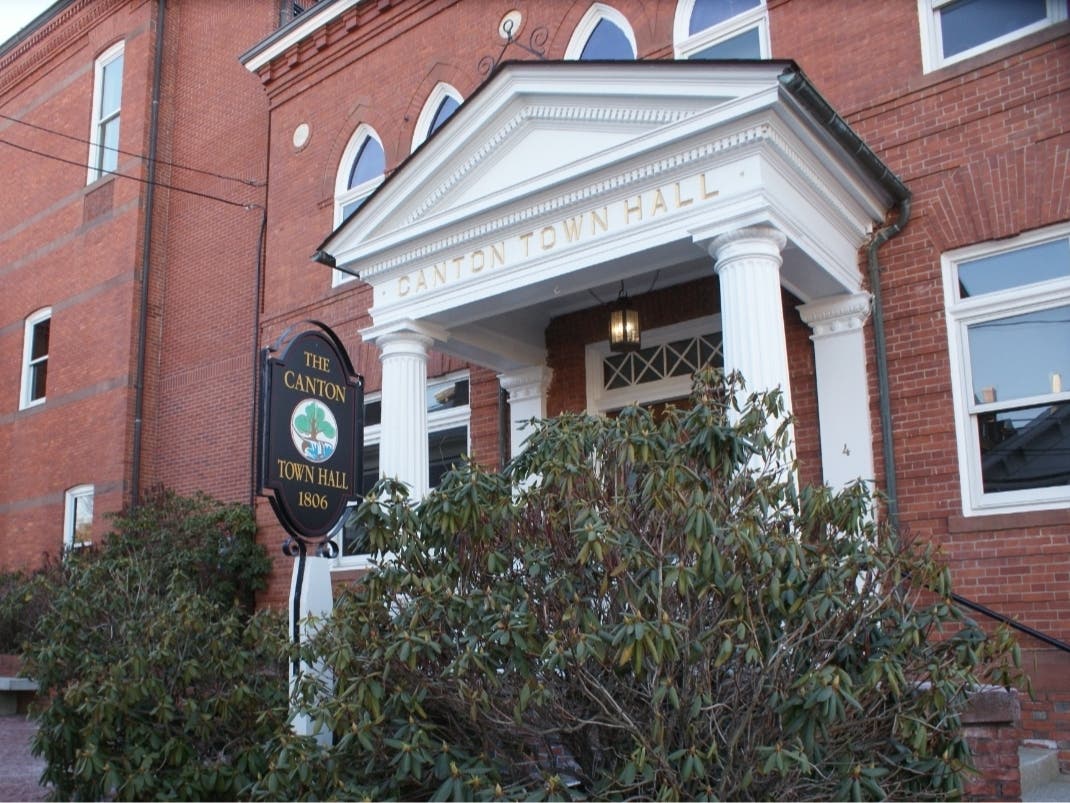
Forum held at Canton Community Center


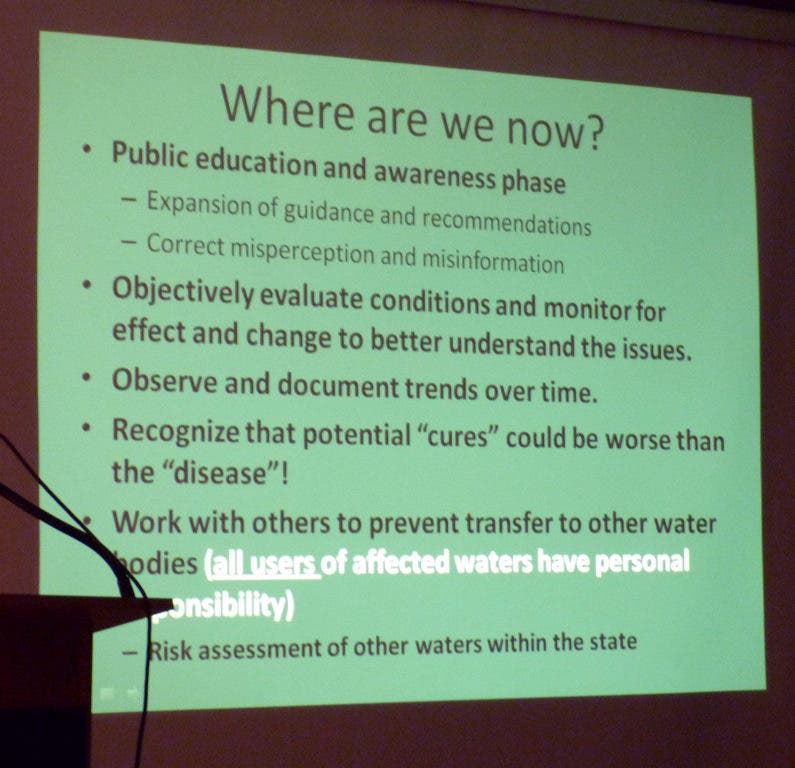


Users and advocates of the Farmington River should not panic but should take the presence of an invasive algae seriously.
That was the message from Peter Aarrestad, Director of the Inland Fisheries Division of the state Department of Environmental Protection, during a forum at the Canton Community Center about the presence of didymosphenia geminataidymosphenia geminata, commonly called “didymo,” or “rock snot,” in the West Branch of the Farmington River.
“We all need to take it seriously and take reasonable precautions to do what we can to prevent the spread of didymo,” Aarrestad said during the presentation.
Find out what's happening in Cantonfor free with the latest updates from Patch.
The algae was discovered in the river by anglers in mid-March. Soon after, the DEP sent samples to the Vermont Department of Environmental Conservation, which later confirmed the algae was didymo. DEP officials found it in several spots below Route 20 in the Riverton section of Barkhamsted to the New Hartford line.
While the algae has caused serious problems in some areas, such as some rivers in New Zealand where large clumps take over a river bottom and affect aquatic life, Aarrestad said he has talked to colleagues in places like Vermont, New Hamphsire and Virginia who report fewer problems.
Find out what's happening in Cantonfor free with the latest updates from Patch.
“The good news is it’s not manifesting itself to the problem levels in has in New Zealand and other places,” he said.
Aarrestad said part of the reason may be that the algae is native to colder areas of North America. And, ironically, the cold, shallow, moving “tailwater” that comes from the bottom release of the Goodwin Dam in Hartland that is so perfect for trout habitat is also ideal for the algae.
Right now, the DEP is most concerned with the algae spreading to other waters.
The microscopic cells can attach themselves to fishing gear, boats, clothing and wading shoes, especially ones with felt soles that are hard to dry. The DEP and others are urging river users to check, clean and dry before taking equipment to another river or even other parts of the Farmington, especially upstream of the problem areas.
Bill Case, president of The Farmington Valley chapter of Trout Unlimited, said he appreciates officials planning the Canton event. Originally slated to be a presentation to the committee studying the potential for Wild and Scenic designation for the lower Farmington River and Salmon Brook, the event was opened to the public with the help of state Sen. Kevin Witkos.
“If every town did this that would be terrific,” Case said.
Case said he is concerned about didymo and any effects it can have on the river. He is especially concerned with the possibility of it spreading.
He said the group’s message is simple.
“Please be responsible and help prevent the spread of this to the river and to other streams as well,” Case said.
Case is recommending that anglers carry plastic Ziploc bags or newspaper bags to dispose of any algae that gets caught on fishing hooks or gear.
Officials don’t recommend trying to eradicate didymo. Bill Foreman, an environmental analyst with the DEP’s Inland Fisheries Division, previously told Patch that trying to remove didymo from the river will make the problem worse by releasing the cells into the water.
DEP officials are cautiously optimistic that the algae will not take hold in points downriver where the water is warmer, gets more sunlight and is less rocky.
And most important now is education, according to officials and advocates.
The DEP is working on signs for the Farmington River and has published a brochure as well.
“Naturally we’re very concerned with assisting the DEP in getting the word about didymo out in any way we can,” said Eileen Fielding, Executive Director of the Farmington River Watershed Association.
She said people can support that effort by joining the organization or attending a benefit show April 20 at Infinity Hall in Norfolk with performing artists Michael Moschen and Bob Berky.
The Farmington Valley chapter of Trout Unlimited has produced informational tips on business cards and will hand them out on opening weekend of the fishing season this coming weekend.
Case said he is seeking volunteers for the task and asks anyone interested in that effort to call him at 860-678-7245.
The DEP urges all river users to "check, clean and dry" by doing the following:
- Check: Before leaving a river, stream or lake, remove all obvious clumps of algae and plant material from fishing gear, waders, clothing and footwear, canoes and kayaks, and anything else that has been in the water and look for hidden clumps. Leave them at the site. If you find any later, clean your gear and dispose of all material in the trash.
- Clean: Soak/spray and scrub boats and all other “hard” items for at least one minute in either very hot (140°F) water, a 2 percent bleach solution, or a 5 percent dishwashing detergent solution. Absorbent materials such as clothes and felt soles on waders should be soaked for at least 40 minutes in very hot water (140°F), or 30 minutes in hot water (115°F) with 5 percent dishwashing detergent. Freezing thoroughly will also kill didymo.
- Dry: If cleaning is not practical, after the item is completely dry to the touch, wait an additional 48 hours before contact or use in any other waterway.
Aarrestad recommends cleaning products well away from the river since items such as bleach can have negative effects on the ecosystem.
To report possible sightings, call the DEP’s Inland Fisheries Division at 860-424-3474 or dep.inland.fisheries@ct.gov. More information on didymo and other aquatic nuisance species can be found at www.ct.gov/dep or or in the Connecticut Angler’s Guide.
Get more local news delivered straight to your inbox. Sign up for free Patch newsletters and alerts.