Health & Fitness
9th Regiment Conn Vol - 150 Years Ago In The Civil War
9th Regiment Connecticut Volunteers - 150 Years Ago In the Civil War April 1862 - The Assault on New Orleans

The Assault on New Orleans
The following information was provided primarily from Thomas Murray’s “History of the Ninth Regiment Connecticut Volunteer Infantry” written in 1903 as well as excerpts from the recently discovered collections of Col Thomas Cahill (owned by C. Sibley of Hamden) and Captain Lawrence O’Brien (owned by J Cook of Trumbull).
The Ninth Regiment C. V. (Connecticut’s Irish Regiment) left New Haven with 845 men, including ten from Cheshire, in November of 1861 and became the second regiment to land on Ship Island, Mississippi. Martin Burke, a private in Company B from Cheshire, was injured on the island but recovered eventually and served out his term, being mustered out in October of 1864. The island, some 12 miles off the Gulf Coast mainland, was a staging area for the eventual assault on New Orleans, the largest city in the Confederacy and a prime target in the Union strategy.
Find out what's happening in Cheshirefor free with the latest updates from Patch.
On April 4, 1862 the Ninth Connecticut Volunteers were sent on shore at Biloxi, Mississippi to avenge the shooting on a flag of truce by unknown people in the town. It was there they heard reports of Confederate troops nearby and surprised the Third Mississippi at Pass Christian taking their regimental colors, the first captured during the war. In addition they captured a letter just completed from Col T. Mellon to Confederate General M. Lovell, a supply of arms, equipment and paperwork with valuable information used in the planned assault on New Orleans.
Two weeks later, Col Thomas Cahill in an April letter to his wife in New Haven written from Pilottown, Louisiana complained of Confederate reporter’s account in a New Orleans newspaper that misrepresented the facts as well as the strengths of the regiments involved at Pass Christian. He also vowed “If I get hold of that fellow I think I shall try the bottom of my boot on him”. While he took issue with the reporter’s distortions he admitted he was upset as well by the misspelling of the name Cahill.
Find out what's happening in Cheshirefor free with the latest updates from Patch.
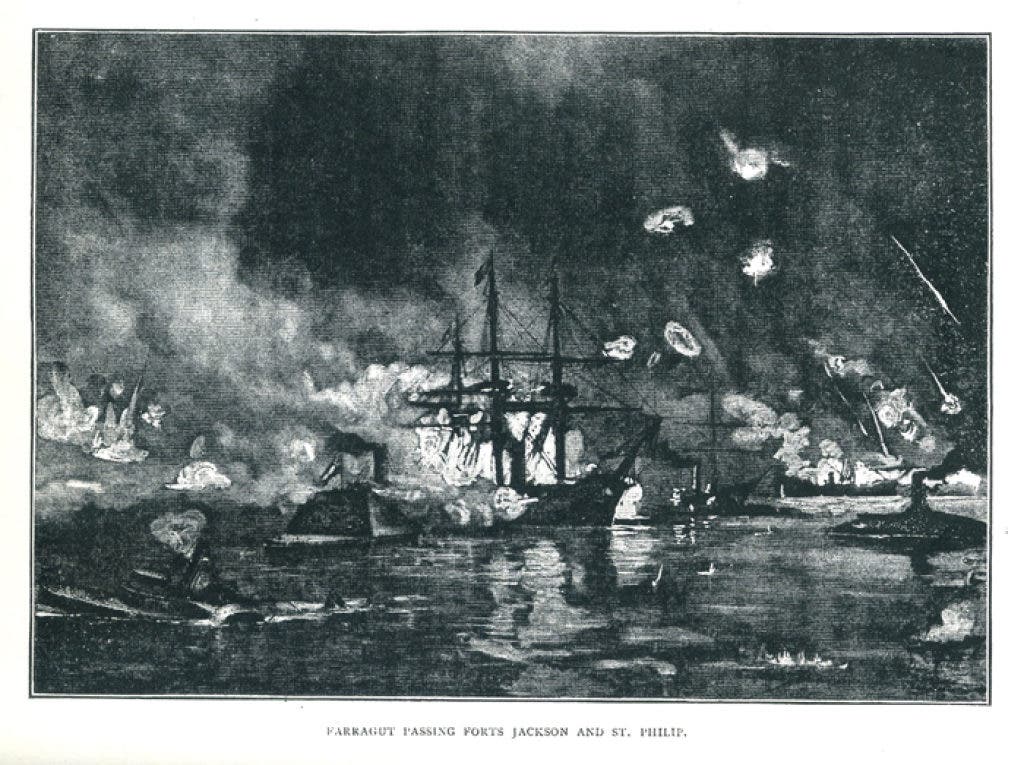
In an April 29, 1862 eleven page letter to his wife written at the mouth of the Mississippi, Cahill described the events that occurred during the past two weeks. After leaving Ship Island on Tuesday, April 15th the Ninth, as part of the brigades of Generals Phelps and Williams, were in support of Admiral Farragut’s fleet of 47 armed vessels. The assault on New Orleans provided a number of challenges to the approach from the Gulf with sand bars and fierce river currents. The fleet with many large ships struggled for miles to navigate the passes before it finally reached Confederate Forts Jackson and Saint Philip, once considered the impregnable guardians of New Orleans which lay yet another sixty miles upriver. While the Ninth was aboard the Mantazas which towed the E. Wilder Farley, a ship that contained the Twelfth Connecticut, at Southwest Pass it was sent to the aid of the Great Republic which was stuck on a sand bar along with General Williams and 3,000 soldiers. Cahill related to his wife the fierce naval battle at the forts, the chain bridge set across the river by the Confederates to block the Union ships and the parties sent ashore to spike the abandoned guns along the route. As the naval fleet fought its way past the forts Cahill related, “What was now to be done … the forts must be reduced or taken by point of bayonet”. On April 29th word was thankfully received that the forts had finally surrendered.
Next, we’ll take a look at the fall of New Orleans as we continue with the history of the Ninth and events of 150 years ago.