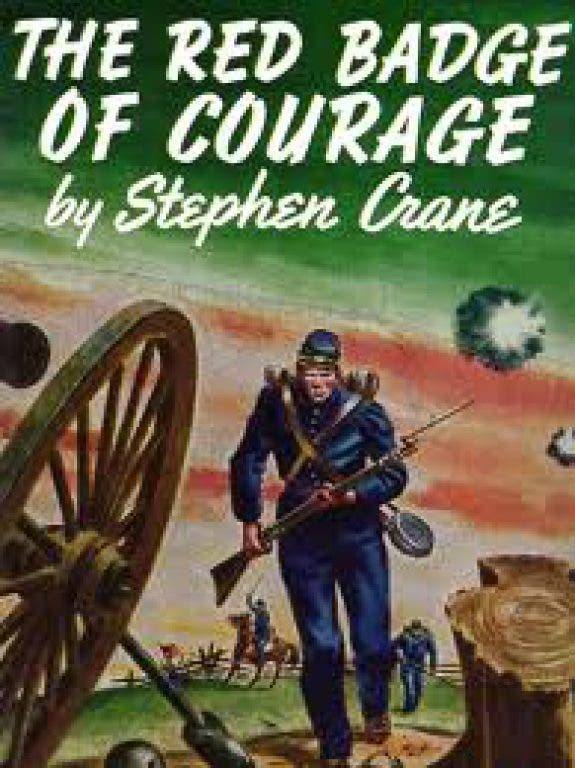
Stephen Crane's Civil War novel, The Red Badge Of Courage, has truly stood the test of time. In fact, I was pleasantly surprised to find it in an eighth grade classroom while student teaching this past year. Any book published in 1895 that now shares space with such works as The Hunger Games has truly left its mark on society.
When the novel was first published over a century ago, critics were truly impressed with the realism of the battle scenes. Crane, it was assumed, was a man who clearly knew his way around a war zone. Yet there was a problem with such an assertion – Crane had never been in the Civil War. In fact, the young author had never experienced war first hand at all.
Find out what's happening in Cheshirefor free with the latest updates from Patch.
So much for basing fiction on personal experience.
Today many creative writing teachers believe autobiography is the greatest source of fiction. This may be true in some cases, but certainly not in all. In fact, for every great work that focuses on kitchen table issues, there seem to be ten which have emerged from an author's imagination. Would anyone be interested in Shakespeare if all his plays were based in Stratford-upon-Avon? Probably not.
Find out what's happening in Cheshirefor free with the latest updates from Patch.
The sad fact is Crane knew what many of today's teachers don't: that imagination usually trumps reality. Why else would politicians fib? Or “reality” TV programs come across as being so orchestrated? Creativity can not only make life interesting. It can make it profound. Just ask any quality author of fiction.
This isn't to say there's no place for personal experience. Not at all. Truth be told, Crane himself based one of his most famous stories on a real-life experience of his own. Yet The Open Boat is based on an event far, far removed from the everyday world. It's the kind of thing we wish would only occur in fiction.
The man knew when to keep it real.