Health & Fitness
The Case for Mandatory Motorcycle Helmet Laws
The motorcycle crash that put a helmetless rider in the hospital with critical head injuries a few days ago resulted in a debate about helmet laws. A trauma physician responds.
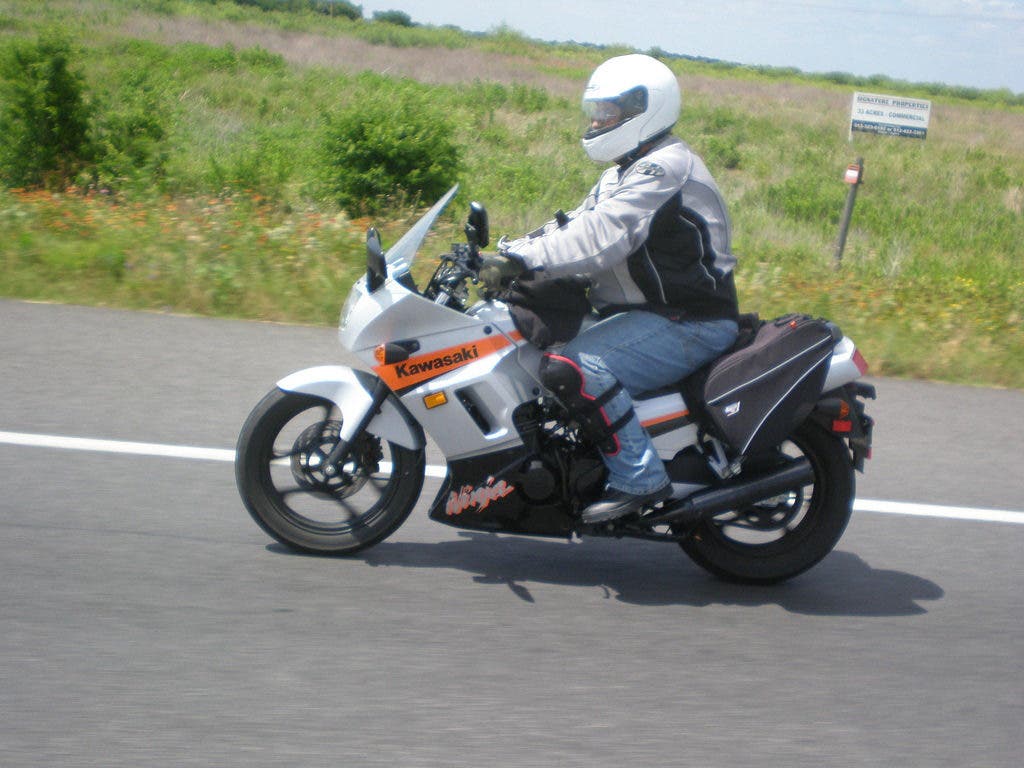
Riding a motorcycle is an inherently dangerous activity. The risk of death for 1 mile driven on a motorcycle is 15 times the risk of death for 1 mile of driving a car. The risk for unhelmeted motorcyclists is even higher, in fact it is six times higher than for helmeted motorcyclists. According to a study published in the most recent* Morbidity and Mortality Weekly Report (MMWR), motorcyclists accounted for less than 1% of all vehicle miles traveled but more than 14% of all road traffic deaths, over 14,000 in all from 2008 through 2010.
The issue of mandating helmet use has two components: First, is there evidence that motorcycle helmets reduce the risk of death and severe brain injury. Second, if the answer to the first question is yes, does society have the responsibility to reduce death and severe brain injury by mandating helmet use. In the following paragraphs I will discuss each of these points.
Find out what's happening in Cheshirefor free with the latest updates from Patch.
The evidence supporting the hypothesis that motorcycle helmets reduce severe brain injury and death is as overwhelming as the evidence that the earth is round and not flat. I will point to one phenomenon observed in real world conditions and not a laboratory that is so persuasive that no other evidence is necessary (even though there is plenty of other evidence).
Starting in the late 60s a large number of states passed laws requiring the use of motorcycle helmets on public streets and roads . Over time, motorcyclists became politically organized and were able to persuade the legislatures of quite a few of those states to repeal mandatory, laws. This resulted in a large-scale national natural experiment which can be used to answer the question of whether motorcycle helmets save lives. The results are in and the answer could not be more obvious.
Find out what's happening in Cheshirefor free with the latest updates from Patch.
In every time, without exception, that is state enacted mandatory helmet laws, the motorcycle death rate in that state went down, sometimes by as much as 50%. And every time, again without exception, that a state repealed mandatory helmet laws the death rate immediately went up. In one state it more than doubled the year following repeal. As I said above, no further proof is needed that mandatory helmet laws save lives, but I will offer some additional information that relates to the second aspect of this topic.
Not only do motorcycle helmets reduce injuries and deaths, they also reduce the medical costs associated with motorcycle crashes. A compilation of studies looking at average hospital charges per case of motorcycle crash with reference to whether the rider was using a helmet or not showed that writers without helmets
incurred costs that were as much as three times greater than those of helmeted
riders. This study actually underestimates the cost savings of helmets because many times wearing a helmet or not makes the difference between going home with a scratched helmet versus needing to go to the hospital for trauma evaluation.
By knowing the total costs associated with each crash involving a helmeted rider as well as the cost of each crash for unhelmeted riders the monetary savings afforded by helmets can be calculated in the US as a whole it has been calculated that in 2010 helmet use saved $3 billion. In Connecticut this translates to a savings of $380 per registered motorcycle in the state. And this brings me to the
second point in the argument.
Does society have the right to mandate the use of motorcycle helmets? I would say that it not only has the right to do so but that in the public interest it has a duty to require helmet use. The argument that the consequences only effect the rider is the trade by the observation that the majority of medical and other costs
resulting from motorcycle crash injuries and deaths are borne by the society.
In fact, at most only a third of the costs are paid by the rider or his/her insurer, and the remainder is covered by public funds. It is therefore the duty of the society to enact reasonable requirements for the use of a public facility (streets, roads, and highways) when the lack of such regulations will
inevitably increase the nonreimbursed costs of such use to the public.
This is also the justification for requiring seatbelt use, having speed limits, requiring liability insurance, and many, many other laws and rules which on strictly libertarian grounds could not be justified but which are reasonable and necessary to fiscal responsibility. As a last point I would hope that anyone responding in opposition to this point of view will make a counterargument
based on the harm done by alcohol, tobacco, or drug use. This is not about alcohol, tobacco, or drug use. It is about motorcycle safety and any argument for or against should adhere to the subject at hand.