Health & Fitness
Foodie In Florence: Feeding A Family of 7 Billion
As our population grows to 7 billion, I question how we're supposed to feed our planet and give solutions.

If you hadn't heard, on Halloween this year we hit the 7 billion persons mark. Impressive? Slightly. Terrifying? Absolutely. With the discussion of dramatic population growth there's always room for the argument, "how on Earth are we going to feed 7 billion?"
It is a fact that the US alone produces enough calories to feed the world more than one time over and the real problem is in distribution and not production. That's the first problem.
The second problem is that within our food system we focus too highly on the production of animals. When we think that we are doing good by providing animal products and protein we're really wasting precious resources and feeding people less. Let's crunch some numbers:
Find out what's happening in Clintonfor free with the latest updates from Patch.
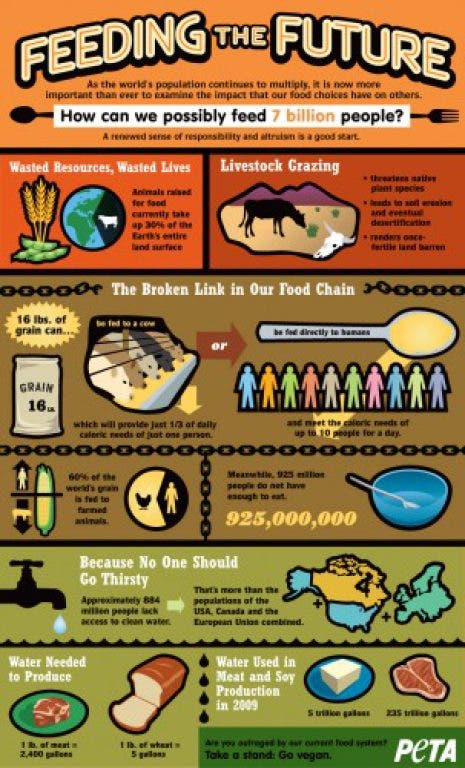
Animals grown for food currently take up 30% of our land that could be growing fruits, vegetables, and grains
16 pounds of grain can be fed to ONE cow and would yield 1/3 of a person's daily caloric needs.
Find out what's happening in Clintonfor free with the latest updates from Patch.
16 pounds of grain is also capable of feeding 10 people for a day.
60% of the entire grain in the world is fed to animals while 925 million are hungry.
1 pound of meat uses 2,400 gallons of water - a loaf of bread uses 5
This water is given to animals while 884 million are thirsty.
This is the reality of our food system. It's not a cry to become vegetarian or vegan, but by limiting our meat consumption we can help direct the production of meat to other forms of food, help fight the obesity epidemic, and save the planet and our resources.
In the words of Einstein, "Nothing will benefit human health and increase the chances of survival of life on earth as much as the evolution to a vegetarian diet"
Buon Appetito! (Vegetarian style)