Health & Fitness
Something Old, Something New
An evening walk on the beach allows my family to witness the Spring mating rituals of the local horseshoe crabs.
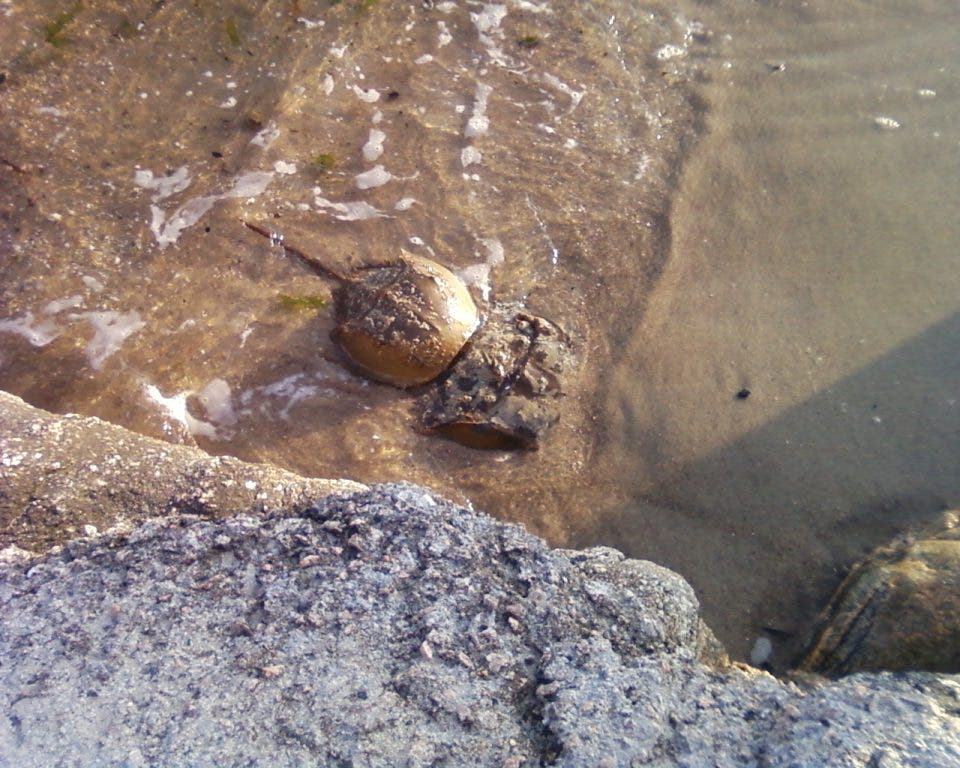

The girls and Jon and I took a walk down at the Westbrook Town Beach last night and witnessed a Spring Ritual. The little one and I collected some beautiful shells in the sand and Jon and our oldest daughter decided to check out the the fishermen on the jetty.
Once we grew tired of our seashell search we decided to take on walk on the jetty as well. As we started our journey we saw a number of horseshoe crabs gathering along the shore there must have been 20 in all. It was their mating season, and the females began to lay their eggs with the males in tow. It was truly amazing to watch this whole process.
Normally you might see one or two horseshoe crabs on a sand flat during low tide, but never this many at one time. The girls were thrilled to see this display of nature. Each time the tide rolled in a different couple came in with it, and the dance began.
Horseshoe crabs are an endangered species, so they are protected and beach goers are encouraged to leave them alone when they see them at the beach. We learned some interesting facts about the horseshoe crab when we did some research on the laptop at home.
Horseshoe Crabs Facts:
- Horseshoe crabs are 300 million years old, they were able to survive an extinction period that wiped out nearly 95% of all marine species.
- They look a lot like crabs, but they are actually arthropods and resemble spiders and scorpions.
- Their hard shell protects their entire body, they have several pairs of eyes, two large ones can be seen on the top of their shell.
- When horseshoe crabs were caught in the past their shells were ground and used for fertilizer.
- The female horseshoe crab is larger than the male and can lay about 90,000 eggs at a time, but only about 10 of the new offspring actually survive. After the female lays her eggs the male fertilizes them.
- Their eggs provide food for millions of migratory shorebirds, the eggs take 2 weeks to hatch.