Health & Fitness
'Aggressive Tick' Is Rapidly Expanding Range In Connecticut
The lone star tick is an "an aggressive human biter that has been associated with several human diseases and medical conditions."


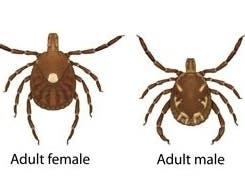
CONNECTICUT — The lone star tick, which is an aggressive human biter and transmitter of several human diseases, is rapidly expanding its range in Connecticut and the entire Northeast, according scientists at the Connecticut Agricultural Experiment Station.
An article concerning the lone star tick's expansion was recently published in the New England Journal of Medicine. Originally, the lone star tick was primarily found in southeastern United States but has been expanding in the Northeast.
The number of lone star ticks submitted to the Connecticut Agricultural Experiment Station increased by 58 percent between the periods of 1996-2006 and 2007-2017, mainly from Fairfield County. In 2019, established populations of this tick were discovered in New Haven County for the first time, according to Dr. Goudarz Molaei, who directs the station's Tick Testing Program.
Find out what's happening in Darienfor free with the latest updates from Patch.
"The lone star tick is an aggressive human biter that has been associated with several human diseases and medical conditions, including tularemia, ehrlichiosis, rickettsiosis, Heartland virus disease, southern tick-associated rash illness, red meat allergy and probably the newly identified Bourbon virus diseases," according to a news release by Connecticut health officials. "In addition, the bites are highly irritating."
The authors say that "warming temperatures associated with climate change may lead to the continued geographic range expansion and abundance of the lone star tick, increasing its importance as an emerging threat to humans, domesticated animals and wildlife."
Find out what's happening in Darienfor free with the latest updates from Patch.
Lone star ticks — which get their name from the white dot or "lone star" on the adult female's back — are most active from mid-March to late June, nymphs most active from mid-May to late July, and larvae most active from July to September.
"It is essential for practitioners and the public to develop a heightened awareness of the health risks associated with emergent tick vectors such as the lone star tick and their potential for changing the dynamics of tick-borne diseases in Connecticut and throughout the northeastern United States," the report's authors wrote. "Ticks and tick-borne diseases are increasingly becoming a major public health (issue). According to the CDC, more than 90 percent of the nearly 60,000 cases of nationally notifiable vector-borne diseases reported in 2017 were linked to ticks."
Get more local news delivered straight to your inbox. Sign up for free Patch newsletters and alerts.