Neighbor News
Great Island came with instructions. How is Darien reading them?
A proposed boardwalk on protected land should come with a clear explanation of how Darien is upholding its conservation obligations.
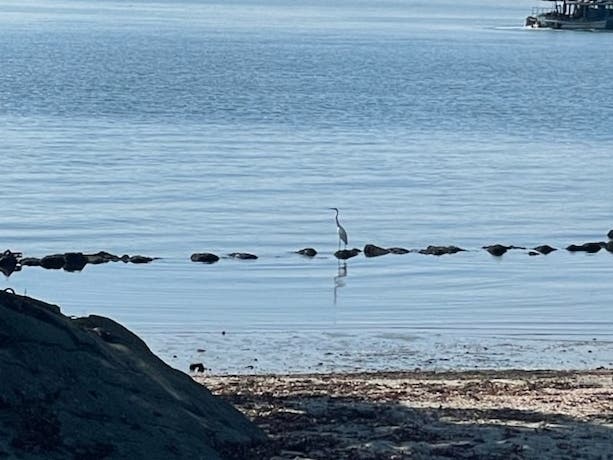
Great Island is not a blank canvas for us to do as we please. It came with written instructions.
Long before Darien acquired Great Island, negotiations over the property's future produced binding "conservation restrictions" that permanently protected a band of land ringing much of the property. The restrictions were attached to the land itself, meaning every future owner – including the Town of Darien – would have the same obligation to honor them.
Now, as the Town works to expand public access for Great Island, these conservation restrictions need to be addressed openly. At the upcoming Board of Selectmen meeting on Monday, June 29, 2026, the Board will discuss the current access and parking design plan for Great Island. The plan includes a proposed pedestrian boardwalk that would be built, in part, within one of Great Island's protected conservation zones.
Find out what's happening in Darienfor free with the latest updates from Patch.
The Great Island conservation restrictions were carefully crafted and explicit. They require the protected land to "be kept as open space in its natural state" and to be "restricted from development with buildings, structures, signs, paving... or any use other than as open space."
The restrictions even extend to the management of trees, vegetation, and the land's natural contours. At the same time, the restrictions recognize that meaningful access may require maintaining and improving the property's existing access roads. On the whole, these protections reflect a thoughtful effort to balance conservation with access.
Find out what's happening in Darienfor free with the latest updates from Patch.
So who is responsible for upholding these restrictions? In this case, the Town wears two hats. It owns Great Island on behalf of its residents, but it is also responsible for safeguarding the conservation restrictions. This makes for an unusual situation. The Town is effectively interpreting and enforcing restrictions that apply to its own property, so being transparent about their interpretation is especially important.
With that in mind, I asked the Town if they had obtained a legal interpretation of how the conservation restrictions apply to the proposed boardwalk and, if so, whether that interpretation could be shared. The response was that the Town had consulted counsel and was "proceeding accordingly."
I suggest that before the design advances any further, the public should be let in on the why – the reasoning behind the Town's interpretation, not just the outcome.
One of the stated reasons for the proposed boardwalk is to separate pedestrians from vehicle traffic. However, the existing Southern Causeway access road is already envisioned as a pedestrian-only route and, according to the Town's consultants, would require only modest improvements to become ADA-friendly.
Yet at the last Great Island Design Parking Committee meeting, we were told that improvements to the Southern Causeway are in some "future project" bucket, while the Town continues to pursue a boardwalk that extends into a conservation-restricted area.
If alternative options can achieve the Town's access goals, why is building a new structure within the protected area considered the better choice?
Residents deserve to understand the basis for the Town's conclusion that the proposed boardwalk is both consistent with the conservation restrictions and the best available alternative. Openly explaining that reasoning would establish a shared understanding that would inform future projects and strengthen public confidence in the Town's overall stewardship of Great Island.
Transparency feels especially important at this moment. As Darien prepares its 2026 Plan of Conservation and Development, residents have repeatedly identified conservation and protection of the town's natural resources as community priorities. The Town is also exploring the creation of a permanent Conservation Commission.
Against that backdrop, the Town should welcome the opportunity to openly explain how it interprets and complies with the conservation restrictions attached to Great Island, setting the standard it would expect of any private landowner in a similar situation.
Ultimately, the Great Island public access project is an opportunity for Darien to demonstrate that a true commitment to conservation is measured by more than campaign promises and planning documents.
More than forty years ago, Darien's leaders looked beyond the needs of the moment and crafted a conservation framework intended to protect Great Island's extraordinary natural resources and spectacular coastal edge forever. Today's leaders have the opportunity to show how those commitments are being carried forward.
At the heart of it, thoughtful stewardship of Great Island asks not just "Can we?" but also, "Should we?"
Author's note: A 1979 New York Times article, "An Estate May Be Key to Breaking Darien's Ban on Condominiums," provides valuable historical context on the negotiations that helped shape Great Island's future.
The 1981 Declaration of Conservation Restrictions is recorded in the Darien Land Records at Volume 463, Page 298, and the associated subdivision map (Map No. 4145B) graphically depicts the boundaries of the conservation-restricted areas. Both are public records available through the Darien Town Clerk's office.