Community Corner
Tracy Kidder Shares His Story
Pulitzer prize-winning author Tracy Kidder tells DCA audience how he set out to tell a great story, and did a good deed as well.
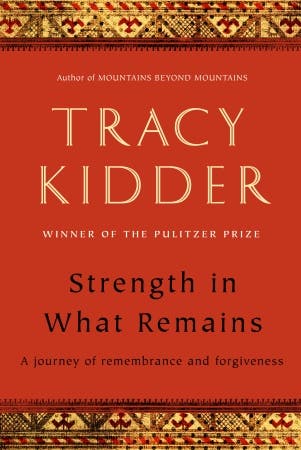
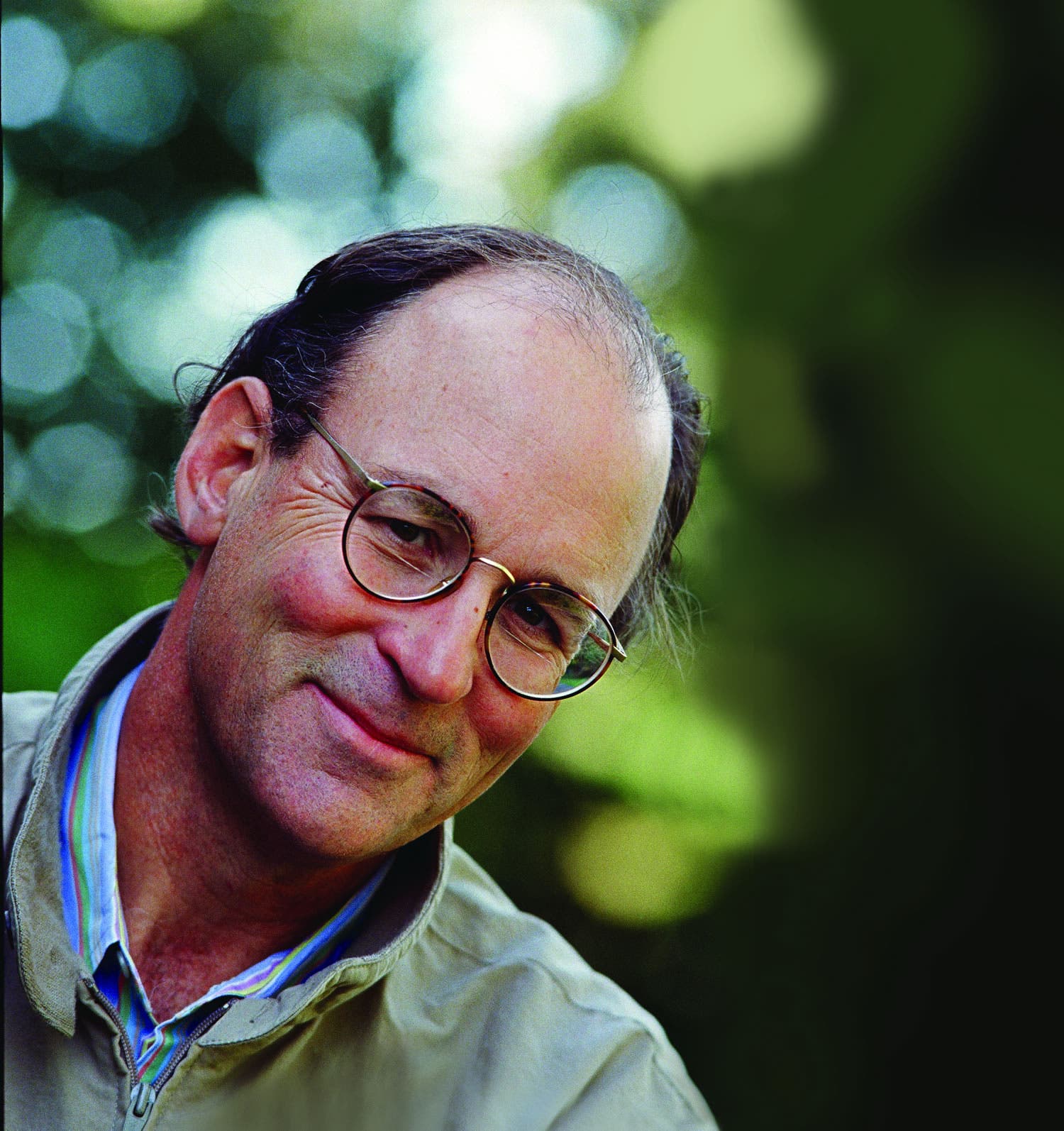
When Pulitzer Prize-winning author Tracy Kidder decided to write a book about a remarkable refugee from the 1990s civil war in the African nation of Burundi, he did not set out to do a good deed.
"I set out to tell a great story," Kidder told a packed audience at the Darien Community Association on Wednesday evening—a homecoming of sorts, as his editor for the past 35 years, Richard Todd, grew up in Darien.
Strength in What Remains, published last month by Random House to ecstatic reviews, tells one great story indeed. It recounts in harrowing and sickening detail his subject’s death-defying experiences during the period of brutal bloodletting in Burundi and Rwanda, and his unlikely escape to America to Columbia University, medical school, and a life devoted to healing.
Find out what's happening in Darienfor free with the latest updates from Patch.
But the unpublished epilogue of the story is the good deed Kidder dared to do despite anticipated frowns from fellow journalists: he yielded to overwhelming feelings of common humanity and became a lead character in the ongoing story, providing medial care to the poorest of the poor.
Considering the potential criticism from his peers, he resolved: "I really didn’t care."
Find out what's happening in Darienfor free with the latest updates from Patch.
And thus, even as he lectured and gave a slide presentation about his book, Kidder encouraged financial contributions to Village Health Works, a non-profit founded by his subject, Deogratias Niyizonkiza, to build and operate a clinic to serve the destitute in rural Burundi, the poorest country in the world according to the World Bank. Its motto is: "Where there is health, there is hope."
Kidder sits on the board of the organization and he gave his own money to make the clinic a reality when the site was but a pile of rocks and a dream in 2006.
A boyish-looking 64 with an endearingly impish grin and the style of a laid-back academic, Kidder told the DCA audience about how he took "tons of notes," intensely observing his subject over a period of years in order to create his probing, engrossing account.
He and Deogratias traveled to Burundi and Rwanda together in 2006 to research the book by retracing his subject’s steps in his six-month, on-the-run ordeal and final flight for freedom in the United States.
At the site of the proposed clinic in a valley overlooking Lake Tanganyika, Kidder learned that patients at the only hospital in the vicinity were not allowed to leave following their treatment until they paid their bills in full, even if it was only $5. The poverty-stricken patients were left without food or care, essentially imprisoned in the hospital.
Kidder, while trying to maintain strict skepticism as a professional journalist, found himself deeply moved by all he saw and the words of hope uttered by the Africans. Unexpectedly called upon to say a few words at a ceremony inaugurating the clinic building project, he found himself vowing that the clinic would become a reality.
Kidder did not want his words to be hollow.
"I gave my own money to appease my conscience," he said, adding that he called upon friends to give donations as well.
The clinic is now in full operation and has served 20,000 patients, most for free. It provides clean water to the community and has a fully-stocked pharmacy. Healthy Africans have visited out of curiosity, calling the clinic "the United States."
Deogratias took a leave from Dartmouth Medical School to develop the clinic and is now completing studies for his medical degree.
"Deo is well and happy," Kidder said, to the relief of many in the audience who had already read Strength in What Remains and found themselves deeply touched.
Kidder calls the clinic a "noble enterprise," which is Deo’s way of dealing with memories of horrors he witnessed that torment him relentlessly: a baby doomed to die at the breast of his dead mother, butchered villagers, dogs fighting over human skulls and bones, a mother of three found dead with her husband’s severed genitals in her mouth.
Deogratias, "Deo" for short, is Latin for "Thanks be to God." When his mother gave him the name (she knew the word from her Catholic catechism), she was prescient.
Deo (pronounced "Dayo") was unusually resourceful and intelligent. In his formative years, during peaceful times, he had large responsibilities in herding the family’s prized cattle over steep mountain slopes in the company of monkeys and gorillas (now all disappeared). He was an excellent student and eventually completed three years of medical school. Twenty-one years old, he was interning in a rural clinic when he had his first brush with death from the erupting civil war.
As an ethnic Tutsi, he became a target of the Hutu who one day without warning descended on the clinic to "cleanse" Tutsis. Panicked, Deo fled to his room and slid under his cot, neglecting to close the door behind him in his rush.
That oversight saved his life. Moments later, weapon-bearing barefoot Hutu guerrillas stormed the clinic to find him, but they did not search his room, assuming he had fled because the door was open. When Deo emerged from his room hours later, he witnessed a scene of massacre that was unimaginable.
It was the grim beginning of a six-month flight across Burundi and into Rwanda when he was constantly on the run, treading stealthily from village to village where he observed atrocities carried out against men, women and children.
Once an unnamed, middle-aged Hutu woman bearing a child on her back took Deo under her wing, declaring, "But I’m a woman and I’m a mother." Her protection spared his life: she convinced the armed men determined to kill Deo that he was her son.
Fortuitous rescues by others made Deo’s escape to America and survival possible.
French-speaking, with a problematical visa and $200, Deo arrived at JFK Airport with few prospects. Once again, a kindly stranger came forth, a baggage handler from Senegal who understood his speech and offered him a place to stay.
Deo found himself in an unlocked squatter’s building in Harlem without furniture and with stopped-up plumbing. The baggage handler helped him get a job as a delivery boy for Gristedes paying $16 a day.
Deo’s mistreatment by his boss and the degrading living conditions were salt on his still-fresh emotional wounds. He discovered Central Park and moved in.
More kind-hearted strangers materialized and made it possible for him to learn good English and apply to Columbia University. Astonishingly, he was accepted. Deo thrived.
In writing In Strength in What Remains—the title is taken from a Wordsworth poem ("Though nothing can bring back the hour of splendor in the grass, of glory in the flower, We will grieve not, rather find strength in what remains behind"—Kidder aspired to create art.
While the book is written as though Kidder inhabited Deo’s mind, Deo remains somewhat a mystery character. He is not pictured, and no clear explication is given of what it was about Deo that provoked strangers to engage in self-sacrifice for this African-born man. That is where the artistry comes in: the reader understands without being told explicitly.
Kidder said after being so involved with Deo, he can no longer look at "anonymous people," the taxi drivers, elevator operators, delivery men, without wondering who they are and what their hidden potential might be.
As for his future plans, only Kidder and his adored Editor, former Darienite Todd, know for sure. Kidder joked that writing a book is "like a long illness." In recovery, he is keeping a busy book-touring schedule.