Community Corner
DEEP Extends Herring Prohibition in Area
Crystal Lake in Ellington is one exception, officials said.


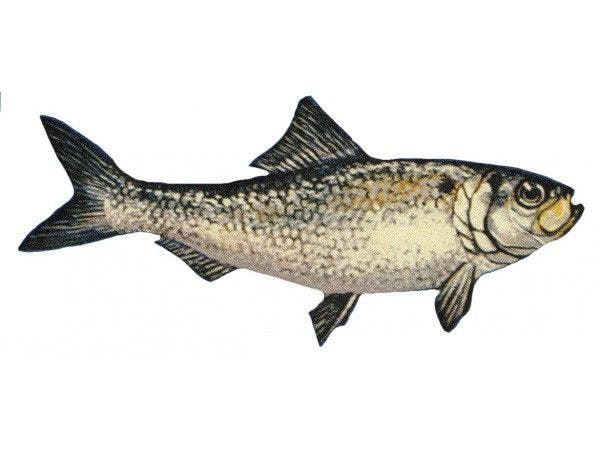
Connecticut’s Department of Energy and Environmental Protection on Monday announced that the prohibition on taking alewives and blueback herring from the rivers in Tolland and Hartford counties has been extended for another year.
Some lakes are a different story, however, and Crystal Lake in Ellington is exempt.
The action was initially taken in April 2002 and has been extended in successive years because there has been no improvement in populations of these species during the past year, DEEP officials said.
Find out what's happening in Ellington-Somersfor free with the latest updates from Patch.
The current action by DEEP Commissioner Robert Klee extends the prohibition through March 31, 2018.
“Conserving our wild fish runs is a priority for our agency,” DEEP Deputy Commissioner Susan Whalen said. “We keep looking for evidence that our conservation practices are leading to a recovery, but the data that we are collecting annually tell us that things are not getting better. We have no choice but to maintain the closure of these fisheries.”
Find out what's happening in Ellington-Somersfor free with the latest updates from Patch.
River herring is a term used collectively to refer to alewife and blueback herring. Both species are anadromous, which means they hatch in freshwater, migrate to the ocean to grow, then return to freshwater to spawn. Historically, millions of river herring returned to Connecticut’s rivers and streams each year.
More than 630,000 blueback herring were passed over the Holyoke Dam on the Connecticut River in 1985, DEEP officials said. By 2006, only 21 passed the Holyoke Dam, the lowest number in the history of the Holyoke Fishlift, DEEP officials said.
Numbers have fluctuated since that time but have never surpassed 1,000. In 2016 the number of fish passed was only 137, DEEP officials said.
While river herring are not an important food source for humans, they are an extremely important prey source to many species of freshwater and marine gamefish, as well as osprey, bald eagle, harbor seals, porpoise, egrets, kingfishers and river otter.
“The news from other states is encouraging. River herring runs are increasing in Maine and the state of Massachusetts may consider lifting its restrictions for some of its rivers,” said William Hyatt, chief of the DEEP’s Bureau of Natural Resources. “But runs in southern New England—especially Connecticut—have not rebounded. Some of our rivers had fewer river herring in 2016 than they did the year before.”
He said river herring return to the rivers from which they originated and therefore segregate into different populations.
"The fact that the species are plentiful elsewhere does not help our rivers, which now have a fraction of what they did 25 years ago,” Hyatt said. “We need to protect our populations until they have grown back to a level of abundance that can support harvest without threatening the long-term survival of the runs.”
Biologists from the DEEP’s Fisheries Division continue to work with their counterparts from the other northeastern states and the federal government to seek answers for the decline and develop conservation initiatives that will help re-build the populations, DEEPofficials said.
In addition, the Fisheries Division continues its other efforts to enhance river herring stocks by transplanting adult river herring into streams where runs have been eliminated or greatly depleted to promote recovery, DEEP officials said.
It also works with conservation groups to removing obsolete dams and building fishways that allow fish to migrate past remaining dams, officials added.
In 2016, more than 35 miles of freshwater riverine habitat were reconnected with removals of dams in Colchester, Meriden, and Southington. A new fishway was completed on a State-owned dam in Clinton and will begin operation in April when the river herring begin to run.
There are exemptions, DEEP officials said.
Non-migratory alewife populations are established in several lakes and ponds in Connecticut and the DEEP prohibition does not include landlocked alewives from Crystal Lake as well as Amos Lake, Ball Pond, Beach Pond, Candlewood Lake, Highland Lake, Mount Tom Pond, Lake Quassapaug, Lake Quonnipaug, Squantz Pond, Uncas Pond, and Lake Waramaug, officials said.
Alewives in the lakes may still be taken by angling and scoop net as established in state statute and regulation, officials said.
Patch File Photo
Get more local news delivered straight to your inbox. Sign up for free Patch newsletters and alerts.