Community Corner
Milling an Important Piece of Somers History
The mills in Somersville employed many people and provided valuable goods to the area — and to the country.


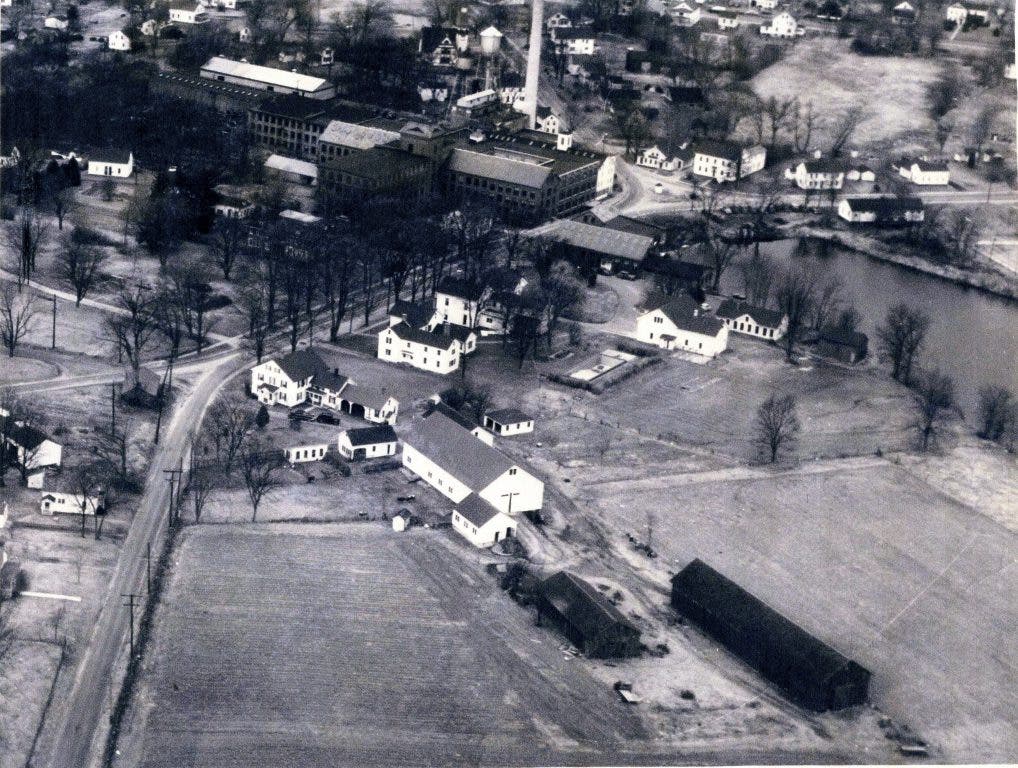


Milling was a very important part of early Somers history, and continued to be until 1969 when the mill closed.
On Saturday morning an era truly came to a close when one of the mill buildings .
The town of Somers was incorporated in 1734, and according to the Somers Historical Society, around that time, Samuel Billings came to America from England, first settling in Enfield before moving to Somers. Once in Somers, Billings built a gristmill and a sawmill on the Scantic River, and the area became known as “Billings Mills.”
Find out what's happening in Ellington-Somersfor free with the latest updates from Patch.
Billings also built a house for himself — at the intersection of Maple and School streets — and soon added a fulling mill to the complex. By 1834, there was a brick building beside the large wooden building.
Let Patch save you time. Get great local stories like this delivered right to your inbox or smartphone every day with our free newsletter. Simple, fast sign-up here.
Find out what's happening in Ellington-Somersfor free with the latest updates from Patch.
According to the historical society, in 1835 these mills were bought by Chester Spencer and his nephews, James and William Chaffee. The Chaffees were more interested in the mercantile business, and left to go elsewhere, dissolving the partnership. Spencer was a stockholder in the cloth company called the Somersville Company, which ran the mill until it was foreclosed on in 1852.
Then in 1853, Homes and Reynolds & Co. bought the property, enlarged it, and ran the textile mill, gristmill, and sawmill for 25 years. The company also built some houses on School and Main streets for the employees.
Rockwell Keeney had worked in this mill and had been running a similar mill in Massachusetts, and when he married Somers’ own Leonora Gowdy, he decided to move to Somersville with his sons George, Lafayette, and Mayro. In 1879, he bought the mills with his sons George and Lafayette, and founded the Somersville Manufacturing Company. He also bought the surrounding homes for the workers and also for his family’s own residences.
According to the historical society, the mills were very profitable for the Keeneys, especially during the two world wars, when their woolen cloth supplied material for blankets and coats for the soldiers. The family brought in skilled workers from abroad, adding a large, mostly Catholic, population to the Somersville section of town. They also built many more workers’ homes, many of them along Quality Avenue.
By 1969, the Environmental Protection Agency demanded that the process effluents be treated, and the family decided it was more than it could manage with the equipment it had on hand, and dissolved the business.
Since the mill closed, various operations have been in the buildings, but the textile mill has remained vacant and in litigation for many years, the historical society said.
Get more local news delivered straight to your inbox. Sign up for free Patch newsletters and alerts.