Politics & Government
Fairfield First Selectman Gerber Delivers 'State Of The Town' Address
"So yes, things are good here, but our increasing popularity brings challenges. Looking ahead over the next decade where do we want to be?"


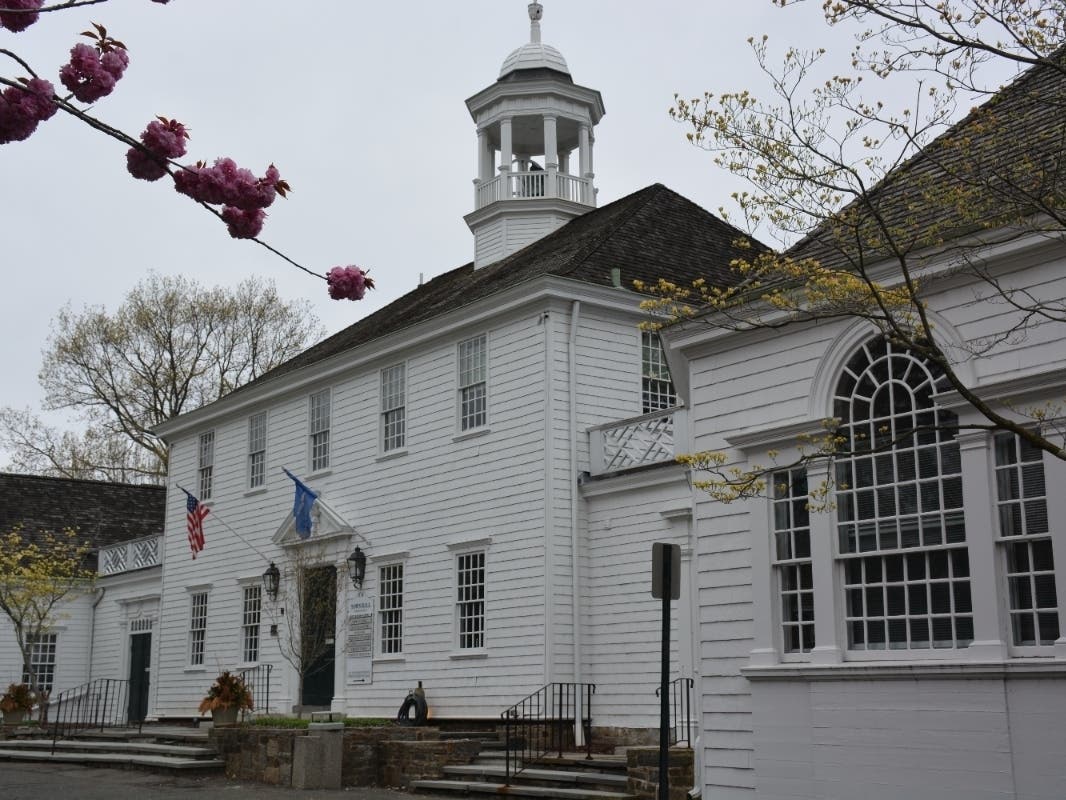
FAIRFIELD, CT — Fairfield First Selectman Bill Gerber delivered the 2024 "State of the Town" address to the Representative Town Meeting Monday, outlining his legislative priorities for the next year, and describing a promising vision for the town for the next decade.
The full text of the address is below, in which he discussed five key areas of focus for long-term planning, including:
- commercial and residential development;
- investing in the Town’s decades-old sewer system;
- the Town’s school system;
- traffic and the Complete Streets program;
- and flood resiliency for residents near the coastline and within the river basin system.
"Many of our current residents grew up in Fairfield, or went to college here and stayed here," Gerber said. "Take it from me, this speaks volumes for what Fairfield has to offer. I don’t hear many young people say 'I’m out of here and never coming back' when they graduate high school."
Find out what's happening in Fairfieldfor free with the latest updates from Patch.
He emphasized a need for the town to continue to improve its long-term planning, using past school decisions in the 1980s to early-2000s, to highlight the need to be more efficient in how Fairfield addresses challenges.
"Starting in the 1980s, as school enrollment declined, Fairfield began closing and repurposing schools as a way to save money," Gerber said. "Mill Hill, Osborn Hill, Oldfield and Grasmere Elementary Schools were closed. Instead of building a dedicated senior center and affordable senior housing, Oldfield and Grasmere (both almost completely walker schools) were permanently re-purposed. Ludlowe High School was closed and Warde expanded to absorb those students. Then what happened?
Find out what's happening in Fairfieldfor free with the latest updates from Patch.
"Over the following years, as the population again rebounded, Mill Hill, Osborn Hill and Ludlowe
High School had to be re-opened, a new elementary school, Burr, had to be built, and about 60
portables installed. What was the tab for all of this? About $140 million in 1980s, 90s and early
2000 dollars. You could safely double that amount, or more, to get a sense of the cost in today’s
dollars. This town spent an exorbitant amount of taxpayer money that could have been avoided
by better long-term strategic planning."
Gerber also discussed the town's budget, which benefitted in recent years from increases in the Grand List. The Grand List is not projected to grow at the same rate this year, and the town will not be able to lean on American Rescue Plan Act funds to avoid borrowing.
"One way to think of this is Fairfield was able to collect more tax dollars from property owners without impacting the tax rate (called the Mill Rate) to the same extent," Gerber said. "The math for this translates to the following in our town budgets: over the past four years, the average annual increase in the Total Expense Budget Line was 3.05%, while the Mill Rate increased by only 0.67%. This year, by contrast, the current Grand List growth estimate is about one-quarter of one percent, so we will not realize the valuation benefits seen in recent years."
In a statement to Patch, Selectwoman Brenda Kupchick, who Gerber defeated in November's election, said she appreciated Gerber's words on taxes.
"I want to thank Mr. Gerber for his acknowledgement of the good work my administration did keeping taxes low," Kupchick said. "It wasn't easy, but we proved it's possible. I look forward to the release of Mr. Gerber's budget."
Gerber also spoke about the importance of understanding the impacts of racism on public health, and he plans to read a proclamation on racism as a public health crisis at Wednesday's Board of Selectman meeting.
He spoke of the town's flourishing arts and cultural scene, and how he hope that Fairfield will be recognized as a destination for the arts, something he said the newly formed Fairfield Arts Commission will work to accomplish.
Additionally, Gerber also issued a call to reopen the Charter revision process, which was unsuccessful at the referendum level in 2022.
"The last Charter referendum included one single question that combined many separate issues, and may have failed for that reason," Gerber said. "Some proposals were worthy of being broken out as separate questions, and I believe, could have passed had they been. Many other needed changes were not proposed, but should be, as separate questions, for the next referendum."
Full text of Fairfield First Selectman Bill Gerber's 2024 State of the Town address:
Members of the RTM, Distinguished Guests, and my Fellow Citizens:
It is a tremendous honor to be here, as First Selectman, continuing this tradition of giving the
annual State of the Town address to the Representative Town Meeting.
I have been in office for just over two months, and I am prouder than ever to be a Fairfielder. I
feel particularly fortunate to find myself working with so many talented and dedicated
employees, department heads and volunteers. There are too many to name individually, but I
want to thank each one of them for the warm welcome they’ve given me and for their
commitment to serving the public.
Many of our current residents grew up in Fairfield, or went to college here and stayed here.
Take it from me, this speaks volumes for what Fairfield has to offer. I don’t hear many young
people say “I’m out of here and never coming back” when they graduate high school.
So yes, things are good here, but our increasing popularity brings challenges. Looking ahead over
the next decade where do we want to be?
live, work and retire.
- We want to maintain the quality of our schools. Not only are they educating our future leaders, but our education system drives our property values.
- We want to become a more walkable, bikeable and sustainable town, so all ages and abilities can enjoy healthier lifestyles and greater attachment to their community.
- And we want to live amid vibrant business districts to drive employment, revenue and convenience.
How do we do that? We have to be more strategic about our planning and investments.
In the next 15 minutes or so, I’ll describe where I think we need to focus our long-term planning
efforts and how I see a budget developing to support that. I’ll also touch on some specific issues
and initiatives that are timely.
LONG-TERM STRATEGIC PLANNING AND INVESTMENT
Let’s begin with commercial and residential development.
Fairfield was already a great town when I moved here 28 years ago. But, in my opinion, “great”
for Fairfield is underachieving. Fairfield can be much more.
My wife, Jessica, and I choose to move here in 1996 despite the fact that downtown businesses
were struggling. The Fairfield Store had just closed. The Howard Johnson’s on Post Road closed
within several months. There weren’t many choices for eating out with the kids - mainly
Sidetracks and McKenzie’s. For adults, there were only a few nice choices in town, so we usually
went to Westport on date nights.
The opening of Joe’s American Bar and Grill signaled a new day for young families, and there
were times we waited 45 minutes to get in. The re-development of the Fairfield Store property
was another milestone.
The success of our vibrant neighborhoods and commercial districts is tied partly to recent
demographic shifts. Our underlying home property values are inextricably linked to our excellent
public school system. Other impacts on our success are a highly educated workforce, access to
rail and airports, our position along the I-95 corridor between NYC and Boston, two private
universities and top-notch public services. Our Town offers urban style amenities in a suburban
style setting.
Commercial Development
turned out to be positive for the town. The Metro Center is an example. There were epic battles
about whether that project in any form should be allowed to happen. Now, in the opinion of
many including myself, we are looking at a very exciting area that …
- could and should be a significant driver of our grand list and tax revenue,
- could create a unique retail, restaurant, social and arts scene, with connectivity to an increasingly vibrant Black Rock section of Bridgeport, and
- is easily accessible by train and automobile.
Residential Development
We have had a lot of residential development in Fairfield, and there is legitimate concern over
zoning applications under State Statute 8-30g which allows developers to bypass most local
zoning laws for residential complexes if at least 30% of the units meet the state’s definition of
“affordable”. The town expects that this year we will obtain the 433 points we need to achieve
a four-year moratorium from 8-30g. That’s good news. But, four years will go by very quickly.
During that period, we must use every tool we have in our toolkit to work towards our next
moratorium with housing that is affordable and attractive for all ages, including seniors, and also
doesn’t negatively impact the feel of our neighborhoods.
Sewers
A few important things were developed around WWII – penicillin, radar and our town’s sewer
system. Fairfield has avoided appropriate investment in this area for decades. Now, our sewage
system has become a limiting factor to growing our Grand List.
The “flow”, as it’s called, from planned and proposed development is too much for some of our
existing lines.
Development at the Metro Center, for example, cannot proceed without a new trunk line, work
that is currently in progress. Additional development on the Post Road corridor from Westport
into town is also limited by our sewer system.
Our town sewage treatment plant may be nearing its capacity, but that is in large part due to a
collection system that is permeable to rain, ground and, at times, salt water. Inflow and
infiltration, as this is known, can be more than 50% of what flows through our lines.
Flushing your toilet is something we pretty much take for granted. We would like that to
continue and so Town bodies will be discussing tens of millions of dollars of necessary
investments in our Water Pollution Control Authority’s infrastructure over the next 10+ years.
Long- term strategic planning for our sewer system is critical - both for our current usage and
to enable future growth.
Schools
Paying for our school system is largely a local responsibility in Connecticut, and the Fairfield
Public School budget accounts for about 60% of our total budget. Starting in the 1980s, as school
enrollment declined, Fairfield began closing and repurposing schools as a way to save money.
Mill Hill, Osborn Hill, Oldfield and Grasmere Elementary Schools were closed. Instead of building
a dedicated senior center and affordable senior housing, Oldfield and Grasmere (both almost
completely walker schools) were permanently re-purposed. Ludlowe High School was closed
and Warde expanded to absorb those students. Then what happened?
Over the following years, as the population again rebounded, Mill Hill, Osborn Hill and Ludlowe
High School had to be re-opened, a new elementary school, Burr, had to be built, and about 60
portables installed. What was the tab for all of this? About $140 million in 1980s, 90s and early
2000 dollars. You could safely double that amount, or more, to get a sense of the cost in today’s
dollars. This town spent an exorbitant amount of taxpayer money that could have been avoided
by better long-term strategic planning.
Traffic
One cost of our popularity is increased traffic and dangerous rights of way. Today, all over the
country, town planners are realizing that connecting neighborhoods through safe and attractive
rights of way leads to healthier and happier societies. You will hear the term “connectivity” a lot
over the coming years. Streets can be redesigned to slow down automobiles, and well-designed
sidewalks, bike lanes, and paths can reduce our dependency on cars, driving foot traffic to our
commercial areas, and increasing economic activity.
It may take Fairfield 20 years to be a “Complete Streets Town” but we must start the planning
now if we are to deal with the increased population growth that we’ve seen over the last 20
years. We need to ensure a sustainable, livable town for everyone- from children to seniors.
Flood Resiliency
We have one of the longest coastlines of any municipality in Connecticut, and resiliency to
flooding is one of the biggest challenges we face as a town. We will be making large
investments to repair and replace existing flood resiliency infrastructure over the coming years.
Long-term strategic planning is essential for our residents near the coastline and within our
river basin system to mitigate flooding and damage.
THE BUDGET
I’ve described five areas where long-term planning is vital to our success…
1. Commercial and Residential Development
2. our Sewer System
3. Schools
4. Traffic
5. And Flood Resiliency
Let’s talk now about the impact on the budget and ultimately, taxes.
At a high level, we face some challenging cliffs in the fiscal 24-25 budget that are left from prior
years. Over the past four years, we had significant increases in our Grand List, an average of 2%
per year, much of that from rising appraised values of existing real estate. This translated to an
average increase of $6.5 million of tax revenue per year. One way to think of this is Fairfield was
able to collect more tax dollars from property owners without impacting the tax rate (called the
Mill Rate) to the same extent. The math for this translates to the following in our town budgets:
over the past four years, the average annual increase in the Total Expense Budget Line was
3.05%, while the Mill Rate increased by only 0.67%. This year, by contrast, the current Grand
List growth estimate is about one-quarter of one percent, so we will not realize the valuation
benefits seen in recent years.
At the same time, Fairfield borrowed significantly less in recent years by employing American
Rescue Plan Act (or ARPA) funds towards projects that would typically have been bonded or paid
for out of the operating budget. Our cost of borrowing was down by $2 million last year. ARPA
funds have been allocated and borrowing rates are now significantly higher. Our borrowing
amounts will have to return to normal levels and will cost more than in the recent past.
The Board of Education teachers’ contract was renegotiated this year. Last year, our
superintendent gave us the heads up that our teachers were significantly underpaid versus our peers, and our retention and new hire rates were dropping as a result. The new contract includes a three-year increase of about 4.4% per year on average. The Board of Education proposed budget increase currently stands at about 5.4%. What does that mean? Well, the Board of Ed budget is about 60% of the total Fairfield budget so that’s a large increase.
These are some of the challenges we face, and we are looking for ways to offset as much of
these headwinds as possible. However, we know we can’t compromise the level of services
Fairfielders are used to and deserve.
EFFICIENCY
I just explained how important a long-term outlook is for planned growth. An equally important
element is improving efficiencies throughout the town. We are blessed with many dedicated
and talented employees, but in some areas we are hamstrung by antiquated systems and
processes. Recently, some of these deficits have led to well-publicized issues around internal
controls. Addressing such problems effectively takes resources - not just money, but also time
and attention of employees with the appropriate skill sets. Making appropriate investments to
increase efficiencies and controls will ultimately save our taxpayers money.
ISSUES
Finally I’d like to talk to you about some issues that my administration is working on.
The Fill Pile – a quick update on the fill pile. All but two sites have now been remediated and the
remaining work is happening now. Construction on the Pavilion is scheduled to begin shortly
with work expected to be completed in the January - February, 2025 timeframe. We continue to
work with CT DEEP on how to address the fill pile itself to achieve a permanent resolution.
Diversity, Racial Equity and Justice
At Wednesday’s Board of Selectmen meeting, I will be accepting into the record the Racial Equity and Justice Task Force’s Blueprint that was originally submitted to the BOS in January, 2022. Members of that Task Force worked for 18 months on this Blueprint and this work has never been adequately acknowledged. Two years later, most of this Blueprint remains very relevant. At Wednesday’s meeting, I will also be reading a proclamation regarding racism as a public health crisis. A few years ago, I received my Masters in Public Health, and through my course of studies became more aware than ever about the impacts of racism on public health. I am also committed to forming a permanent body to discuss issues of race in Fairfield and to propose solutions to make Fairfield a more inclusive community.
Arts Commission
Is the arts scene thriving in Fairfield? You bet it is! We have so much artistic talent in Fairfield,
including in our schools. I urge all of our artists in town to reach out to the newly formed
Fairfield Arts Commission and let them know you are here. The mission of the Fairfield Arts
Commission is to promote and celebrate the Arts in the town of Fairfield, and we can brand and
promote our arts scene to make Fairfield known as a destination for the arts.
Charter
Let’s celebrate and support our form of highly participatory, municipal democracy, but commit
to making improvements where we can. I do believe that we need to reopen the Charter
revision process soon. The last Charter referendum included one single question that combined
many separate issues, and may have failed for that reason. Some proposals were worthy of
being broken out as separate questions, and I believe, could have passed had they been. Many
other needed changes were not proposed, but should be, as separate questions, for the next
referendum.
United Illuminating Monopoles
Finally, a matter of great importance to all of us in Fairfield. There has been much discussion about United Illuminating’s proposal to build massive monopoles through Fairfield and into Bridgeport, requiring permanent easements on over 19 acres of private property, both residential and commercial, and cutting down over six acres of trees and vegetation. I have made my views on their proposal clear in many different forums. I view UI’s current proposal to be a significant economic threat to Fairfield and am committed to fighting it. We now have some of the best legal representation on these matters in the State and our administration confers with our lawyers on every aspect of this case regularly. I hope that you as RTM members and all of our residents will continue to support us by writing to Governor Lamont expressing your views.
CONCLUSION
In conclusion, I want to say that as a former financial executive and a former RTM member, I
believe we have a great combination of talent in this town to lead us into a bright future. We
have two universities, a vibrant business community, quality schools and services that support
our residents at every stage of life. By focusing on strategic long-term planning at the same time
that we improve the blocking and tackling of running the town, I think we will be well positioned
to capitalize on all that Fairfield has to offer.
I ran for office to solve problems and get things done. I hope to engage ALL elected and
appointed officials, and all residents in finding solutions because I truly do believe that we are
better when we work together.
Again, thank you for this opportunity to speak to you. It is a tremendous honor.
Get more local news delivered straight to your inbox. Sign up for free Patch newsletters and alerts.