Community Corner
Before High School, Every Child Deserves the Chance to Lead
By Sharon Lauer, Head of School, The Unquowa School

This is a paid post contributed by a Patch Community Partner. The views expressed in this post are the author's own, and the information presented has not been verified by Patch.
Ask an eighth grader what they remember about second grade, and you might expect stories about favorite teachers or classroom adventures. But at graduation, I often hear something else: the memory of an older student who offered a helping hand, spoke a kind word, or simply made them feel that they belonged.
The child who once looked up to an eighth grader, years later has become one. It is a gradual but remarkable transformation, and one of the most compelling arguments for a PreK–8 education.
We often speak of leadership as something children will develop when they are older. We guide them towards responsibility, independence, and confidence, as though these qualities emerge naturally with maturity and result in leadership qualities. But leadership is not simply a destination. It is a characteristic developed through practice, responsibility, and the experience of being needed and trusted.
This opportunity matters enormously during early adolescence, and in a PreK–8 school, eighth graders occupy a unique position to experience this opportunity. At an age when young people are beginning to understand their influence on others, the PreK-8 setting guides them to use that influence in a positive way by becoming the leaders of their community. Younger children look to them for guidance, teachers entrust them with responsibilities, and they see that their actions have consequences beyond their immediate circle of friends.
The educational value lies not in the status of being oldest, but in what that position asks of them and how right action makes them feel.
At Unquowa, practicing this leadership role begins even earlier. Third and fourth graders help kindergarteners navigate school routines, and they contribute to their K-4th grade lunch service and cleanup. Older students welcome visitors, mentor younger classmates, and represent their school in the wider community. Responsibilities grow alongside their capacity to fulfill them.
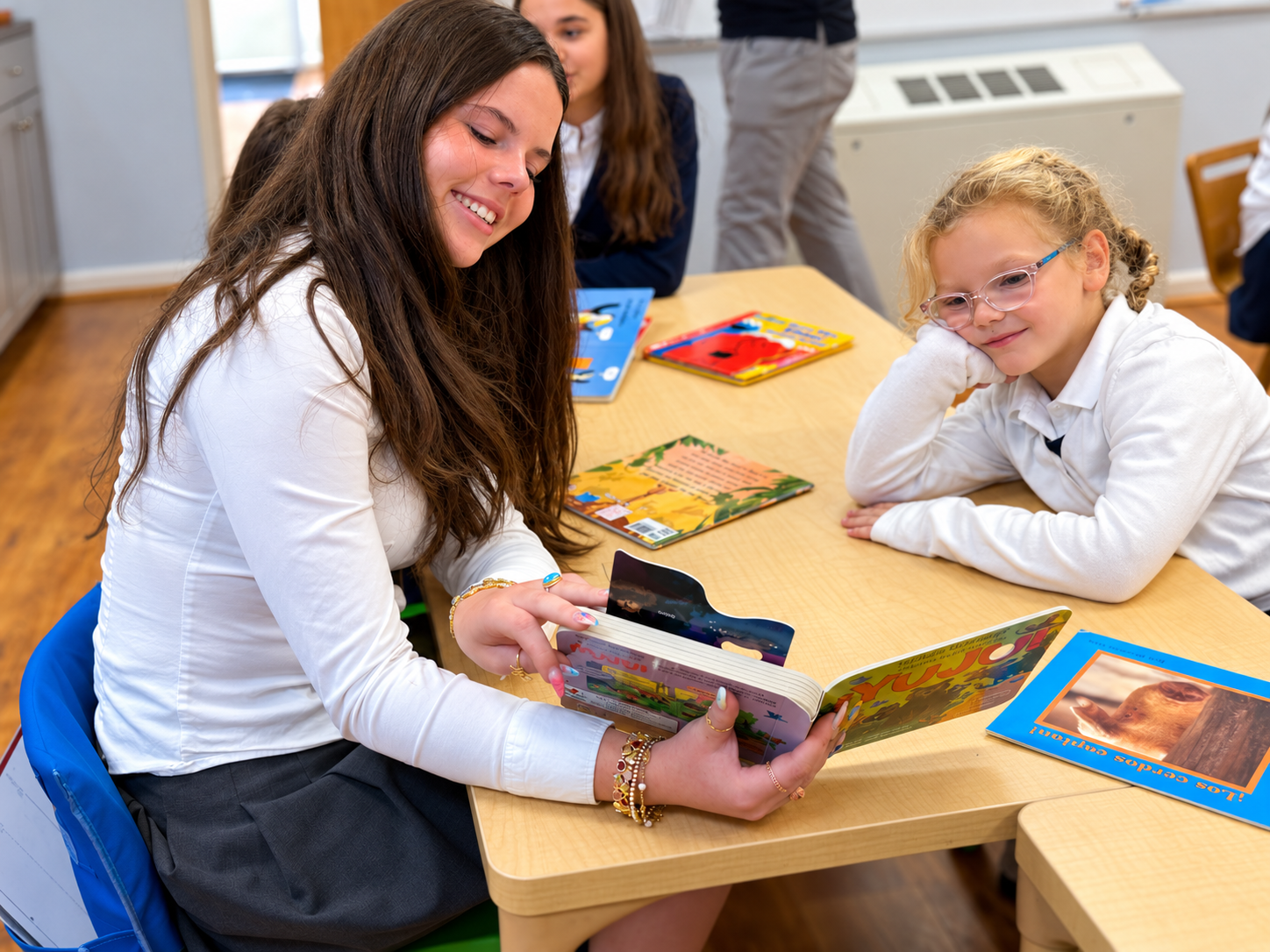
These are not symbolic gestures designed to make children feel important. They are opportunities to discover that they are important to the functioning of a community because they are capable.
There is an educational discipline in allowing children to take responsibility. Adults can usually accomplish a task more efficiently themselves. Teaching a child to take over requires patience, demonstration, encouragement, and occasionally the willingness to watch something unfold imperfectly. Yet that investment produces something far more enduring than a completed task: it produces competence and confidence.
Confidence, after all, is not something we can simply give children through praise. It is something they acquire when experience teaches them that they are actually capable.
A student who first speaks before a small group may eventually address the entire school at Assembly. Another may discover leadership not through public speaking, but through quietly helping a younger child, honoring a commitment, or finding the courage to challenge something unjust.
Leadership doesn’t need to be loud to be consequential.
This is the key promise of the PreK–8 model. Before entering the larger, more complex social world of high school, students have an opportunity to see themselves as capable leaders in a community that knows them well, and this sends them off to high school with the confidence to spread their leadership wings in a larger school community.

Our responsibility as educators is not just to prepare students for the academic demands awaiting them in high school, though that is a crucial part of what we do. It is also to help them to develop the judgment, independence, and moral courage to meet an unfamiliar world with confidence and character.
Before children must find their place in a larger community, there is extraordinary value in giving them the opportunity to live in and lead a smaller one.
This post is an advertorial piece contributed by a Patch Community Partner, a local brand partner. To learn more, click here.