Politics & Government
Jewish Home's Bid to Change Regulations for Expansion Rejected Again
Members of Town Plan and Zoning Commission, Expressing Concern About 'Spot Zoning,' Vote 7-0 to Reject Regulation Changes That Would Have Allowed JHE to Rebuild its Facility

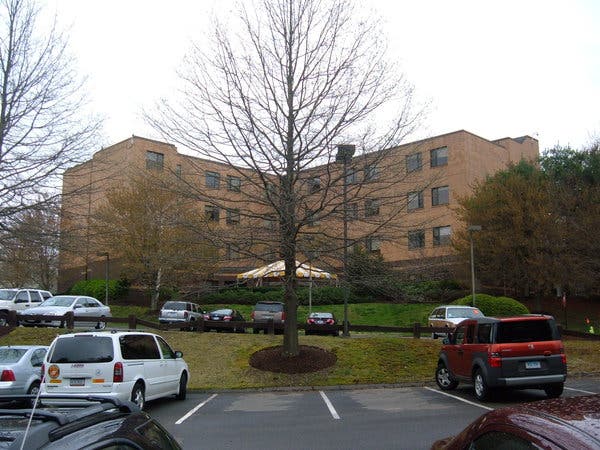
Tuesday night must have seemed like deja vu for the Jewish Home for the Elderly.
First, members of the Town Plan and Zoning Commission spoke highly of the Jefferson Street nursing home, praised the JHE's work in caring for elderly residents and said they liked the JHE's idea to have rooms that were more residential, and less institutional, in appearance and design.
Then, commission members voted to reject regulation changes that would have enabled the JHE to demolish its nursing home and build a new nursing home in its place.
Find out what's happening in Fairfieldfor free with the latest updates from Patch.
"We all appreciate and respect the work of the Jewish Home. It provides a critical service to the people of Fairfield," said commission member James Kennelly.
But Kennelly and commission member Bryan L. LeClerc said the JHE's proposal to change town zoning regulations for chronic convalescent and nursing homes on properties of at least 15 acres seemed like "spot zoning," a term that means regulations are changed for the benefit of a single property.
Find out what's happening in Fairfieldfor free with the latest updates from Patch.
"In our work, using the term 'spot zoning' is a bomb-thrower's term," Kennelly said during the TPZ's meeting in Fairfield Ludlowe High School. But Kennelly said the JHE's proposed regulation changes were problematic because they seemed to benefit only the JHE. "If we're going to make a change to the regulations, from my perspective, there ought to be a larger reason," he said.
Kennelly said he didn't like that the JHE wanted to change zoning regulations in lieu of seeking a waiver to regulations. Austin K. Wolf, the JHE's attorney, said in public hearings that he didn't think the town's Zoning Board of Appeals would approve a waiver to existing zoning regulations. In order for the ZBA to grant a waiver, an applicant has to prove "hardship."
Kennelly said he was "very concerned about the approach the leadership of the Jewish Home has taken to move this forward."
"The leadership of the Jewish Home should follow our process...For me at least, the method with which this is being approached is one I'm not particularly comfortable with, for one entity," Kennelly said.
Matthew Wagner, a commission member, said he was reluctant to approve the regulation changes without the Jewish Home at least trying to get a waiver from the Zoning Board of Appeals. He agreed with Kennelly that the proposed regulation changes - which would have increased permitted lot coverage from 15 percent to 20 percent and floor area from 30 percent to 50 percent of a property's size if a chronic convalescent or nursing home were on at least 15 acres - amounted to "an application for this parcel and this specific parcel."
The JHE's property at 175 Jefferson St. is 15.6 acres.
"I want to approve this," said TPZ Chairman Seth D. Baratz. "I really think it's great, what they want to do. I would rather see the process done differently...I think this is more of a variance thing. I would probably support it if I was on the ZBA."
Douglas L. Soutar, a commission member, said he was "very much in favor" of the JHE and that it "provides a valuable public service." But he too was uncomfortable with changing regulations for the benefit of one property.
"The first night of the hearing, I wrote down two words - 'spot zoning,' " commission member Bryan L. LeClerc said. "That's not the purpose of zoning regulations...to change regulations to affect one property."
The JHE may be able to avoid the need for a regulation change or waiver by reducing the number of proposed buildings or putting them in a different formation, said commission member Deborah K. Owens. "It's not the end of the road for this, but it can't go this way," she said.
The JHE's proposed regulation changes, which applied to properties zoned "Residence 3," were opposed by neighborhood residents based on the potential for overdevelopment, traffic and the impact the changes might have if other approved uses, such as schools or churches, questioned why nursing homes were singled out for special treatment.
The seven TPZ members who rejected the regulation changes were Kennelly, LeClerc, Soutar, Baratz, Owens, Wagner and Sally E. Parker.
The TPZ previously rejected regulation changes that would have enabled the Jewish Home to rebuild its facility in July. Back then, the proposed regulation changes didn't have the 15-acre requirement.
The JHE's preliminary development plan, which was not the subject of its application to change zoning regulations, called for the JHE to demolish its three residential pavilions and build nine residences in their place. The number of beds in the JHE would drop from 360 to 320 because the proposed residences would have larger rooms that include a living room, dining room, kitchen, bathroom, shower and outdoor terrace. The new rooms also would be private, instead of including roommates, and would be designed to give senior citizens more dignity and privacy, according to Andrew Banoff, the JHE's president.
Get more local news delivered straight to your inbox. Sign up for free Patch newsletters and alerts.