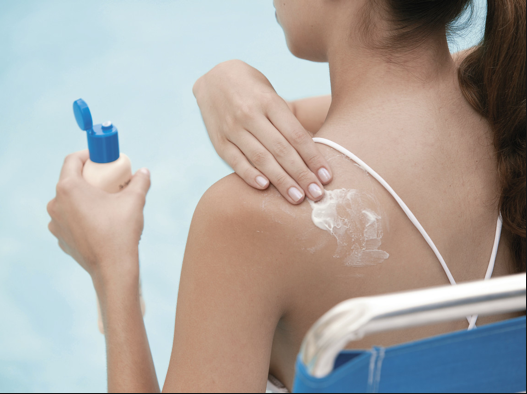
Summer is nearly here and that can only mean one thing for the companies that make sunscreen products. Payday has arrived.
Millions of well-intentioned Americans will be covering up to prevent cancer, primarily by slathering themselves in sunscreen and sun screening products. Most of these will contain questionable ingredients, and many of them will be downright toxic. It took years for doctors to convince us to stay out of the sun and to protect our skin from the harmful effects of UV rays, but now that we're here it may be time to rethink the entire sunscreen prescriptive. As a society, we're not suffering the ill effects of too much sun, but we may be paying in spades for getting too little of it, and for introducing unfriendly chemicals into our bodies.
I think we've been pretty clear in the past about why we all need to take in some sun daily. We need sunlight so that our bodies can make Vitamin D, which is critical to human health. Sunscreens, though, make it nearly impossible for us to get the sun we need to produce Vitamin D naturally. That's a problem.
Another problem is the toxicity of most sunscreens. When you put something on your skin, it gets absorbed directly into your bloodstream. The sunscreen doesn't just sit on top of your skin. It sinks in, bringing all of the carcinogenic and hormone disrupting agents contained in most commercial sunscreen products along with it. If you can't eat it then you probably shouldn't be wearing it.
Yes, there is a time and a place for some sunscreen, but it's not every day. Common sense, protective clothing and minimizing exposure to direct sunlight when it is strongest will go a long way to protecting skin. Most of us are indoors for most of the day anyway and so aren't in nearly as much danger of overexposure as the press, sunscreen manufacturers and over-zealous dermatologists would have us believe.
Our family uses coconut oil as a sunscreen, which is completely natural and also good for your skin. Coconut oil is the original sunscreen and is used by people all over the world for its natural protective effects. It blocks about 20% of the sun's UV rays, and that combined with protective clothing and sensible sun exposure should be all that anyone really needs. You can increase the protective effects of coconut oil by applying it more frequently: every two hours is ideal for fair-skinned people. We're talking about pure coconut oil here by the way -- not a sunscreen or other commercial sun lotion containing coconut oil.
If you're looking for a commercial sunscreen then you may want to check out the Environmental Working Group's site. This not-for-profit group lists information about sunscreen brands and their ingredients that can be helpful for most people. Additional resources and information on sun exposure and sunscreens can also be found here and here.
The bottom line? Enjoy the sun. Get a little every day. Use common sense and read the labels before you put, or spray, anything on your skin. Happy summer.
In good health,
Dr Allie Mendelson
************************
Dr Allie is a chiropractor in Farmington at Talcott Family Chiropractic. Subscribe to the newsletter to receive valuable health information and to learn of upcoming free workshops.
Dr Allie is a frequent speaker on topics concerning wellness and nutrition, and hosts "The Dr Allie Show" which airs on several Hartford area radio stations. See here for radio schedule and to listen to prior shows.