Community Corner
Coronavirus Docks Nation's Oldest Continuously Operating Ferry
The coronavirus crisis has left a historic ferry on the Connecticut River at the dock for now.


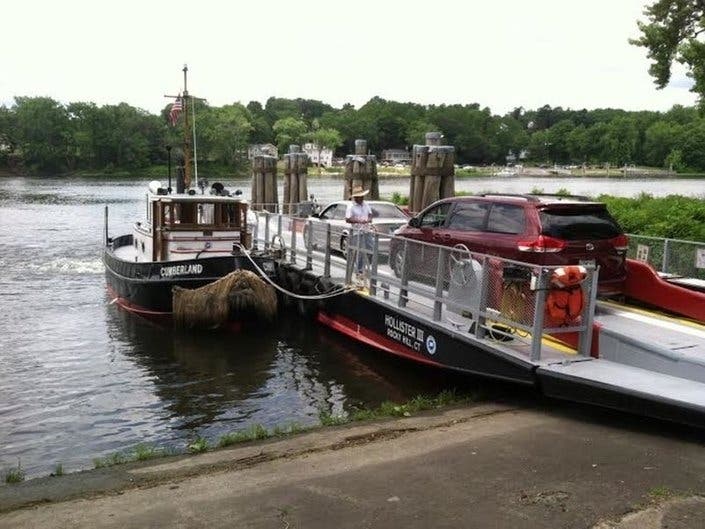
GLASTONBURY, CT — Concerns over the new coronavirus have left America's oldest continuously operating ferry at the dock for now. The ferry usually operates from April 1 through Nov. 30.
The ferry crosses the Connecticut River and is part of state Route 160, which begins at Route 15 in Berlin and ends at Route 17 in Glastonbury. The docks are in Glastonbury and Rocky Hill.
"The ferry will not open and will be closed indefinitely until further notice, due to the COVID 19 situation," according to a notice on the state Department of Transportation's ferry website.
Find out what's happening in Glastonburyfor free with the latest updates from Patch.
Delays are usually reserved for high water this time of year. Last year at this time, a rainy period led to increased water levels on the Connecticut River and stalled the ferry's schedule. High water creates a bad angle for the ramp on which vehicles load and unload, state DOT officials have said. The high water also creates a swifter current and a greater chance that the barge-and-tug ferry would encounter dangerous, floating debris, state DOT officials have said.
The ferry is the nation's oldest continuously operating service, dating back to 1655.
Find out what's happening in Glastonburyfor free with the latest updates from Patch.
The ferry operates on a tug-and-tow system with a small tugboat — the Cumberland — pulling a barge — the Hollister III. The rig accommodates three cars and about 15 motorcycles.
The original ferry was a small raft pushed across the river using long poles. In 1876, the ferry was "modernized" into a steam-driven craft system, DOT officials said.
The Cumberland was commissioned in 1955, and there have been three versions of the Hollister.
Get more local news delivered straight to your inbox. Sign up for free Patch newsletters and alerts.