Health & Fitness
Aging at Home Takes a Plan: Experts Share Where to Begin
If a fall, a new diagnosis or a sudden change in conditioncame tomorrow, would you and your family be ready?



Aging at Home Takes a Plan: Experts Share Where to Begin
Dr. Stephanie Paulmeno, Advisory Board Member, former Board Member of AHIG (Doctor of Nursing Practice, Gerontologist, Nursing Home Administrator, Nationally Board-certified in Public Health, Case Management, & Dementia Care)
GREENWICH, CT — If a fall, a diagnosis or a sudden change came tomorrow, would you and your family be ready?
Find out what's happening in Greenwichfor free with the latest updates from Patch.

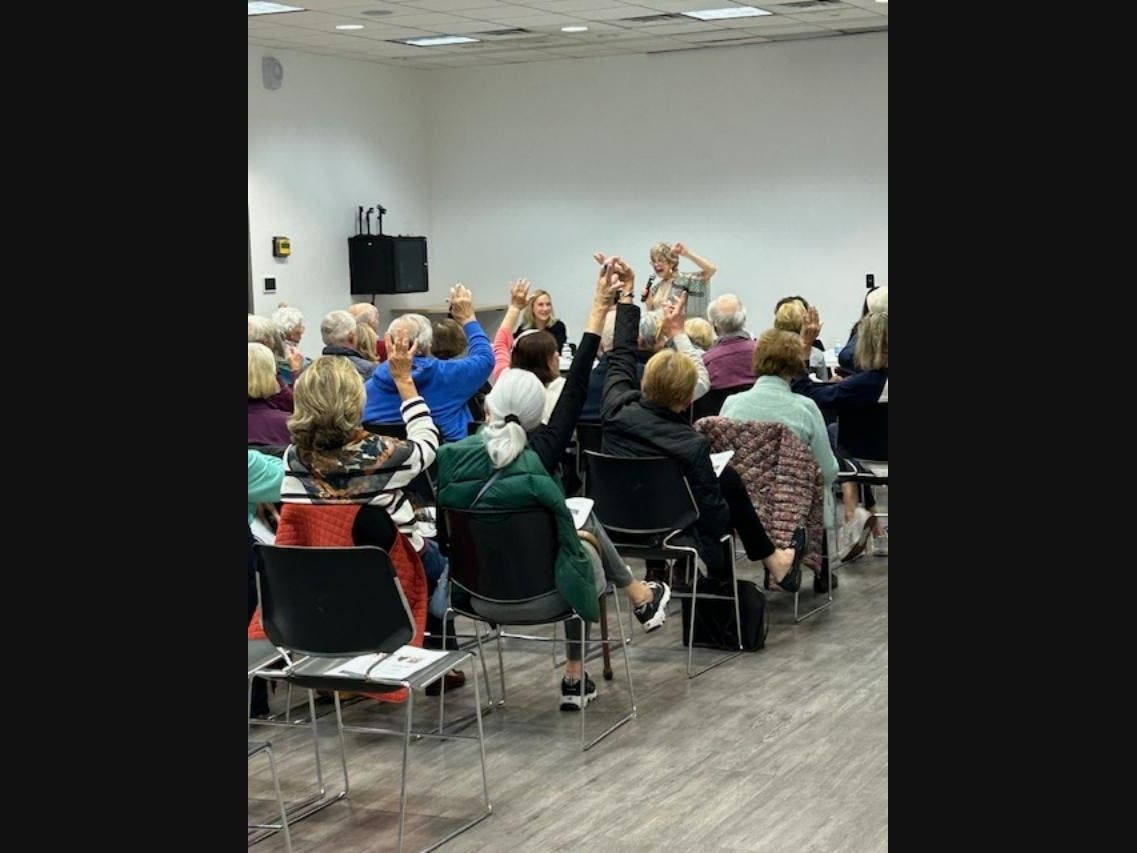
That question framed "Home Is Possible! Learn What It Takes to Age Safely and Confidently at Home", an At Home In Greenwich panel presentation that drew more than 60 people to the Greenwich YWCA on Oct. 19.
Find out what's happening in Greenwichfor free with the latest updates from Patch.
Moderator, Dr. Stephanie Paulmeno, a registered nurse for more than 58 years and a licensed nursing home administrator since 1987, reminded the audience that staying home is "possible because of planning, made one thoughtful decision at a time." The five expert panelists offered practical advice, each from their own fields of practice and experience.


 Panelists: Ricki Goldstein,
Kathy Moniello, Michelle
Beltrano, Dr. Stephanie
Paulmeno, Roni Lang,
Linda Ziac,
and Ann McCarthy.
Look at your home through a different lens. Kathleen Moniello, a Seniors Real Estate Specialist and Certified Aging in Place Specialist with Coldwell Banker, and President of Forevermore Homes, LLC, asked attendees whether their homes would still work if they needed a rollator or wheelchair, or a caregiver's help. She shared the story of a couple in their late 60s whose eyes were opened when the husband broke his ankle. Moniello described six key features of an aging-in-place-ready home: one-level living, a low-threshold covered entry, wide doorways, an accessible bathroom, space for a caregiver and an engaged location. If features are missing, she said, the question becomes "modify or move?" Her tip: borrow a wheelchair and try navigating your own home. She also made available her book, "Housing and Care Decisions Today: Shaping the Quality of Your Life Tomorrow," from her "Aging in the Right Place" series, to the panel attendees free of charge via a QR code. Her book offers a home self-assessment and a 12-step guide to housing and care decisions. “The best decisions are made before they become urgent.”
Know when it's time for home care. Ricki Goldstein, RN, JD, of Sterling Care described the warning signs that a loved one may need more help at home, and how families can open that conversation with care and respect. She walked through the types of support available, from companion care to a licensed home care agency, where a registered nurse assesses each client and oversees an individualized plan of care. The benefit, she stressed, is more independence, not less.
Plan while you can. Elder law attorney Michelle Beltrano, RN, Esq., of Beltrano Law, LLC, of Greenwich explained how estate planning documents help keep people at home. A power of attorney document lets a trusted person sign a home care contract, pay for a ramp or chair lift, and apply for Connecticut's Home Care Program for Elders (CHCPE) on your behalf. Without one, a family may face a court-supervised conservatorship. Health care advance directives, a revocable trust and a pour-over will round out Attorney Beltrano's recommended plan. The number one reason she sees clients forced to move, she said, is a home that is no longer safe, or a house worth millions with no cash left for 24-hour care.
Build your circle of support. Linda Ziac, LPC, CCM, Founder of The Caregiver Resource Center that has operated in Greenwich for 36 years noted that roughly one in four adults 65 and older lives alone, a share that climbs sharply with age. Being alone does not mean being lonely, she said, but living alone removes the built-in safety net a household provides. She urged attendees to build a circle of support that reaches beyond family, set up a regular check-in routine, name a health care proxy before a crisis, and assemble a "Go Book" of essential information for emergencies. Make sure the people in your support network know they are in it and what it is you are asking of them. Are they willing to do that? “One or two reliable relationships make a real difference.” Ziac also reviewed worksheets she developed for participants ibn this presentation to use at home.
Make friendship part of the plan. Roni Lang, LCSW, a longtime social worker experienced in geriatric assessment, explained how friendships support health yet become harder to maintain with age. She shared strategies for forming and sustaining relationships and for building a personal social support plan.
Borrow before you buy. Resource tables at the event included a QR-coded flier for all five Wheel It Forward locations, a resource program that was not on the panel. These are no-cost lending libraries of durable medical equipment (wheelitforward.org).
Dr. Paulmeno closed with three action steps: walk through your home with fresh eyes; make sure your health care and financial documents are in place and that someone knows where they are; and have an honest conversation with the people you'd count on.
To learn more, contact At Home In Greenwich at (203) 422-2342 or director@athomeingreenwich.org.