Arts & Entertainment
Alexandre the Great Captures, Enraptures Audience at the Greenwich Symphony
More Moutouzkine, less Liszt!


By Linda Phillips
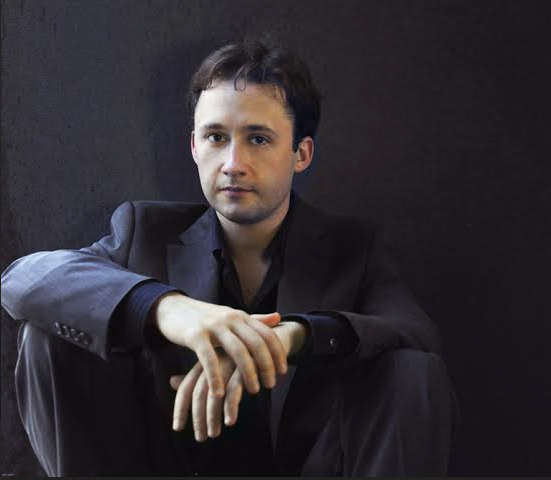
Flashback: The incredible young pianist Alexandre Moutouzkine first showed Greenwich audiences his astonishing artistry in the Rachmaninoff Piano Concerto #3 in 2012 with the Greenwich Symphony, a performance which left the audience collectively gasping.
Last weekend, in the final concert of the Symphony’s 57th season, the work he played was the massively pyrotechnical Liszt Piano Concerto #2, with lots of runs, flourishes, octaves, arpeggios, trills and very little thematic material. While he astonished with his presence and fantastic technique, we wanted more: a real concerto, with discernible movements. And we didn’t even receive an encore from the gifted young man in a black tailcoat after a standing ovation and many cries of “bravo.”
Find out what's happening in Greenwichfor free with the latest updates from Patch.
Conductor David Gilbert announced the works, and gave background information on the pieces to be played and on the inside history of music, introducing many of us to Mottl, a great conductor of the late 19th century who championed Berlioz and Chabrier, and collaborated with Gluck.
Opening with the Gluck-Mottl Ballet Suite #1, the orchestra sounded the work’s major theme, with French horn prominent. Section two was consonant and sweet going from minor key, with major resolutions. In the third section French horn and flute spoke, Light and sprightly, the section contained an excellent motif by flutist Helen Campo. A light, romantic section followed, with the entire work courtly and rather majestic.
Find out what's happening in Greenwichfor free with the latest updates from Patch.
Alexandre Moutouzkine took the stage for the Liszt with a command that extended to his greeting of Concertmaster Krystof Wytek, then turned his prodigious talent to the keyboard, where he issued the four sections, encapsulated in one unbroken movement, moods changing and drama surging, with total mastery.
The quiet opening, with clarinet prominent, led to broken chords in piano, the on to astonishing runs, where Mr. Moutouzkine showed his absolutely perfect dynamics.
Dramatic and florid, Adagio sostenuto assai contained runs and a solo by the pianist that was dark, and repeated in the orchestra. It ran immediately into Allegro moderato, quiet, the cello picking up the melody from piano in a duet. Allegro deciso was markedly 4/4, with the piano repeating a sequence of chords. Allegro animato was a breathtaking scampering in the keyboard, dramatically underscored by kettle drums. Moutouzkine was astonishing, riveting.
To call Mr. Moutouzkine’s performance “flawless” would be to belittle it.
Preternatural, perhaps?
Brahms Symphony #1, sometimes called “Beethoven’s 10th, is a beautifully scored work (Brahms was a master of orchestration) and the opening was commanding, capturing with orchestral balance and comprehension the beautiful tumult of Brahms’ mind and emotion. The pounding opening of un Poco Sostenuto was akin to the beating of a pounding heart, the oboe sounding mournfully. Andante Sostenuto, stately, slow, was exalted, with French horns, woodwinds and brasses featuring and a solo by Concertmaster Wytek. Un poco allegretto e grazioso in a sprightly movement, leading to the majestic theme of the fourth movement, which ends with the full passion, vigor and understanding of the composer, and contains the symphony’s recognizable theme. As Brahms said of his compositions, “I take dictation from God.”
This season, the GSO has taken a leap forward in its performance artistry: Scheduling an array of great symphonic works, and playing them with intensity and an organic unity.
And Mary Radcliffe, president of the GSO Board of Directors, presented the GSO’s 2015 Music Award to cellist Emily Azzarito at the Sunday performance. Pianist Alicia Wang also won the award — both students with great promise.
For information on the upcoming 58th season of the GSO, go to www.greenwichsymphony.org
Photo credit: E. Appel
Linda Phillips’ classical music reviews have won four “Best Column of the Year” awards from the Connecticut Press Club, and have been nominated for the Pulitzer Prize in Criticism. She is the author of the novel, “To The Highest Bidder,” nominated for a Pulitzer in fiction.
Get more local news delivered straight to your inbox. Sign up for free Patch newsletters and alerts.