Community Corner
Greenwich PD Sees 'Drastic Increase' For Youth Mental Health Support
The Greenwich Police Department said it has seen a big increase in the need for mental health support for young people in recent years.


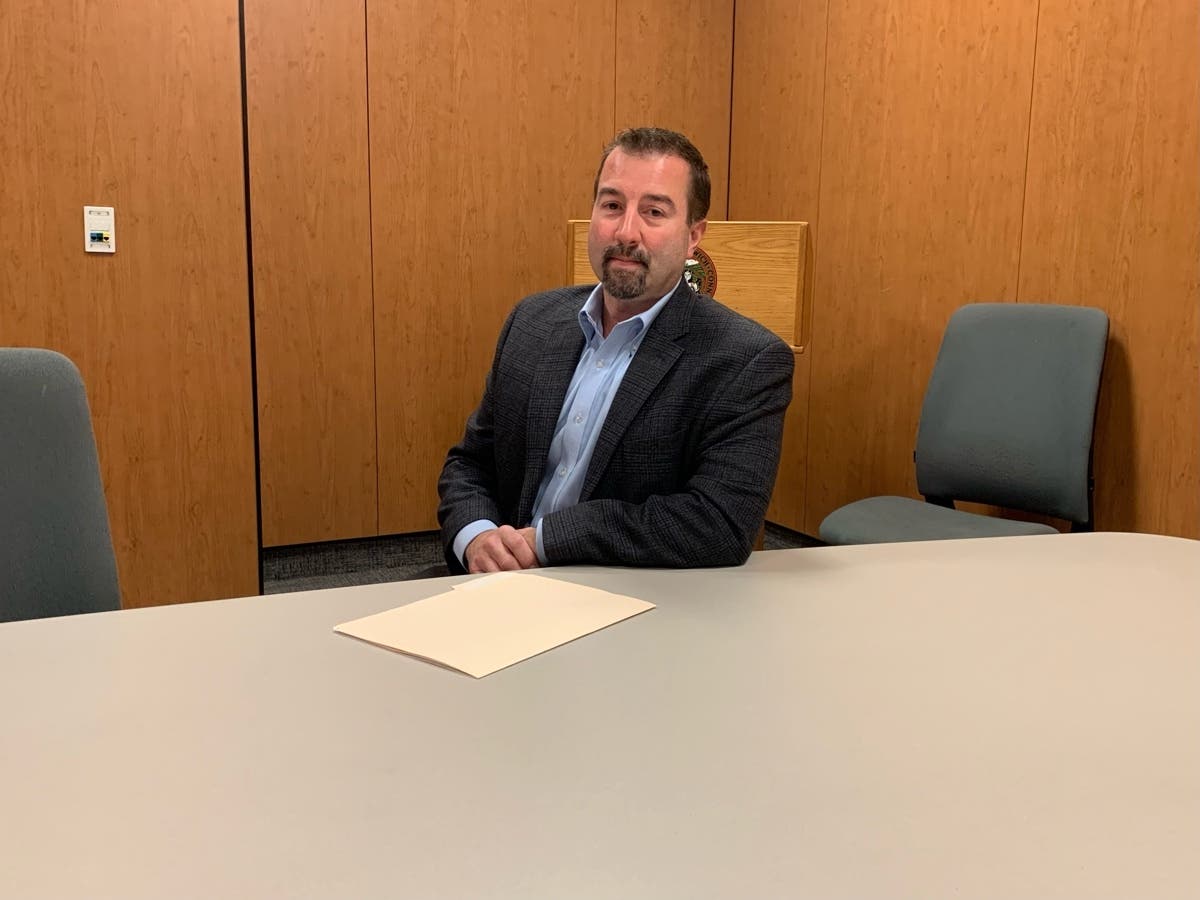
GREENWICH, CT — Since COVID-19 restrictions have lifted and society has adjusted to a new normal, the need for mental health support for individuals has increased across the country, and locally here in Greenwich with regard to young people.
Sgt. Brent Reeves, who heads the Greenwich Police Department's Special Victims Section (SVS), said there has been a "drastic increase" in the need for mental health support for children over the last few years.
"We believe it's related to the COVID lockdowns, the lack of socialization and children living on the internet both for the purposes of school and socializing," Reeves said. "It's really been a disservice to the children because they really lost out on socialization and learning those coping mechanisms that help them through their life."
Find out what's happening in Greenwichfor free with the latest updates from Patch.
The SVS "conducts criminal investigations and delinquency investigations with a victim-centered focus," said Reeves, who has been a part of the SVS since 2016.
Detectives in the section investigate crimes by or against children, crimes of adult sexual abuse, crimes of abuse and neglect against the elderly and crimes againt individuals with special needs. Detectives are also tasked with investigating runaways or missing and abducted persons, and internet crimes against children.
Find out what's happening in Greenwichfor free with the latest updates from Patch.
The section conducts in-depth follow ups for domestic violence, a field in which Reeves specializes in. Additionally, 61 GPD officers and four dispatchers have Crisis Intervention Training.
"I like to say we have 11,000 children," Reeves said of serving the youth in town. "We're basically the clearinghouse for anything that happens with children in the town of Greenwich."
Utilizing Risk Assessments
One way the SVS reaches children is through risk assessments, which are done by Greenwich Public Schools.
These assessments are completed by the schools when a child either engages in self-destructive behavior, or makes a threat. The student is referred to a counselor, an assessment is made on if the student is considered low-risk or at-risk, and the GPD is notified.
"While we don't necessarily want to make that information public, it's important for the police officers to know that this particular child is going through a hard time," Reeves said. "So if the police have to respond to that address, there's a history in the system to give them some background foundation about how to respond and what to do."
According to Reeves, in the 2020-2021 school year, there were 91 risk assessments completed for Greenwich public school students. In the 2021-2022 school year to date, there have been 145.
There has been an alarming increase in the number of young students who have made threats of self-harm, according to Reeves.
"In the years I've been doing this, I've never seen such a volume at such a young age of suicide threats," he said. "We've been seeing an inordinate amout of middle school children with suicidal ideations, making suicidal threats and threats of self-harm."
The GPD will follow up with families of children who have had risk assessments, so they can be pointed in the direction of community resources such as Kids In Crisis, Boys and Girls Club of Greenwich, Arch Street Teen Center, Child Guidance Centers of Southern Connecticut or Family Centers, to name a few.
"We're more or less the connection," Reeves explained. "We're the hub or the wheel to connect families to the appropriate services so they can get that intervention and counseling."
But Reeves said there's a challenge because "the system is overwhelmed." Since the pandemic, parents have had a difficult time finding pediatric therapists.
"Even when you do find one, to get an appointment in a timely manner is very hard," Reeves said.
The department also utilizes its Juvenile Review Board, a community- based diversion process for youth that was established in 2005.
"The JRB has been a great tool for uncovering what the underlying issues may be so we can plug in the proper interventions to try and get children back on the right path," Reeves said.
Social Media Problems
Social media has been a big driver for the increase in mental health cases for young people, Reeves said.
"There's online bullying, there are children who are engaging in groupthink where they go online to try and determine what they should think rather than trying to think for themselves. The internet is not a nice place," Reeves added. "Adolescents act out in real life. Social media is just another venue for them to act out."
Reeves encouraged parents to monitor their kids' social media activity.
"Remember that they are children and that the phone is yours, you can take it away and go through it anytime you want, and we recommend that," he said, noting that middle schoolers should not have Snapchat or Instagram accounts.
The school district utilizes Gaggle, a software that flags keywords related to self-harm or violence that might be used on school computers. School Resource Officers are alerted whenever the software picks anything up.
Spikes in behavior of young people are usually signs something is wrong, Reeves said. If a student historically has good grades or attendance and all of a sudden there's a change, that's an indicator that intervention is needed.
“It's really any behavior that's outside of the norm for that particular child," Reeves said.
Working With CT Department of Children and Families
This summer, the GPD will partner with the Connecticut Department of Children and Families to embed a DCF investigator with police.
The investigator will respond with officers on some calls, Reeves said.
"This is an opportunity for us to really have a closer handshake with DCF because the majority of the cases we deal with, especially in my section, end up as a DCF referral at some point," Reeves said. "To have a DCF investigator here really helps us."
DCF investigators have worked with police agencies in urban areas in Connecticut, but the state recently decided to roll out the program to smaller communities.
Reeves said families can call 211 to get connected with Emergency Mobile Psychiatric Services, but it takes some time for a response. For immediate assistance, people should call 911.
Get more local news delivered straight to your inbox. Sign up for free Patch newsletters and alerts.