Politics & Government
Greenwich Prevails In Post Road Iron Works Development Appeal
A judge dismissed an appeal of the Inland Wetlands and Watercourses Agency decision denying the application.


GREENWICH, CT — From the Town of Greenwich: On February 20th , in a 24-page decision, Judge Marshall Berger Jr. dismissed the appeal by Post Road Iron Works, Inc. (PRIW) of the Inland Wetlands and Watercourses Agency (IWWA) denial. Post Road Iron Works, Inc. made an application to the agency in January 2016. After five months of review and testimony, the agency issued a letter of denial in July 2016, which was followed by a filing of an appeal with the state supreme court.
The plaintiffs sought a permit for 355-unit apartment building on 5 acres at 345 West Putnam Avenue.
Due to the extensive industrial history on a portion of the site, remedial action to address contaminated
soil also was part of the application. IWWA Chairman Brian Harris stated, “The agency fully supports
cleanup of the contaminated soil and even redevelopment, but the plans need to be vetted thoroughly
and accomplished without undue harm to the nearby wetlands. The applicant didn’t provide the
documentation needed to prove this would happen.”
Judge Berger’s decision specifically affirmed the agency’s finding that the application was incomplete for
several reasons and therefore, the applicant did not meet their burden of proving their position. According to the IWWA regulations, any application deemed to be incomplete shall be denied. Similarly, if the agency cannot conclude that there are no other alternatives which would cause less harm to the wetlands, the application must be denied.
Find out what's happening in Greenwichfor free with the latest updates from Patch.
Nick Cataldo of the Greenwich Neighborhoods Preservation Association (GNPA) filed as an intervenor
early on in the application process, giving the association the right to fully participate in the proceedings.
GNPA’s interests focused on the system of vernal pools in proximity to the project and whose importance was first documented with the 2012 “Tollgate” application. To represent their concerns, GNPA hired Dr. Michael Klemens, a renowned herpetologist who investigated the vernal pools back in 2012 and again in 2016.
Several functioning vernal pools were identified during the Tollgate application and it was noted the
unusual nature of this given the density of residential development surrounding them. Previous and
current reports by Dr. Klemens highlighted the importance of retaining and enhancing what remains of
the surrounding woods. Wood frogs, who live part of their lives in those woods also need the vernal
pools to reproduce. The presence of the juvenile frogs in the vernal pools is critical to keep the nutrient
cycles of the pools functioning properly. Without the breeding population of wood frogs, the vernal
pools will deteriorate.
Find out what's happening in Greenwichfor free with the latest updates from Patch.
After reading the decision, Mr. Cataldo expressed satisfaction noting the contributions of the GNPA
made a difference. “The testimony of Dr. Klemens was cited multiple times in the decision,” remarked
Cataldo. “His observations regarding the importance of the woodlands on the PRIW property to the
health of nearby vernal pools were central to the agency’s decision.”
In 2017, GNPA moved forward and implemented a vernal pool enhancement project on Hemlock Drive,
directed by Dr. Klemens. It is the neighbors’ intent to rehabilitate the pool and compensate for past
impacts.
IWWA Director Patricia Sesto said this affirmation has ramifications statewide. “Every time a case
comes before the court, agencies across the state learn more about how to interpret and implement the
state statutes.” In this particular case, the judge confirmed the agency’s right to pursue ancillary
activities necessarily associated with the project, even if these activities are off-site.
The attorney for PRIW rejected the agency’s requests for details regarding a proposed sewer repair
project required to facilitate the increase in volume generated by the proposed development, stating
the sewer project was not part of the application. The repair work would have been directly associated
with Horseneck Brook and some distance from the PRIW property. Judge Berger agreed with the agency
that they correctly considered this integral to this application and within their jurisdiction.
“Refining the jurisdictional boundaries of the state statutes in an ongoing endeavor,” remarked Sesto.
“We couldn’t conceive of how the sewer repair wouldn’t be considered part of the project and under
the agency’s jurisdiction, but the law doesn’t always follow our interpretations. This time it did.”
Sesto described the proposal as a complex project, with consequences well beyond the property
boundaries. “It is the charge of the agency to safeguard these resources to the benefit of the affected
property owners and community as a whole,” said Sesto, “The agency did an excellent job protecting
those interests.”
The denial of the Post Road Iron Works redevelopment plan by the Planning and Zoning Commission
also was appealed. Judge Berger will likewise review this case.
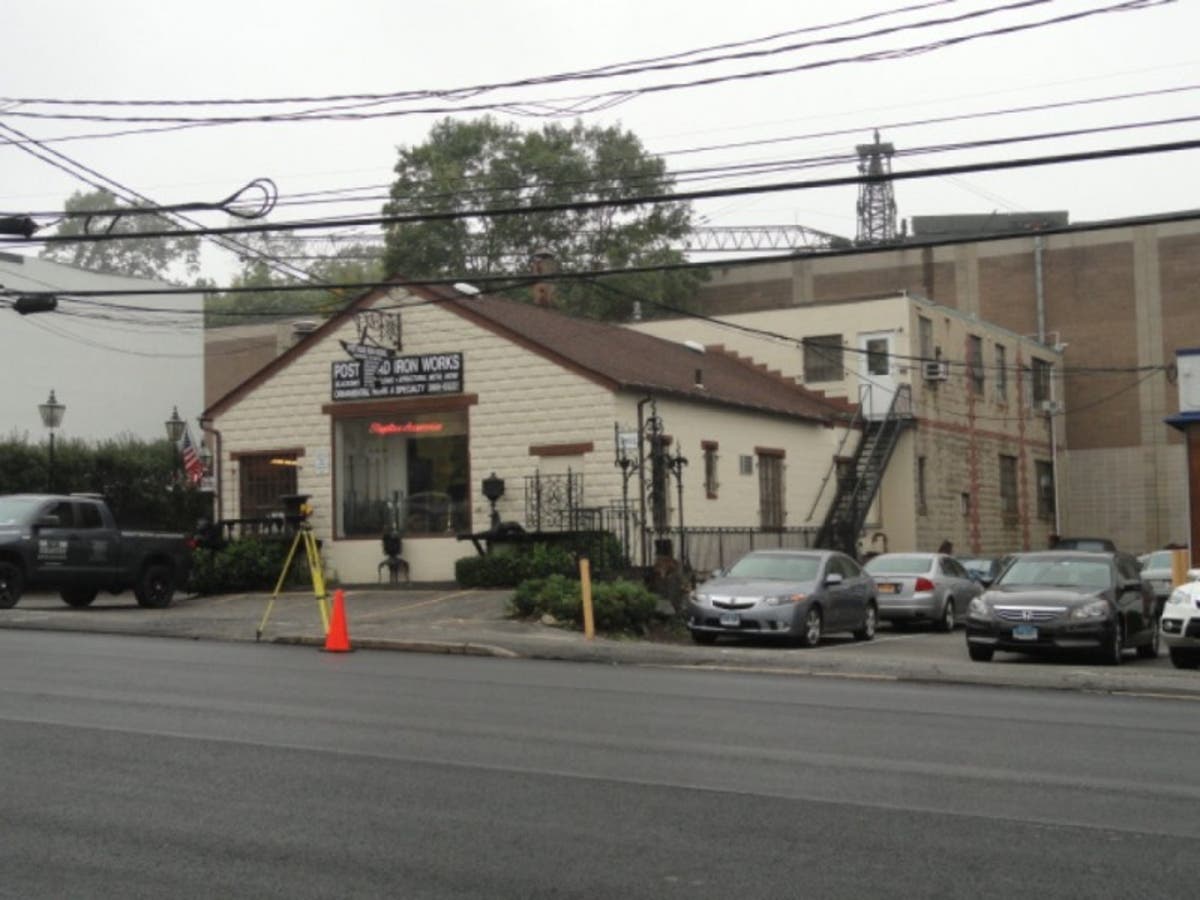
Patch file photo of the Post Road Iron Works building
Get more local news delivered straight to your inbox. Sign up for free Patch newsletters and alerts.