Politics & Government
How Safe Are Your Tires? A New Report Raises Serious Concerns
A new report has been released that raises serious concerns about tire regulations in CT and questions how safe are our tires.


HARTFORD, CT — The numbers are very sobering. In 2017, 246 people were injured or killed in Connecticut in tire-related crashes. In 2017, there were 653 such tire-related crashes, which equates to 12 crashes a week or about 5 people a week killed or injured due to tire-related issues, according to findings by AAA Northeast.
The comprehensive reports finds that: "Connecticut's tire regulations leave drivers at risk. As a result, AAA tells motorists 'don't just go by the law.'
"New national research by AAA Automotive underscores the dangers of worn tires in wet weather. Testing tires worn much less than what CT deems to be safe showed:
Find out what's happening in Greenwichfor free with the latest updates from Patch.
- Increased stopping distance of almost 50%
- Vehicle with worn tires still going 40 mph when vehicle with new tires is stopped
"Price is not necessarily an indicator of quality - in wet weather, worn tire performance deteriorated significantly for all tires," AAA states.
In Connecticut, drivers aren’t allowed to drive on tires with tread depths below 2/32nd of an inch. To easily determine that measurement, slip an upside-down quarter between your tire grooves, and look at Washington’s head. If you can see all of it, it’s time to shop for new tires.
Find out what's happening in Greenwichfor free with the latest updates from Patch.
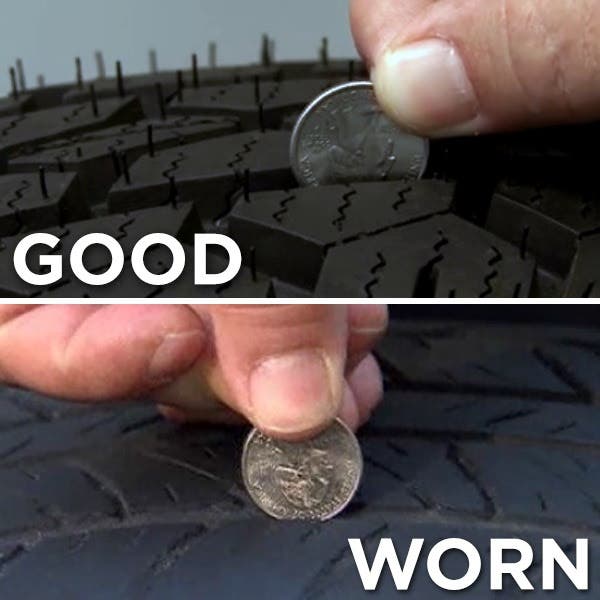
Photo via AAA
If your tires are bald or worn and your driving in rain, you’ll travel 87 more feet – the length of a semi-trailer truck, according to testing by AAA and the Automobile Club of Southern California’s Automotive Research Center.
Driving on worn tires at highway speeds on wet pavement increases your average stopping distance by 43%, compared to new tires, says AAA.
With nearly 800,000 crashes occurring on wet roads each year, AAA urges drivers to check tread depth regularly, replace tires proactively, and increase following distances significantly during rainy conditions.
“Tires are what keep cars connected to the road,” says Fran Mayko, AAA Northeast spokeswoman in a news release. “And wear has a significant impact on how quickly a vehicle can stop in wet conditions.”
Even the most advanced safety systems rely on a tire’s basic ability to maintain traction, Mayko added. “AAA’s testing shows that wear has a significant impact on how quickly a vehicle can come to a stop in wet conditions to avoid a crash.”
Most states have a legal minimum tire tread depth and current industry guidelines frequently recommend drivers wait until tread depth reaches 2/32nd of an inch to replace tires. However, AAA feels even this is too little tread to drive on safely and recommends motorists replace tires when they have 4/32nd of an inch of tread remaining
Because of the driving danger in wet conditions, even with new tires, AAA recommends drivers:
- Avoid using cruise control;
- Reduce speed; avoid hard braking.
- Increase your following distance to allow for space to the car in front of you;
- Gently ease off the accelerator and steer in the direction you want to go if you hydroplane. When the wheels gain traction, you’ll be in control of the vehicle. Don’t brake forcefully since this may cause a skid.
The full report, fact sheet and other information regarding the tire study can be found on the AAA NewsRoom.
Photo credit: Shutterstock / Olaf Naami
Get more local news delivered straight to your inbox. Sign up for free Patch newsletters and alerts.