Arts & Entertainment
A Review: Greenwich Symphony Soloist Performs with 'Finesse, Passion and Power'
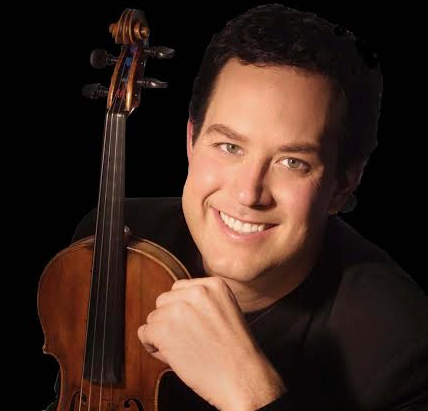
Violinist Brian Lewis drew a standing ovation and three curtain calls for his performance.


By Linda Phillips.
In a performance scored entirely for full orchestra (all right, pianist Andrew Gordon was not around for the Sibelius 5th), the Greenwich Symphony showed its interpretive power as a musical group to be reckoned with in a near-flawless rendering of works of Samuel Barber and Jean Sibelius, (20th century), and Ludwig van Beethoven (18th to19th century).
The GSO, at full complement, began the Saturday evening with Conductor David Gilbert’s remarks on the works to be played, alluding to the musical history of the pieces, the thoughts of the composers, and the relevance of the works to their time. Of the Beethoven, he said that the Overture to the opera Leonore actually foretold, musically, his entire opera, Fidelio —unlike other operas’ teasing tidbit openers.
Find out what's happening in Greenwichfor free with the latest updates from Patch.
An overture, a concerto and a symphony were programmed, disparate in mood, yet the Barber Concerto for Violin and Orchestra and the Symphony No. 5 of Sibelius shared a common theme: trouble with the third movement, which Conductor David Gilbert said Sibelius himself characterized as representing “nature’s mysticism and life’s angst. He also related that Samuel Barber’s fellow student, a violinist for whom he composed the concerto, asked him to rewrite the last movement. Barber refused, and the friend never performed it.
But many violin soloists have, and to the roster of tremendous performances in Greenwich, we can add soloist Brian Lewis, whose charismatic presence, emotional reading and interplay with the orchestra was wonderful to behold and hear, and the Barber’s dizzying last movement, with its orchestral strikes agains the mad motifs, was nothing short of thrilling.
Find out what's happening in Greenwichfor free with the latest updates from Patch.
The Leonore Overture of Beethoven was particularly notable for the wonderful dynamics in the full orchestra, Highly programmatic, opening with a sustained chord, woodwinds sounded, in a troubling passage, the clarinet speaking. The flute floated, articulate. An orchestral conversation, the piece was characterized by terrific beats and upbeats, French horns performing admirably, the entire orchestra conveying great drama, swelling to an exciting close.
Lewis took the stage to applause, beginning the Barber with its immediate melody, the clarinet sounding, oboe against kettle drum, leading to a throbbing with muted brasses, the violin singing its urgent, sad song. Woodwinds cascaded.
Andante opened with the mournful sound of the clarinet, the orchestra somber, strings wrenchingly tender. The violin motif was pensive and powerful, the orchestral crescendo moving.
The dizzying narrative of Presto in Moto perpetuo was indeed perpetual motion, the violin at breakneck speed, flutes and brasses floating. Finesse, passion and power by Mr. Lewis was followed by the strings in sections, a crisp snare drum leading to cacophonous trumpets. Mr. Lewis
was given a standing ovation, three curtain calls, and shouts of “bravo”. Conductor Gilbert cited the fine orchestra and first chairs.
Sibelius’ Symphony, anomalous in the sea of music of the time, which included Schoenberg and other modernists, was reworked by the composer. The orchestral abundance of the GSO served it well, as excellent French horns opened the Tempo molto moderato, joined by woodwind sections. Bucolic, the trumpet sounded against shimmering strings, a bassoon against whirring strings, the music becoming light, flute and piccolo singing, before moving back to ponderous. Very energetic bowing in a 4/4 measure, abruptly ended the movement.
Woodwinds opened Andante mosso with a church-like chorale. Pizzicato violins were joined by cellos, swelling and with repeated themes, leading to a French horn announcement and a woodwind ensemble passage.
Allegro molto opened with violas whizzing and climbing against a French horn statement, majestic, then back to scampering. A quiet passage in the violins sounded in an extremely repetitious movement, with some small dissonances, until the mysterious six chord ending, each separated by a caesura.
This GSO concert simply picked up the audience and never let it down with its sheer orchestral power, articulation and artistry. It next concert will be on April 18 and 19th, and will feature pianist Alexander Moutouzkine. For tickets and information, go to www.GreenwichSymphony.org, or call 203-869-2664.
Contributed photo: Brian Lewis.
Linda Phillips’ classical music reviews have won four “Best Column of the Year” awards from the Connecticut Press Club, and have been nominated for the Pulitzer Prize in Criticism. She is the author of the novel, “To The Highest Bidder,” nominated for a Pulitzer in fiction.
Get more local news delivered straight to your inbox. Sign up for free Patch newsletters and alerts.