Community Corner
Stirring the Pot: Amanda Hesser and Michael Pollan
Food journalists weigh in on society's culinary desires.
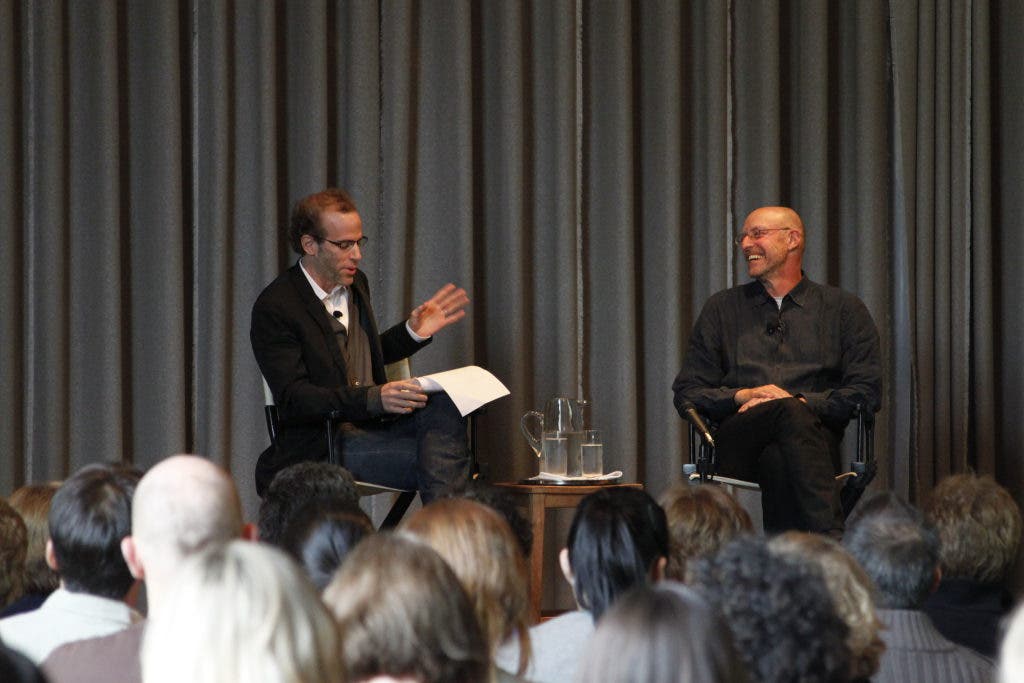


On the same gray, drizzly day at the Stone Barns Center in the rolling emerald landscape of Pocantico Hills, celebrated food journalists Amanda Hesser and Michael Pollan talked about whether more people were cooking at home. Hesser was there that recent spring morning to promote her hefty tome, the "Essential New York Times Cookbook," and Pollan addressed an afternoon overflow crowd about the food revolution and farming crisis in America. The two presentations provided an interesting dichotomy not only on cooking but also on the food culture in our country.
A mere wisp of a woman, who seems serenely happy in her life, Hesser spent six years compiling the best of the recipes that have appeared in the New York Times since the mid-1800s. She said that she tested the more than 1,400 recipes that appear in the book, often cooking after work at home and finally dining at 11 p.m. Her book is a intelligent narrative laced with witty commentary. She was particularly interested in learning why a recipe resonated with home cooks, how it reflected the historical period of the time and why some recipes survive to this day.
Recipes appeared in the paper, she explained, in response to a request, much as the same way blog viewers by the thousands answered her query for their favorite recipes clipped from the Times and used repeatedly by home cooks through the years. In the 19th century, she told a rapt audience, someone might ask for a way to cook opossum and answers would appear in print. Those esoteric recipes were few compared to the hundreds of palate-friendly suggestions, such as ones for raspberry granita, for example, or Delmonico hash, dulce de leche and polenta with sausage. Hesser pored through the incredible treasure trove of recipes and columns penned by the cosmopolitan Craig Claiborne in the massive archives of the Times, culling the best from his best.
Find out what's happening in Greenwichfor free with the latest updates from Patch.
One that survives, 40 years after Claiborne first ran it in his column, is David Eyre’s Pancake, a simple batter that puffs up in the oven like a popover and deflates as it leaves the pan like a soufflé. Another recipe, this one for a purple plum torte, was recommended by at least 265 respondents. (See below for both recipes.)
A hundred years ago, people cooked “because they had to,” Hesser said. There were few cookbooks and food magazines, certainly no TV with its surfeit of cooking shows. Today, Hesser said, people are invigorated to do more cooking. Young people are well-traveled and sophisticated and want to replicate at home what they tasted on their travels. Her perspective is certainly informed by the fact that she is a food journalist and cookbook author and also by the fact that she lives with her husband and young twins in Brooklyn, a food haven if ever there was one. She raved about the profusion of small appliances that have made her kitchen experiences so much more pleasurable than in the past, singling out the microplane zester as a great boon. Her presentation was moderated by Gabrielle Langholtz, editor of the award-winning Edible Brooklyn and Edible Manhattan magazines.
Find out what's happening in Greenwichfor free with the latest updates from Patch.
Michael Pollan had a different perspective. He worries not so much that more people aren’t cooking than about what they are eating. In cosmopolitan cities like New York, he told his audience, only 40 percent of the population cooks. With a slight nod to Dan Barber, who was moderating the presentation and who is the award-winning chef/owner of Blue Hill in New York and Blue Hill at Stone Barns, Pollan said that this was not surprising considering the presence of many excellent restaurants and take-out to be found in New York. He mentioned two other details: Kitchens in the city tend to be very small, making the dining-out experience a welcomed alternative to tackling a full-meal press at home, and a two-income family allows husband and wife to eat out more often than if the couple needed to be more careful financially.
Pollan is the author of the Omnivore’s Dilemma, which turned many of us into vegetarians. He teaches in the graduate journalism department at UC Berkeley and he brings his college forum expertise to his speaking engagements. He challenges his audiences to think (as regards genetically modified crops), to revisit “going localvore” (doesn’t it makes more sense to distribute food crops regionally than to confine oneself to a limited local radius), to seek solutions (you can get more people to cook at home by approaching cooking as a social activity that engages the whole family rather than as a chore to be performed by one individual).
A sustainable food systems advocate, Pollan devoted a good part of his presentation to farming, where the whole food debate really begins. He talked at length about genetically modified (GM) food crops, such as corn and soy, and about Monsanto’s herbicide Roundup and about Roundup Ready crops. It would take a year in Pollan’s course at Berkeley for his audience to fully appreciate what his food crusade is saying about the implications of genetically engineered seeds and the devastating effects of herbicides. He did, however, manage to clearly enunciate these points:
*The promise of GM products was to “feed the world,” he said, “but conventional farming could do that. Can GM crops feed the world? I don’t know the answer.” (More than 160 million acres in the U.S. are planted with GM crops.)
*Many countries, particularly in Europe, reject our GM exports.
*The advantages of GMs are mostly for huge farms and companies like Monsanto, with very few benefits to consumers.
*Most of the GMs are fed to farm animals, yet if they are so safe for human consumption, why doesn’t the Food and Drug Administration label GM produce as such? (Pollan purchases only produce labeled organic.)
*We waste between one quarter and one third the food we grow.
“A lot of people get fanatical about GM,” he said, when they should be looking first at themselves: “The way we are eating is contributing to the health care system … . We have to pay attention to the whole food scene.” Our personal health, he argues, cannot be divorced from the health of the food chains of which we are part. He called sugar a toxin and set “food without pesticides as a real standard.”
During his talk, Pollan praised Michele Obama for igniting interest in home vegetable plots and for addressing the epidemic of child obesity. He described her interactions with Wal-Mart and with Pepsi as regards the amount of sugar and salt in food and drinks but he’s reserving judgment right now until he sees results of their actions. At one point he quipped, “We are negotiating the quality of junk food!”
Pollan posited that we can conquer ignorance about the makeup of what we eat if we cooked our own meals. “A lot of people don’t have the skills to cook,” he stated matter-of-factly. “There are real issues around kitchen literacy, around the cutting board.” Cookbooks that are very personal — narratives rather than a mere compilation of ingredients followed by instructions — can inspire the neophyte in the kitchen to stir the pot with curiosity and confidence. Glamorous books meant for the experienced cook can be intimidating. On the other hand, putting the Essential New York Times Cookbook to practical use could be the first step in getting people to pay closer attention to what they put in their mouths.
David Eyre’s Pancake
(Adapted from The Essential New York Times Cookbook, Norton)
- 2 eggs
- ½ cup flour
- ½ cup milk
- Pinch of ground nutmeg
- 4 tablespoons butter
- 2 tablespoons confectioners’ sugar
- Juice of half a lemon
- Fig or blackberry jam, pear butter or any kind of marmalade, for serving (optional).
Preheat oven to 425 degrees.
In a mixing bowl, lightly beat the eggs. Add the flour, milk and nutmeg and lightly beat until blended but still slightly lumpy.
Melt the butter in a 12-inch skillet with a heatproof handle over medium-high heat. When very hot but not brown, pour in the batter. Bake in the oven until the pancake is billowing on the edges and golden brown, about 15 minutes.
Working quickly, remove the pan from the oven and, using a fine-meshed sieve, sprinkle with the sugar. Return to the oven for 1 to 2 minutes more. Sprinkle with lemon juice and serve with jam, pear butter or marmalade.
Serves 2 to 4
Plum Torte Recipe
(Adapted from The Essential New York Times Cookbook, Norton)
- 1 cup all-purpose flour
- 1 teaspoon baking powder
- Large pinch salt
- 1 cup sugar, plus 1 tablespoon, or more or less, depending on the tartness of the plums
- 8 tablespoons (1 stick) unsalted butter, softened
- 2 large eggs
- 12 purple plums, halved and pitted
- 2 teaspoons fresh lemon juice, or more or less, depending on the tartness of the plums
- 1 teaspoon ground cinnamon
Preheat oven to 350 degrees.
Sift the flour with the baking powder and salt.
Cream 1 cup sugar and the butter in a large bowl with a hand mixer (or in a mixer) until light in color. Add the dry ingredients and then the eggs and stir.
Spoon the batter into an ungreased 9-inch springform pan. Cover the top of the batter with the plum halves, skin side up. Sprinkle with the remaining tablespoon of sugar and the lemon juice, adjusting to the tartness of the fruit. Sprinkle with the cinnamon.
Bake the plum torte until the cake is golden and the plums are bubbly, 45 to 50 minutes. Cool on a rack, then unmold.
For more information on the speaker series and on-going programs contact the Stone Barns Center for Food and Agriculture, 630 Bedford Rd., Pocantico Hills, NY: 914-366-6200; stonebarnscenter.org
Open 10 a.m. to 5 p.m., Wednesday through Sunday.