Home & Garden
West Nile Virus Found in Greenwich Mosquitoes
The town will continue to apply larvicide to catch basins.


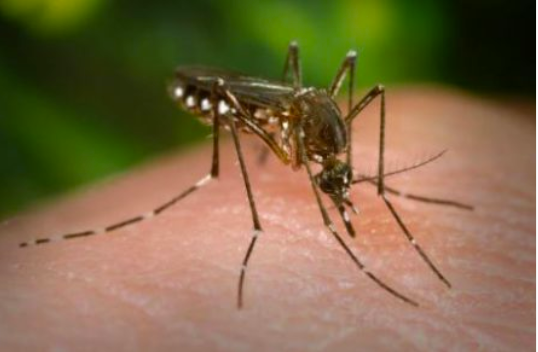
The State of Connecticut Mosquito Management Program announced that mosquitoes trapped near the Eastern Civic Center in Old Greenwich on Aug. 5, have tested positive for West Nile Virus (WNV).
These are the first positive mosquitoes identified by the Connecticut Agriculture Experiment Station (CAES) in Greenwich this year. In addition to Greenwich, WNV positive mosquito pools have been found in other towns in Connecticut: Darien, Guilford, New Haven, Stamford, Waterford and West Haven. So far there are no human cases of WNV in Connecticut.
The mosquitoes trapped (Culex pipiens) are generally bird and mammal biting which breed in standing water often found in artificial containers like discarded tires, birdbaths and catch basins.
Find out what's happening in Greenwichfor free with the latest updates from Patch.
The State Mosquito Management Program will continue to trap and test mosquitoes at three testing sites in Greenwich as part of their program. The State trapping program will continue into the fall.
The Town of Greenwich is continuing its fight against West Nile Virus by conducting a preemptive larviciding program, which includes the treatment of public and private roadway catch basins, public school ground catch basins and other property owned and operated by the town as needed. This year’s program began in June and larvicide is reapplied every four to six weeks.
Find out what's happening in Greenwichfor free with the latest updates from Patch.
Director of Health, Caroline Calderone Baisley said in a statement, “Controlling the mosquito population in the larval stage through the application of larvicide has been found to be a prudent action; however, this measure only helps to reduce the mosquito population, not eliminate it. The recent warm weather and frequent rain events have increased the ability for mosquitoes to breed. Residents are encouraged to protect themselves whenever they are outdoors.”
Baisley added, “The finding of WNV positive mosquitoes in Greenwich marks the time to emphasize that personal protection measures are extremely important against biting mosquitoes during the day and at night.”
Environmental Health Supervisor Robert T. Farfaglia said, “Although the town’s larvicide program treats catch basins, the general public must be vigilant in eliminating standing water on their own properties and protecting themselves from biting mosquitoes at all times. It is important to recognize that the highest risk of exposure to West Nile Virus infected mosquitoes is during the months of August and September.”
The virus (WNV) is spread to humans by the bite of an infected mosquito, which becomes infected when it bites a bird carrying the virus. WNV is not spread by person-to-person contact or directly from birds to people.
General symptoms occur suddenly between 5 to 15 days following the bite of an infected mosquito and range from slight fever, headache, rash, swollen lymph nodes, nausea, malaise and eye pain, to the rapid onset of severe headache, high fever, stiff neck, disorientation, severe muscle weakness, gastrointestinal symptoms, coma or death.
The following precautions should be taken when outdoors:
- Avoid outdoor activities at dawn and dusk when mosquitoes are most active.
- Wear shoes, socks, long pants and long-sleeved shirts. Clothing material should be tightly woven.
- Use mosquito repellent when it is necessary to be outdoors. Always use according to label instructions. The most effective repellent contains DEET or Picaridin.
- When using DEET, use the lowest concentration effective for the time spent outdoors and wash treated areas (exposed skin) when returning indoors.
- Cover up arms and legs of children playing outdoors and cover playpens or carriages with mosquito netting.
- Do not apply under clothing, to wounds or irritated skin, the hands of children or to infants less than two months old.
- Do not use products that combine DEET with sunscreen on children. The DEET may make the sun protective factor (SPF) less effective. These products can over expose your child to DEET because sunscreen needs to be reapplied often.
- Use mosquito netting when camping out and on carriages.
- Do not camp out overnight near stagnant or standing water where mosquitoes are most active.
In addition, Greenwich residents are urged to continue to participate in the Town’s mosquito control efforts by eliminating areas of standing water around their homes which includes:
Yard and Home Checklist
- Get rid of old tires, tin cans, buckets, drums, bottles or any water holding containers.
- Fill in or drain any low places (puddles, ruts) in yard.
- Keep rain gutters, drains, ditches and culverts clean of weeds and trash so water will drain properly.
- Cover trash containers to keep out rainwater.
- Repair leaky pipes and outside faucets.
- Empty plastic wading pools at least once a week and store indoors when not in use.
- Make sure your backyard pool is properly chlorinated every day.
- Fill in tree rot holes and hollow stumps that hold water with sand or concrete.
- In addition, Greenwich residents are urged to continue to participate in the Town’s mosquito control efforts by eliminating areas of standing water around their homes which includes:
- Yard and Home Checklist
- Get rid of old tires, tin cans, buckets, drums, bottles or any water holding containers.
- Fill in or drain any low places (puddles, ruts) in yard.
- Keep rain gutters, drains, ditches and culverts clean of weeds and trash so water will drain properly.
- Cover trash containers to keep out rainwater.
- Repair leaky pipes and outside faucets.
- Empty plastic wading pools at least once a week and store indoors when not in use.
- Make sure your backyard pool is properly chlorinated every day.
- Fill in tree rot holes and hollow stumps that hold water with sand or concrete.
- Change the water in birdbaths and plant pots or drip trays at least once each week.
- Keep grass cut short and shrubbery well trimmed around the house so adult mosquitoes cannot hide there.
- Eliminate collected water in boat or pool covers.
Ponds and stagnant water bodies that do not support fish, frogs or other amphibians that eat mosquito larvae may be treated with a biological control agent such as Bacillus thuringiensis israelensis (BTI) and Bacillus sphaericus (BS). It is suggested that the Department of Health or Greenwich Conservation Commission be contacted when treatment is considered.
Get more local news delivered straight to your inbox. Sign up for free Patch newsletters and alerts.