Community Corner
Accused Of Attempted Murder, Who Is Guilford Teen Ellis Tibere?
A chorus of friends, classmates, educators, clergy and his parents share a similar refrain: The imprisoned teen "is sick and needs help."


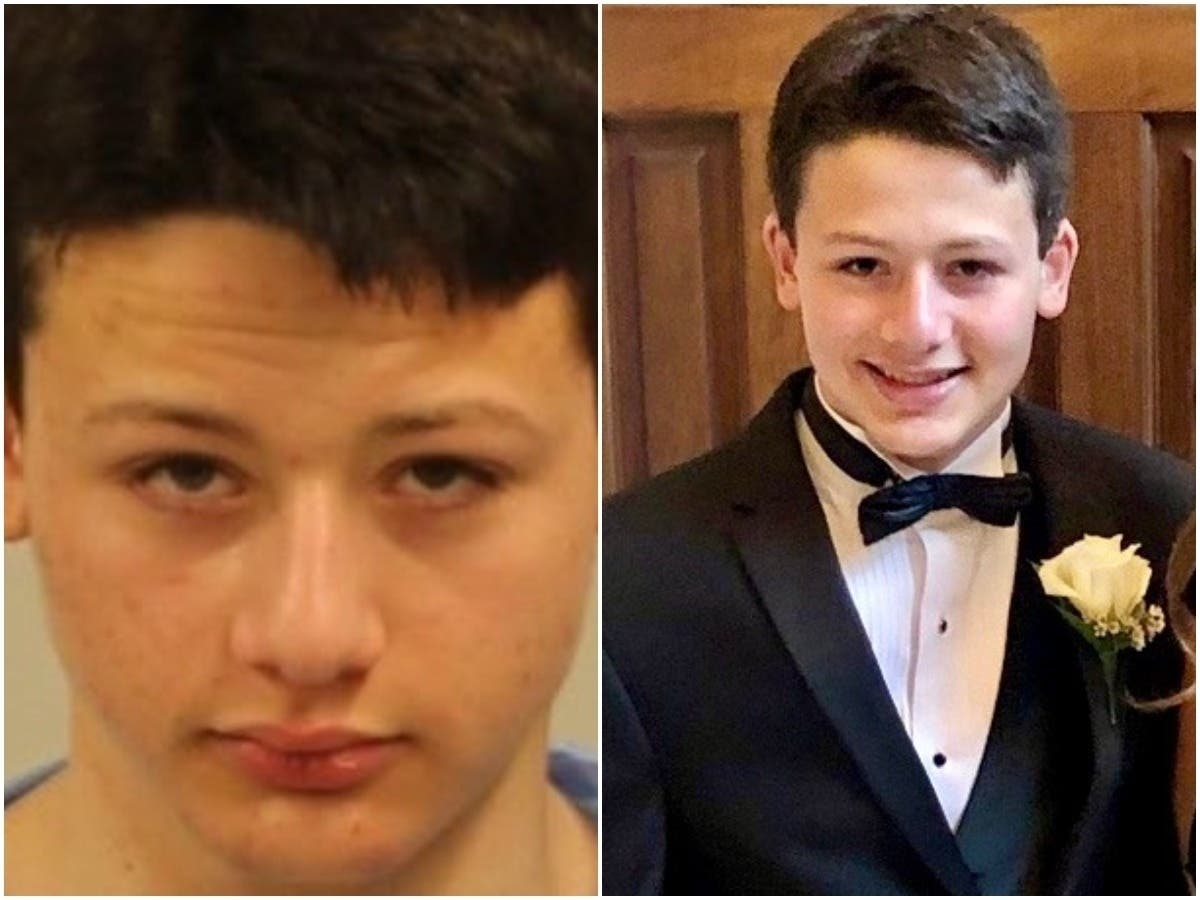
GUILFORD, CT — A month before then-18-year-old Ellis Tibere was accused of the Jan. 6, 2020, attack of a woman in a Westport beauty salon parking lot, the Guilford High School senior had received his college acceptance and presidential scholarship letters.
Tibere was a high-performing student, a community and synagogue volunteer, and a Unified Sports ambassador, who spent his last two years in high school enrolled in the International Baccalaureate World School Diploma program.
Described as a random attack in a community more than an hour’s drive from his Guilford home, the stabbing was preceded by the teen’s day-long disappearance and an act his family says came as a result of a psychotic episode. More colloquially known as a psychotic break, it’s where a person has lost touch with reality, with delusions and hallucinations as its hallmarks.
Find out what's happening in Guilfordfor free with the latest updates from Patch.
Denise Paley and Eric Tibere, the teen’s parents, do not deny their son is responsible for the random and violent attack. They were shocked and saddened.

His parents say he’s mentally ill and his actions were an aberration, an extreme deviation from his typical behavior.
Find out what's happening in Guilfordfor free with the latest updates from Patch.
The court and department of corrections agreed at least that he is mentally ill. Tibere spent 12 weeks during the height of the coronavirus pandemic at Whiting Forensic Hospital, the state’s maximum-security psychiatric hospital. And later, the Connecticut Department of Corrections would send him to a jail where prisoners with “significant mental health" issues are held.
Tibere was released from Whiting last spring after a psychologist told the court the teen didn’t pose a threat that required keeping him there. At Whiting, those held are people with serious mental illness who have been civilly committed and are people determined by a court to be not guilty because of insanity. Also held at the hospital are people who have been accused of a crime and are evaluated as to their competency to stand trial. Tibere was deemed competent by the court to stand trial. However, his mother points out that, "Competency and mental illness are two separate issues. The problem is that mental health treatment is often geared towards restoring competency not recovery."
Tibere was released into his parents’ custody — they’d already posted the $1 million bail. Tibere would have to remain in his home and wear an electronic GPS monitoring device. For many months, he complied, staying at home with his parents and younger brother.
Then, on Dec. 21, Tibere cut off the GPS ankle device with scissors, left them in the garage and fled his home headed for a wooded area. Paley called police as Eric Tibere went in search of his son. He found Tibere close by their home in the woods. As his father told Patch, and police wrote in a report, Ellis, who had a kitchen knife, was communicating as a person named “Jackson.” He was in distress.
When Guilford police and a K-9 arrived, they found the teen lying in the snow in a fetal position with his father standing over him, the knife nearby in the snow. Eric Tibere told police he was never in danger.
Tibere was taken into custody and brought to Yale New Haven Hospital, where he was cleared to be taken by police, his mother said, back to the Guilford Police Department and, later, to jail in New Haven, to be returned into the custody of the corrections department.
Tibere’s bail was raised to $2.25 million. He’s again in custody, but back and forth from the Garner Correctional Institution in Newtown and the Manson Youth Institution prison in Cheshire. His parents do not know why he has been moved. And they do not know the current state of his mental health. Not knowing about the health and welfare of their son is one part of his family’s nightmare.
Patch conducted a number of interviews with his parents, who believe it’s important that their son’s story be told. This report is based on those interviews.
Denise Paley and Eric Tibere do not defend what he did. But, they said what their son did was so wildly outside his normal character that only a break from reality, psychosis, can explain what happened.
“It is not him. People don’t know him but only know the media portrayal of him,” Paley said. “He owns that piece of him, what he did, but he is so much more than that.”
In fact, in police reports, Westport officers said Tibere told them he broke into two homes intent on killing. But that was a delusion, his mother said. Paley said her son told police that he held household batteries up to the home locks to disable them so he could break in. Tibere has not been charged for the break-ins he alleged.
“It never happened,” Paley said. “It was a complete delusion. My son is very ill, and what he needs is help, not a prison cell alone with his illness untreated and unmedicated.”
Who is Ellis Tibere?
In an inch-thick binder the family shared with Patch, neatly arranged and categorized, are character references addressed to the court, letters of support from friends, handwritten notes from classmates, statements from his clergy and school, cards from neighbors and community members, the boy’s school records, a history of his volunteer work, and photographs.
“In our own community, we have received nothing but love. Our community knows Ellis. And even people we do not know have reached out with letters and emails and messages because, through six degrees of separation, everyone knows him, and they love him. I want people that don’t know him to understand who he really is on a broader level. The boy he really is. Not the very sick person defined by psychosis.”
Paley recounted a comment on a social media post from a news reporter where people pointed to the mug shot of her son noting, “Look at his eyes. You can see how he’s evil.”
“He is not evil. He is mentally ill. That photo is of a boy in the middle of a psychotic episode,” she said, her voice cracking. “My son.”
When he was a child, he was diagnosed with attention deficit disorder — which the Centers for Disease Control and Prevention says is found in “millions” of American children — and obsessive-compulsive disorder. The ADD was medicated, and while concerning, not uncommon.
Obsessive-compulsive disorder is an anxiety condition that plagues a person with unwanted thoughts, images or impulses — called obsessions — that are impossible (very difficult) to suppress, causing him great stress and worry, the Child Institute explains. People with OCD develop repetitive, ritualized actions to stop the anxiety caused by the obsessions. Some are behaviors, and some are mental acts such as counting, it is explained.
According to the National Institutes of Health, and from language contained in the Diagnostic and Statistical Manual of Mental Disorders from the American Psychiatric Association, and directly from the Child Institute:
“Common obsessions include fear of contamination, fear of harm to himself or others, and fear that he might do something violent or terrible. Children with OCD may compulsively wash their hands, lock and relock doors a certain number of times, line up objects or touch parts of their bodies symmetrically in order to neutralize a fear and make themselves comfortable. They may also repeatedly ask questions and seek reassurance.”
As a child, Tibere was put on medication, his mother said, and participated in therapy for many years. And as he grew up, he grew out of some of what he experienced as a young child, she said.
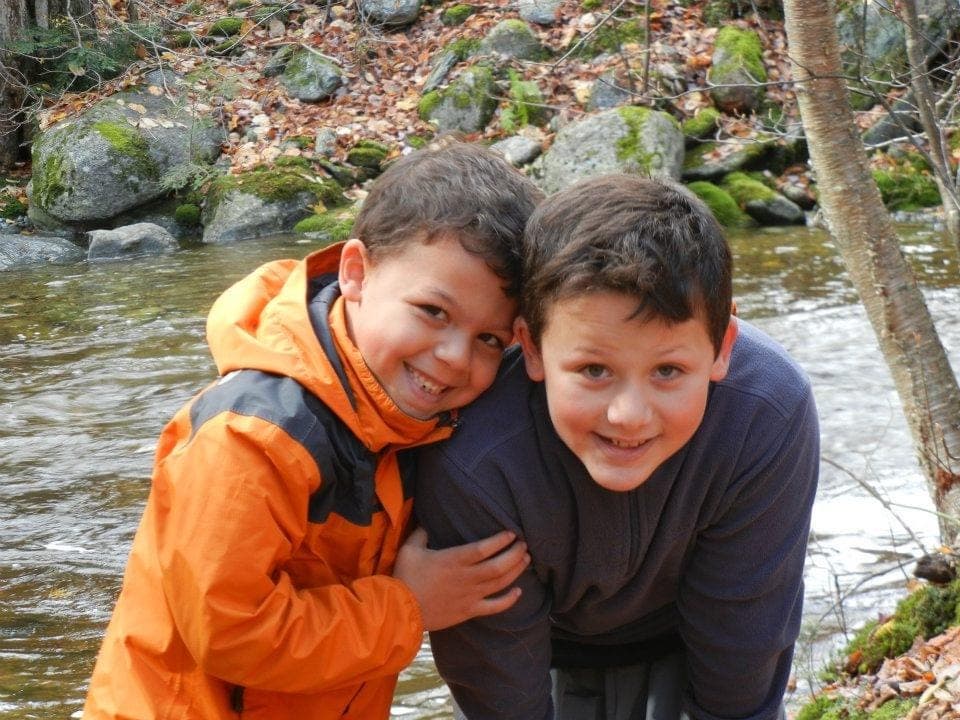
“When he was very young, he was so anxious; but as he got older, he became more confident. He really accepted his OCD, and it was part of his character,” Paley said. “He could do things that were a little quirky because of it.”
And his parents described him as a boy, then a teenager, who was easygoing.
“Ellis has always been a really sweet boy. He's always gotten along well with others. He’s never had a friend that he had a fight with,” Paley said. “He’s never had tension with other kids.”
Indeed, in letter after letter written by shocked and saddened friends, teammates and classmates, they spoke about the boy they knew, many with anecdotes that they write describe his character and behavior.
These are excerpts from the many letters to the court from Tibere's classmates.
“Ellis never got angry, and it was often something I would joke with him about. He loved everyone and was truly a joyful kid. His actions this winter do not reflect his true character by any means.”
“I find this really hard to write because I can't comprehend how this happened. Ellis is the last person I know that could be capable of this type of behavior. The most harm I ever saw him cause was to me on the lacrosse field during practice and that was a complete accident - nothing more than a scratch. I actually think our coaches would have preferred if Ellis showed more aggression on the field.”
“Ellis was destined for greatness in the world. He needs help. We miss him. We know he's a good person.”
“Ellis is sick and he needs help. That has just been established. He's a good person. We all know within our hearts that he cares about each and every one of us ...I don't know what happened that day. I want Ellis to get the help he needs.”
“He was a super friendly kid and got along with everyone. Ellis is the type of kid that everyone wants to be around because of his sense of humor, kindness and compassion.”
“One day in 6th grade Ellis and I were at recess playing basketball there must have been at least 15 kids shooting hoops and all of a sudden Ellis somehow passes the ball and nails me straight in the face. This wasn't a big deal, but it strung a bit Ellis started bawling his eyes out in front of 15 other boys because he felt so badly that he hit me in the face by accident. Ellis really cared about me and did not want anyone to get hurt. He was not only compassionate or kind around me but other people as well.”
“During the past 17 years Ellis has been one of the best friends I could have asked for because he has such a kind and caring heart.”
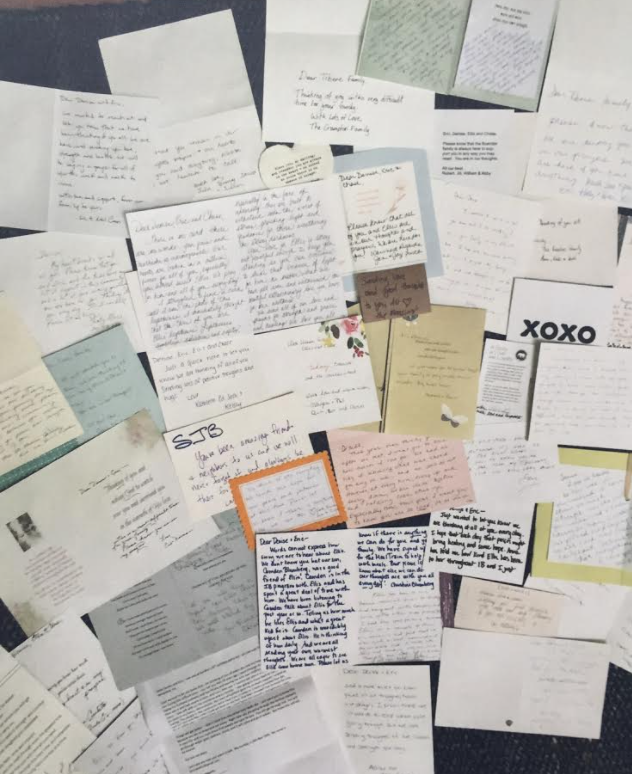
In dozens of letters testifying to the teen’s and his family’s character presented to the court before his initial bail hearing, the sum total of the missives describes a “loving,” “gentle” and “kind” family-oriented teen with many friends, was involved in myriad academic and sports programs, and who volunteered in the community and through his synagogue.
His rabbi wrote the crime he committed did not reconcile with the boy she knows.
“I would say that not only is this current behavior a shocking aberration from everything I had ever seen from Ellis, I would not hesitate to add that he stands out amongst all the students I have ever talked, as one of the kindest ever,” wrote Temple Beth Tikvah Rabbi Stacy K. Offner.
“There is no rational way to synthesize current behavior with the strong, ethical, studious young person that I know,” the rabbi told the court.
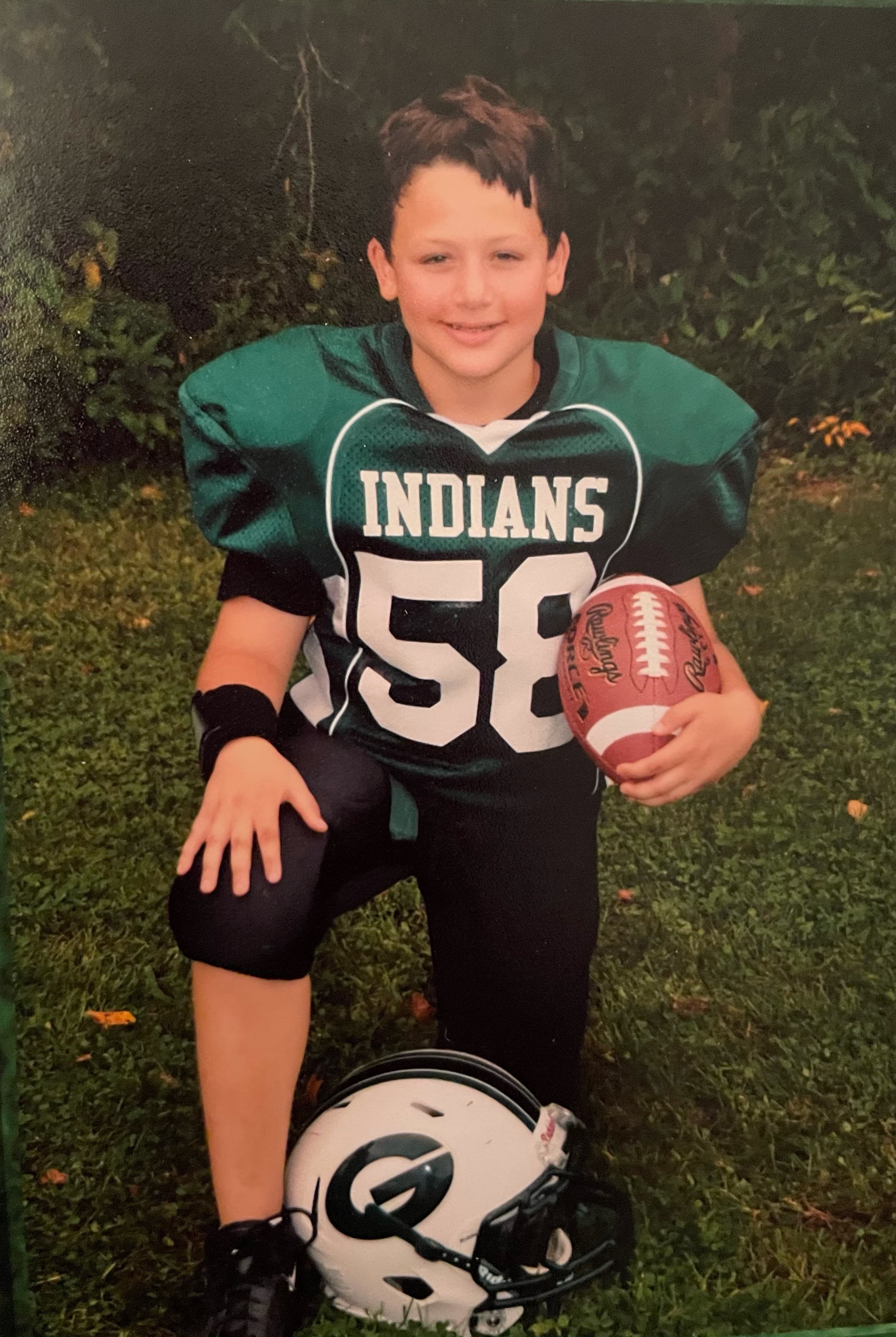
Tibere himself described his own character in a “candidate statement” from Guilford High School, a self-evaluation tool required of seniors applying to college, internships, jobs and for scholarships. He wrote that he would like to be remembered during his four years at Guilford High School as being a “joyful” person.
“In and out of school, I have treated people with courtesy and respect,” he wrote, “and it has been pointed out to me that I always have a grin plastered on my face.”
Paley said psychiatrists and psychologists have yet to provide a mental health diagnosis of her son since the crime. Psychosis, or a psychotic break, in teens and young adults may be a precursor to a diagnosis of schizophrenia. But to date, there is no diagnosis that his parents have been made aware of save for his ADD and OCD diagnosis from when he was younger.
“Doctors have called us to ask, ‘Did he ever abuse animals or set things on fire?’ What?” Paley asked rhetorically. “Ellis has slept with the same dog since he was 5. That dog still sits in Ellis’ room waiting for him.”
Since the incident, the family has been educating themselves on mental illness. Paley is now on the board for National Alliance On Mental Illness Shoreline, she said, adding she was named the agency’s public policy liaison and was recently certified to teach NAMI’s "Ending the Silence" program to help students learn the warning signs of mental health conditions and steps they can take.
The day before the attack, Ellis Tibere went missing
Tibere’s parents said their son has always been reliable and was “always” in contact when he was out. They told Patch he was “very predictable” and has “a very set routine," so a deviation from that routine is what led them to believe, the day before the attack in Westport, that something “must be wrong.”
They said that their son was low-key; in the GHS Yearbook, he was named the kid most likely to “sleep though an earthquake,” Paley said. His father called him a “very calm, mellow kid.”
“He’d go to the library with friends. If they went out to dinner after, he’d always call. He was never a partier; he’d rather stay home and play video games with friends. Or go to the movies. He wasn’t into big parties,” they told Patch. He was a homebody save for school, sports, volunteer activities and “hanging out with friends.”
That Sunday afternoon, Jan. 5, 2020, Tibere was supposed to meet a group of friends at the library as they were working on a school project that was due.
“He had told us he was going to the library. He never made it there,” Paley said. “When he didn’t come home for dinner, and he didn't call, or tell us he was going out for dinner, immediately, we knew something was wrong. We knew it then.”
They drove to the library, past friends’ houses looking for his car, called everyone they knew who might have an idea where he was.
“We called people. Nobody could locate him. So we went to the police very early on,” Paley said, noting it was out of character for her son not to call.
“He would never not call to say he wasn’t coming home for dinner. It wouldn’t be unusual for him to go out, but he would call,” she said.
His friends also were looking, checking at each other’s houses and “looking for him through social media.”
“Nobody could find him,” Paley said.
His parents feared the worst.
“Initially, we thought he must have been carjacked," Eric Tibere said. "We were worried about him. He doesn't like to drive anywhere; he’d rather have people pick him up.”
Numerous calls to Guilford police did little to allay their fears and concerns about their missing son.
“We pressed police to track his cell,” Paley said, but they declined because he’s an adult.
A “late bloomer,” he had just turned 18 three months before the attack, she said. “We tried and were unable to report our car stolen because we gave him the keys. We didn’t stop trying to find him.”
Around 11 p.m., Paley said she saw a charge pop up on the credit card his parents had given the teen for emergencies.
“A gas station in Darien,” Paley exclaimed. “He’d never driven further than New Haven in his life. We thought for sure he was carjacked. That’s where my head was at that time.”
A Guilford police officer who had been up to their home suggested they call state police to do an “attempt to locate,” and he was later found by authorities asleep in the family car after midnight at a highway rest stop near Darien. They were notified of this by a Guilford police officer and told, “He’s fine and on his way home.”
It was after midnight.
“I told the officer there’s no way my child would be in Darien asleep on the highway. No way. I told him he cannot be in his right frame of mind,” Paley said.
Eric Tibere and a family friend drove to Darien and checked every rest stop there and back up Interstate 95. There was no sign of Ellis.
“Obviously, he never came home. I called the police officer back and said something is seriously wrong. I said there is no way he would be doing this in his right frame of mind,” Paley said. “I'm not making a blanket statement blaming the police, and I don't think anything was done maliciously, but there is clearly a lack of training and misalignment for what they are responsible for doing. I knew my son was in trouble and couldn’t get the police to act. But who else were we supposed to call? The police were our only option.”
She kept calling back.
On one call into the night, the police officer suggested that her son would “come home when he’s finished partying.”
“I told him maybe some seniors in high school stay out partying on school nights but not my son. Ever. He’s never stayed out past 10 p.m. on a school night," Paley said. "And he doesn’t know anyone in Darien."
"The officer then said to me, ‘Well, if you're fighting with your son, you need to just let him cool off.’ He wasn’t listening to me. He had his own narrative. I said, ‘What are you talking about? I never said we were fighting. He kissed me goodbye when he left for the library,’” she said.
Sunday turned into Monday. Frantic with worry, they called everyone they could think of who knows their son. They called the school. They drove all over town. Eric went back to the police station to plead for help. Denise called the station again — and again in the afternoon of Monday, Jan. 6, around 24 hours after Ellis’ disappearance.
“They said, ‘Don’t you know? He’s in Westport.’ No one even called to tell us,” Paley said.
That’s how the family found out what had happened.
“Now, our sweet loving boy who had never had a violent incident in his life, now, he is considered a dangerous person that everybody needs to be wary of,” Paley said.
Editor's note: Patch plans a follow-up story with hoped-for responses and information from police, prosecutors and the victim's attorney.
Get more local news delivered straight to your inbox. Sign up for free Patch newsletters and alerts.