Community Corner
Ireland's Great Hunger Museum Leaving Hamden For Fairfield County
Quinnipiac Univerisity has agreed to transfer the museum's collection to the Gaelic-American Club of Fairfield.


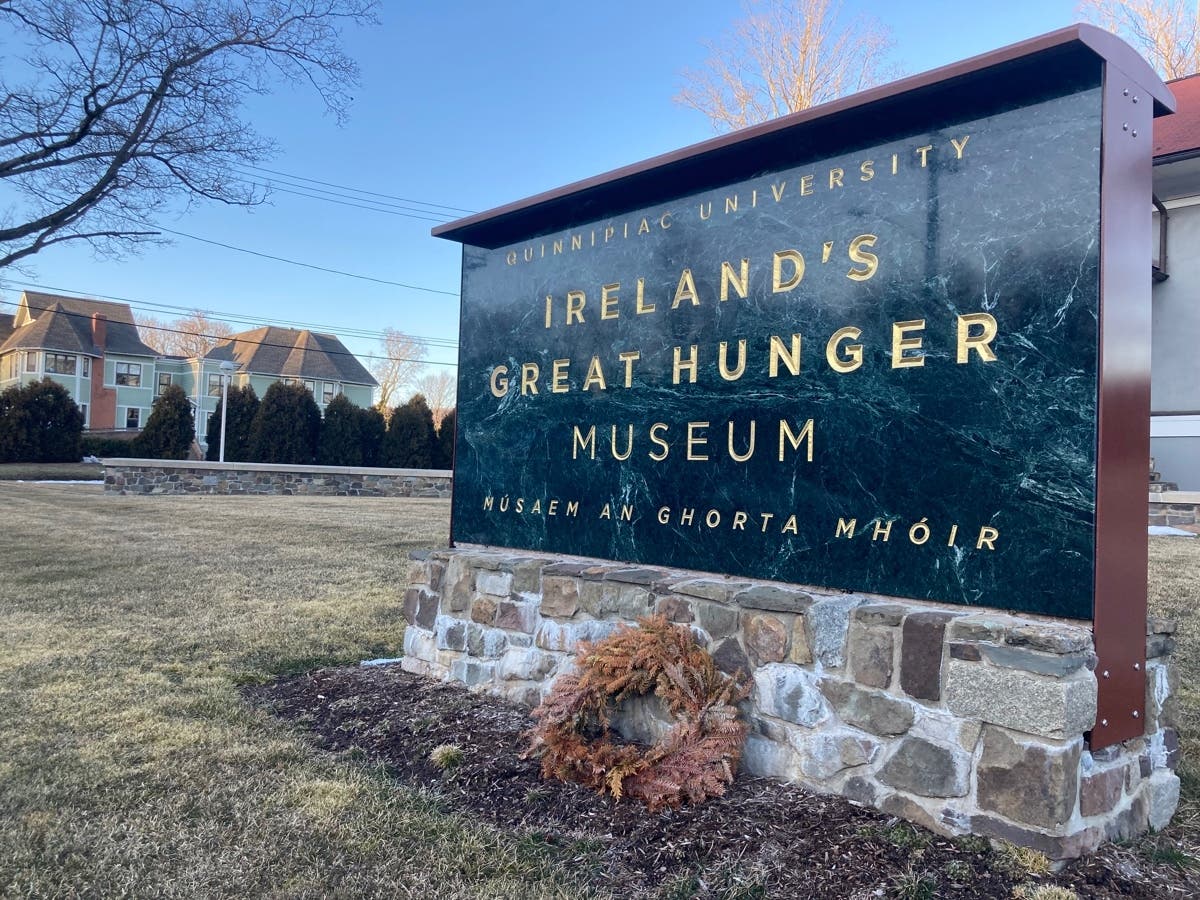
HAMDEN, CT — The Connecticut-based Ireland’s Great Hunger Museum is moving to a new home, after Quinnipiac Univerisity agreed to transfer the museum’s collection to the Gaelic-American Club of Fairfield.
“It was a huge priority for them to keep the collection intact, and keep it in Connecticut, and not at Quinnipiac,” said Fairfield resident Amy O’Shea, a former director of the Gaelic-American Club, who worked with the club's current leaders on the project. “They just didn’t think the museum was viable in its current location.”
Quinnipiac intends to repurpose the museum’s existing space at 3011 Whitney Ave. in Hamden, O’Shea said. The museum, which closed at the onset of the coronavirus pandemic in 2020, will move to downtown Fairfield, where it will be in close proximity to the Metro-North train line, restaurants, shopping, and the Fairfield Museum and History Center.
Find out what's happening in Hamdenfor free with the latest updates from Patch.
The Gaelic-American Club is in talks with a property owner in Fairfield’s town center about housing the museum's collection, but it likely won’t be open to visitors for another year or two.
“They’re very, very excited about the museum going in there, we just have to work out some of the details of the transaction,” O’Shea said. “We need to do extensive renovations in the building. It’s going to be designed and built specifically for the collection, just like the building in Hamden was.”
Find out what's happening in Hamdenfor free with the latest updates from Patch.
The new space is about 2,000 square feet larger than the 6,000-square-foot Hamden site, according to O’Shea, who estimated renovation costs at $1.5 million to $1.7 million. The Gaelic-American Club has created a nonprofit for the museum, with a separate board of directors, and will seek funding from individuals, corporations and grants through the federal, state and Irish government. The club also plans to hire an executive director and curator for the museum.
“We are very honored that Quinnipiac is entrusting us with this very prestigious and important collection,” O’Shea said. “We’re excited that the collection is now in the hands of the Irish-American community, and we realize this comes with a lot of responsibility.”
The museum contains the world’s largest collection of art related to the Great Hunger, which occurred from 1845 to 1852 in Ireland.
“The collection is just absolutely breathtaking, it just affects you on such an emotional level when you see it,” O’Shea said. “It honors such a tragic part of Ireland’s history that really should be remembered, and remembering it through a collection of art is really amazing.”
The Gaelic-American Club approached Quinnipiac in December about the museum, according to O’Shea, who said the school also received proposals from a few out-of-state organizations and a group called Save Ireland’s Great Hunger Museum, which sought to reopen the Hamden location. The Quinnipiac Board of Trustees voted unanimously to relocate the museum to Fairfield, the college announced Friday.
“The goals of keeping the museum collection together, in Connecticut and cared for by the Irish-American community were paramount in our decision making,” said Arthur Rice, chairman of Quinnipiac’s board, in a university news release.
The Gaelic-American Club is one of the largest Irish-American organizations in New England, with 6,000 members and a 75-year history.
“The GAC submitted a plan that assures a sustainable future for the collection based on the club’s established infrastructure and its cultural and financial resources to support the display of the full collection in a more central location,” Quinnipiac President Judy Olian and Provost Debra Liebowitz said in a letter to the school community.
“This is an ideal solution that keeps the collection in Connecticut and intact, cared for by the Irish-American community and best positions it for long-term success.”
Get more local news delivered straight to your inbox. Sign up for free Patch newsletters and alerts.