Schools
National Science Foundation Awards Grant To Quinnipiac Program
The nearly $300K grant was awarded to a joint Quinnipiac/University of South Alabama program for a study of 4,500-year-old Bronze Age bones.

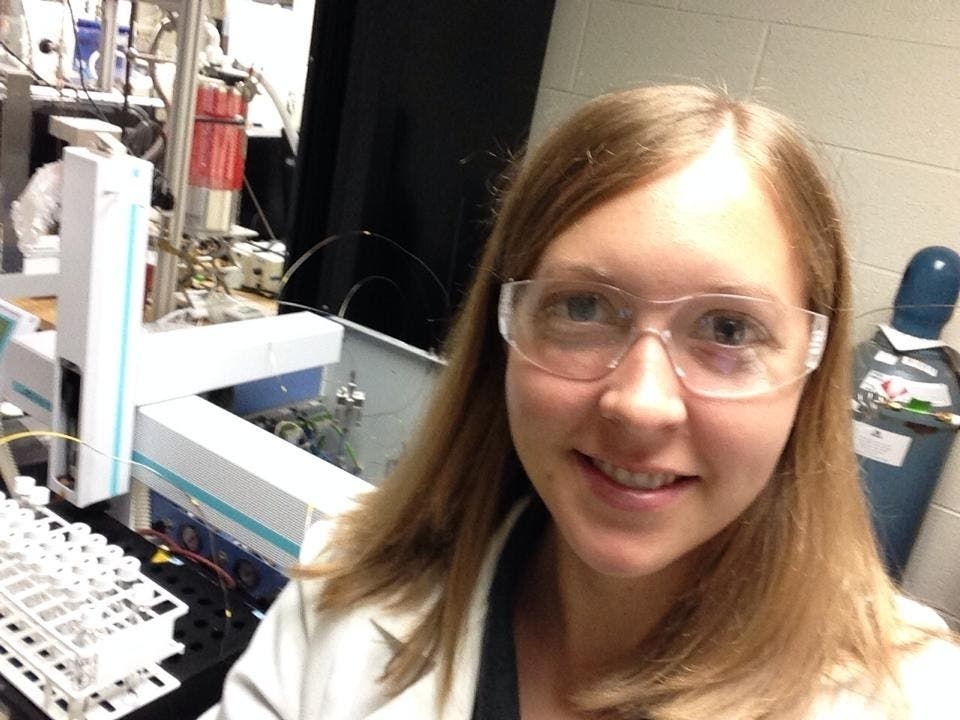

From Quinnipiac University: Eight undergraduates from community and four-year colleges around the nation are spending eight weeks at the University of South Alabama conducting original research on two collections of 4,500-year-old Bronze Age human bones on loan from the government of the Emirate of Ras al-Khaimah in the United Arab Emirates (UAE).
The Bioarcheology of Bronze Age Social Systems program is funded by a $293,914 grant from the National Science Foundation (NSF), awarded to co-principal investigators from Quinnipiac University and the University of South Alabama. The grants are given to programs that expose undergraduates to research earlier in their college careers.
Under the leadership of Jaime Ullinger, associate professor of anthropology at Quinnipiac, and bioarchaeologist Lesley A. Gregoricka, associate professor of anthropology at the University of South Alabama and director of the USA Forensic Science Program, the diverse pool of nationally recruited undergraduates are examining the remains to understand how alternative pathways to social complexity--during an increasingly globalized Bronze Age--were embodied in the human skeleton and reflected in mortuary practices.
In addition, the students will share their research journey on social media and create digital stories that will be translated into Arabic and shared with people in the United States and the UAE who would not otherwise have access.
According to Ullinger and Gregoricka, the remains from two large tombs pose challenges because the skeletons were commingled, and the bones from both tombs were burned to varying degrees. That is why many of the bioarchaeological methods used to determine the age, sex and social status of these people could advance the accuracy of techniques used in contemporary forensic cases and disasters involving commingled remains.
“Umm an-Nar is the name given to this Bronze Age culture that existed around 2700-2000 BCE in the area of UAE and northern Oman,” said Ullinger. “These skeletons present a unique opportunity for an in-depth examination of the socioeconomic, political and environmental circumstances of this population, which likely had a tribal, kin-based system of social organization. Through collaboration with top scholars, our students are trying to answer questions about changing mortuary practices and human life in the region.”
Gregoricka said, “The prehistoric archaeology of southeastern Arabia is dominated by monuments to the dead, making the study of these remains critical to our understanding of Umm an-Nar culture. As everyday behaviors, activity patterns, and experiences become incorporated into the skeleton, these bones help us to tell the stories of these Early Bronze Age communities and how they adapted to their surroundings over time.”
Find out what's happening in Hamdenfor free with the latest updates from Patch.
Students also receive training on effectively disseminating their research results to academics and the broader public, while engaging in discussions surrounding the ethics of working with human remains.
The project, which takes place over three summers, is funded by NSF’s Research Experiences for Undergraduates (REU) program in the Directorate for Social, Behavioral and Economic Sciences (SBE), which integrates research and education.
Under the guidance of Ullinger and Gregoricka, the students will engage in the entire research process, from hypothesis formation to data collection, analysis, public outreach and publication. They also will have the opportunity to attend the American Association of Physical Anthropologists conference in April 2020 to present their findings.
Find out what's happening in Hamdenfor free with the latest updates from Patch.
As a requirement of the grant, applicants were selected through a rigorous application process and recruited though social media. The program received more than 90 applicants for the eight spots. The final group—ranging from incoming sophomores to incoming seniors, most of whom are majoring in anthropology--includes students from Quinnipiac, University of Notre Dame, College of William and Mary, College of Southern Nevada, Cal State Fullerton, Albion College, Louisiana State University and the University of South Alabama.
Participants receive mentorship in professional development via guest scientists and with established summer undergraduate research workshops at the University of South Alabama. Before their conference presentation, students will engage with members of the local community to share project findings using weekly blogs, social media posts and digital stories. As part of the project, participants are required to post daily to Facebook, Twitter and Instagram, as well as blog about what they are doing and what they’ve learned.
About Quinnipiac University
Quinnipiac is a private, coeducational, nonsectarian institution located 90 minutes north of New York City and two hours from Boston. The university enrolls 7,000 full-time undergraduate and 3,000 graduate and part-time students in 110 degree programs through its Schools of Business, Communications, Education, Engineering, Health Sciences, Law, Medicine, Nursing and the College of Arts and Sciences. Quinnipiac consistently ranks among the top regional universities in the North in U.S. News & World Report’s “Best Colleges” issue. Quinnipiac also is recognized in Princeton Review’s “The Best 381 Colleges.” The Chronicle of Higher Education has named Quinnipiac among the Great Colleges to Work For®. For more information, please visit https://www.qu.edu/.
About University of South Alabama
The University of South Alabama is a global teaching and research university that provides students with an exceptional education in business, the liberal arts, education, engineering, computing, the sciences and health care. USA’s commitment to student success includes small class sizes and hands-on research opportunities in more than 100 undergraduate, graduate and doctoral degree programs offered through 10 academic colleges and schools. USA offers advanced and innovative health care through the USA Health system and the College of Medicine. For more information, visit www.southalabama.edu.