Schools
Quinnipiac University Professor Receives Fulbright Award
Quinnipiac University professor receives Fulbright award to study Sierra Leone's international agreements.


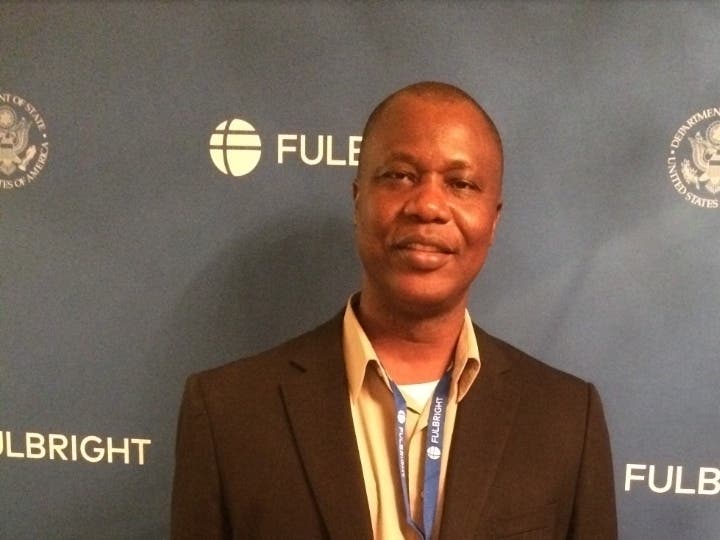
Hamden, CT – Fodei Batty is among more than 800 U.S. citizens who will teach, conduct research, and/or provide expertise abroad for the 2019-20 academic year through the Fulbright U.S. Scholar Program. Recipients are chosen based on academic and professional achievement, as well as a record of service and leadership in their respective fields.

“The Fulbright is one of the most distinguished awards you can receive in academia,” Batty said. “I feel truly honored and believe it’s a testament to my research. Having a faculty member receive a Fulbright is also beneficial to the university’s image. It puts Quinnipiac’s name out there in good company.”
Robert Smart, dean of the College of Arts and Sciences, said Batty’s research and teaching will be enriched by this opportunity.
“Fulbrights are awarded to outstanding scholars who want to pursue a project that will benefit not only themselves, but the larger communities that they serve,” Smart said. “This is certainly true of Dr. Batty. His work engages many of the most pressing international issues as they impinge on the lives of diverse populations with a colonial heritage involving Europe.”
Later this month, Batty and his family will travel to Sierra Leone, where the professor will pursue his research project, “The Motivations, Constraints, and Politics of Acceding to International Agreements in Sierra Leone." He also will teach two courses as a visiting Fulbright associate professor at the University of Sierra Leone.
“I plan to use Sierra Leone as a case study to try to understand why African states accede to and ratify some international agreements and not others,” Batty said.
A native of Sierra Leone, Batty will work with the foreign ministry of Sierra Leone to catalog the fates of all foreign bilateral and multilateral agreements that Sierra Leone has signed, ratified or deposited with the United Nations, the United States, the African Union and others. Batty plans to do about 200 interviews with fellow academics, government officials and anyone else associated with Sierra Leone’s foreign policy establishment.
When he returns to the United States, Batty plans to use his research as the basis for several scholarly articles, academic conference presentations and possibly a book.
“We expect that upon his return, Dr. Batty will be able to drive several conversations on campus that are central to the university’s strategic vision for‘The University of the Future,’ with students and with the Greater New Haven area,” Smart said. “He is a valued member of the College of Arts and Sciences and we are anxious for his return and his contributions to campus conversations.”
The Fulbright Program is the U.S. government’s flagship international educational exchange program and is designed to build lasting connections between the people of the United States and the people of other countries. The program is funded through an annual appropriation made by Congress to the U.S. Department of State. Participating governments and host institutions, corporations, and foundations around the world also provide direct and indirect support to the program, which operates in more than 160 countries worldwide. Since its establishment in 1946 under legislation introduced by the late U.S. Sen. J. William Fulbright of Arkansas, the Fulbright Program has given more than 390,000 students, scholars, teachers, artists and professionals the opportunity to study, teach and conduct research, exchange ideas, and develop solutions to international concerns. Fulbrighters address critical global challenges in all disciplines, while building relationships, knowledge, and leadership in support of the long-term interests of the United States. Fulbright alumni have achieved distinction in many fields, including 60 who have been awarded the Nobel Prize, 86 who have received the Pulitzer Prize, and 37 who have served as a head of state or government.