Politics & Government
Beavers Besiege Lambtown Road
Town Weighs Options, Including Abandoning Lambtown Road Extension


For 10 years, a quiet war has been waged on Lambtown Road Extension between local property owners and the beavers that live in a pond by the roadside.
So far, the beavers appear to be winning.
The town is weighing several options. One choice would give Lambtown Road Extension, which was once a private road, back to the property owners. Another would be to install an expensive new drainage system.
Find out what's happening in Ledyardfor free with the latest updates from Patch.
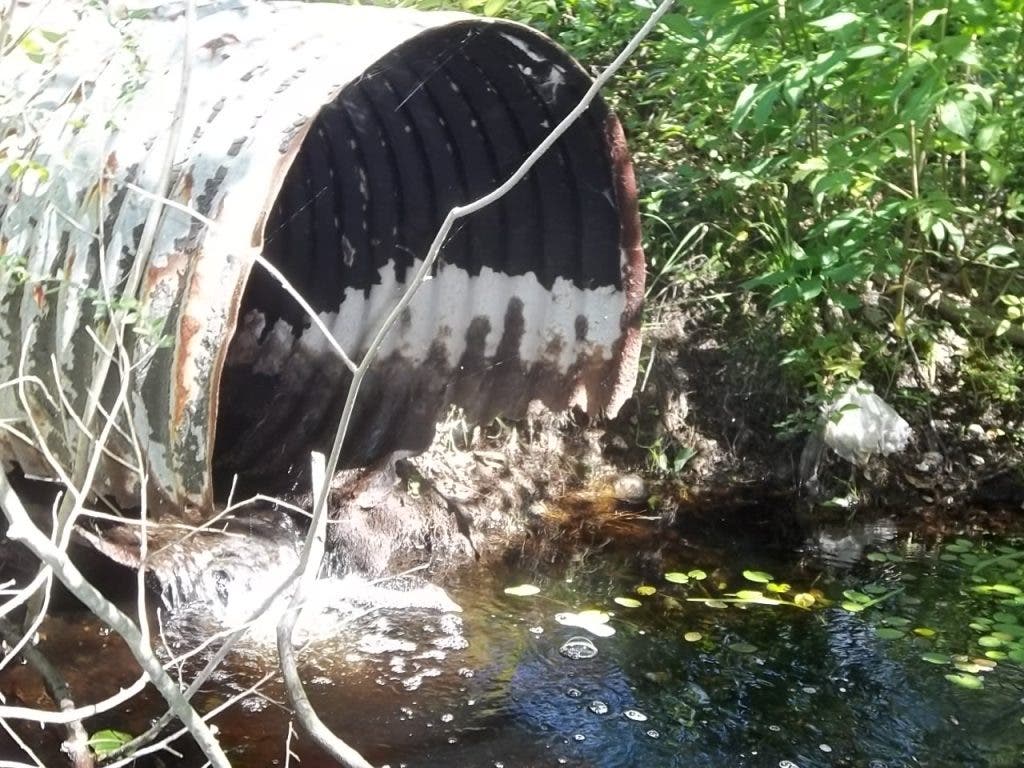
The beavers threaten the road by clogging the culverts that run beneath it. Lambtown Road Extension holds back the waters of the pond, and without the drainage culverts, the road would flood.
Beavers 1, Town 0
Find out what's happening in Ledyardfor free with the latest updates from Patch.
The problem is so serious that the town is considering abandoning the road.
Lambtown Road Extension once belonged to the Lamb family. According to resident Ed Lamb, whose ancestors have been on the property since 1714, the road probably began as a cart path and became a public road in the 1800s. It is also designated a scenic route.
If abandoned, it would become a private road, maintained by the residents.
Lamb said he would be willing to consider it. “We’d certainly be willing to work with the town on that,” he said. “Whether or not we’d agree to that, I don’t know… Issues like that usually become more complicated than they seem on the surface.”
Others are hoping the town would not need to go that far. Town Councilor John Marshall said the scenic stretch of unpaved road provides a convenient shortcut to and from Groton.
“I hope we don’t (abandon it) because it’s really a nice section of road,” Marshall said. “If we abandon the road, we don’t have to maintain it, but I think the landowners want us to keep maintaining it.”
Trapping is another option being considered, but that plan also has its critics.
Sue Webber, who lives on Lambtown Road Extension, said she and her family do not believe in trapping the beavers on their property. When they create problems, she said, "we clean it up ourselves. We don’t have them trapped or anything. We don’t want to kill any because we just don’t want to see the beavers hurt.”
Lamb, too, opposes trapping. “I’m a conservationist and I feel that animals should have a right to survive,” he said. “I think we have to find a way to cohabitate with them.”
Trying to Outsmart the Beavers
One possible approach to cohabitation is by using "Beaver Deceivers," Lamb said.
“The problem with beavers is that they like to builds dams. The Beaver Deceiver is a device that prevents beavers from stopping the flow of water,” employing black plastic pipes whose openings are protected by wire cages.
These, however, may not be effective.“They’re too small,” Public Works Director Steve Masalin said. “Nothing is getting though except what’s running in those pipes. They can also become clogged."
Masalin believes the town’s best option may be to try another type of barrier. “There’s a better design for a Beaver Deceiver, which in my opinion will be better than what we have now,” he said. “Beavers react to the sound of running water.”
And because they can hear the water running, they attempt to clog even the pipes and cages, Masalin said. The new system would prevent this by running underwater.
In the meantime, the situation is getting more serious. “This problem is 10 years old at least, and beavers have more beavers,” Masalin said. The expanding beaver population is moving into new areas. “Now we have activity in more parts of the watershed that are even more harmful.”
A meeting on the problem is planned for the end of August, although the exact date has not been set. Residents of the area will be invited. Masalin said he and representatives from the Land Use and Wetlands commissions will be there.