Kids & Family
The first Continental Congress, held in Philadelphia, adjourned on Oct 26, 1774
Silas Deane, Eliphalet Dyer and Roger Sherman represented Connecticut


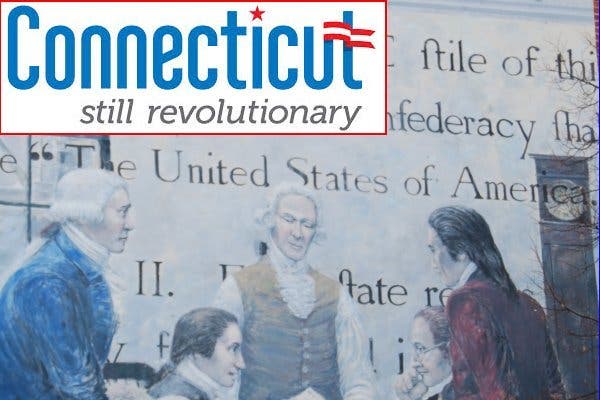
The first Continental Congress
The first Continental Congress, held in Philadelphia, adjourned on Oct 26, 1774 after more than seven weeks of debate and discussion. Delegates from all of the colonies except Georgia - including Silas Deane, Eliphalet Dyer and Roger Sherman representing Connecticut -- attended the meeting which was in response to an act by British Parliament to punish colonists for the Boston Tea Party. The delegates planned for a boycott of British goods later to start in December of 1774 and scheduled a second Continental Congress meeting to be held in 1775.
From historic pages from the Courant, for more stories please go to courant.comldayinhlstory.
Roger Sherman

Roger Sherman (April 19, 1721 – July 23, 1793) was an early American lawyer and politician, as well as a Founding Father of the United States. He served as the first mayor of New Haven, Connecticut, and served on the Committee of Five that drafted the Declaration of Independence, and was also a representative and senator in the new republic. He was the only person to sign all four great state papers of the U.S.: the Continental Association, the Declaration of Independence, the Articles of Confederation and the Constitution. Thomas Jefferson said of him: “That is Mr. Sherman, of Connecticut, a man who never said a foolish thing in his life.”
Find out what's happening in Ledyardfor free with the latest updates from Patch.
Silas Deane

(December 24, 1737 – September 23, 1789) was an American merchant, politician and diplomat. Originally a supporter of American independence Deane served as a delegate to the Continental Congress and then as the United States’ first foreign diplomat when he travelled to France to lobby the French government for aid. He also enlisted the services of a number of Continental soldiers of fortune, among whom were Lafayette, Baron Johann de Kalb, Thomas Conway, Casimir Pulaski, and Baron von Steuben.
As a mark of approval for Deane’s conduct in Paris, the French government agreed that he should travel back to the United States aboard a warship carrying out the first French ambassador to the United States. Louis XVI presented Deane with a portrait framed with diamonds and both Vergennes and Franklin wrote letters commending Deane. More On Silas Deane http://webb-deane-stevens.org/historic-houses-barns/silas-deane-house/
Find out what's happening in Ledyardfor free with the latest updates from Patch.
Eliphalet Dyer

As the revolution began, Dyer was named to the state’s Committee of Safety, and named a delegate to the Continental Congress in 1774. He would serve in the Congress during 1774-1775, 1777–1779, and 1782-1783. John Adams, in his diary, characterized Dyer as “...longwinded and roundabout, obscure and cloudy, very talkative and very tedious, yet an honest, worthy man; means and judges well.”
Eliphalet retired from public life in 1793. He died at home in Windham on May 13, 1807, and is buried in the Windham Cemetery. His daughter Amelia was married to Joseph Trumbull, who served with Dyer in the Continental Congress.
Eliphalet retired from public life in 1793. He died at home in Windham on May 13, 1807, and is buried in the Windham Cemetery. His daughter Amelia was married to Joseph Trumbull, who served with Dyer in the Continental Congress.
Samuel Huntington
Who was the man that some consider to be the first president of the United States?

Samuel Huntington was born into a family of ten children. Three of his brothers were sent to study theology at Yale, but Samuel’s parents decided that his education would be of a different kind. They apprenticed Samuel to become a cooper and enlisted his help in running the family farm. However, a farmer was not what Samuel wanted to be. At age twenty-two, he left the family farm in pursuit of bigger dreams.
Intent on becoming a lawyer, Samuel decided to teach himself all that he would need to know. Samuel read the books contained in the personal library of Scotland’s local minister, Ebenezer Devotion. After studying law books from the collections of other friends in Windham, Samuel passed the bar. He was admitted to practice in March of 1754.
By 1761 Samuel had fallen in love and married Martha Devotion, daughter of Ebenezer Devotion. Then, in 1765 Samuel made a great leap in his legal career. He was appointed to the position of King’s attorney for the colony of Connecticut. Nine years later, Samuel’s conscience made him resign from this post and turn his back on what might have been a bright and comfortable future in the employment of the King.
Instead, Samuel Huntington became a patriot and dedicated the rest of his life to serving the public. In 1775 he was chosen to serve as a delegate to the Continental Congress where he represented Connecticut when Congress convened in January of 1776. On July 4, 1776, Samuel Huntington signed the Declaration of Independence casting his lot with the other fifty-five signers.
Some argue that this makes Samuel Huntington the first president of the United States.On September 28, 1779, Samuel Huntington was elected 6th president of Congress and began serving his term. During that term, on March 1, 1781, the Articles of Confederation became operative as the first Constitution of the United States. The first section of the Articles of Confederation designates our nation as the United States for the first time.
Samuel Huntington continued his public service by becoming chief justice of the Supreme Court in 1784. In 1786 he became the 18th governor of Connecticut and would hold that office until his death almost ten years later. Samuel Huntington died in his 64th year and was laid to rest in Norwichtown. The man who started life as a farm boy kept some traits throughout his life that served him well; he was reputed to be a practical man of few words who wrote in a simple style. His quiet leadership and full commitment to the American Revolution won him the respect of all. From: